
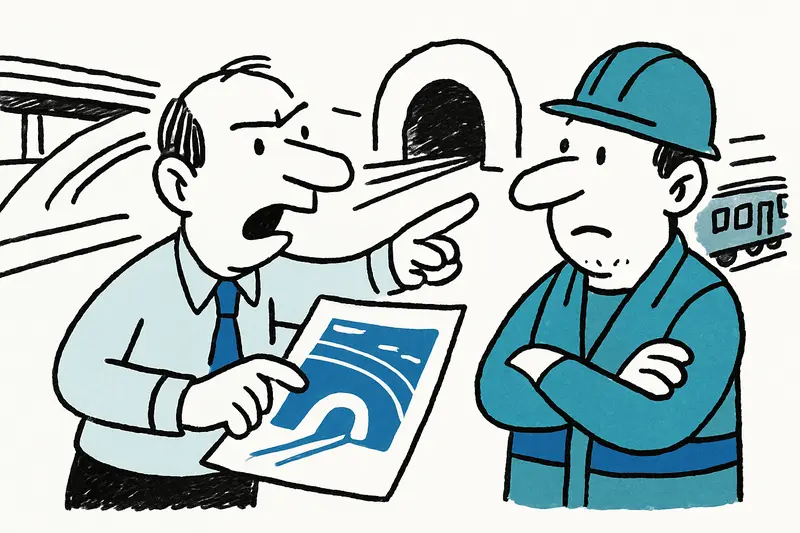
Rethinking the Ring Road: Tunnel, Rail Alignment and the Question of Benefit for Palma
The Island Council has revised plans for the ring road around Palma — introducing an 845‑metre tunnel and shifting the alignment to allow space for the planned rail link to Llucmajor. A reasonable compromise — but costs, the schedule and the impact on residents remain unanswered.
Rethinking the Ring Road: Tunnel, Rail Alignment and the Question of Benefit for Palma
When early in the morning the bus lane on the Vía de Cintura is still half empty and a haze from the first flights hangs over Son Sant Joan, this is the place where transport policy becomes audible: engine noise mixes with the distant beeping of luggage trolleys. In recent months the Island Council has worked precisely on that noise level — and has revised the plans for the new ring road. The result: instead of a straight ribbon of asphalt, there will in future be a 845‑metre tunnel and the alignment has been shifted so that the planned rail connection to Llucmajor can be added later.
What really changes
The main changes are clear: a mid‑length tunnel, several new underpasses and continuous pedestrian and cycle paths. The route between the airport motorway and Son Ferriol is being moved to make room for future tracks and a possible station at Coll d'en Rabassa with park‑and‑ride facilities. A nice idea, but it comes at a price: current estimates speak of around €110 million. Money the Island Council wants to use to relieve the overburdened Vía de Cintura — often a bottleneck in the mornings and evenings.
The central question: Will this really relieve Palma?
The guiding question is simple and yet uncomfortable: does this solution sustainably transform the traffic situation — or does it merely shift the problem? A tunnel eases the visual impact and reduces noise in the immediate neighbourhood. But without the rail connection, the tunnel will mainly create space — for more cars, unless an attractive rail offer is provided at the same time. In short: the technical switch has been set. Whether the train actually arrives later will decide the benefit.
Underestimated risks
Public debates often ignore three things: first, cost risks. €110 million is an estimate; similar projects often see rising sums. Second, the construction phase: Son Ferriol and Coll d'en Rabassa should expect months of construction noise, altered access routes and bulky diversions. And third, ecological and hydrological questions — especially in the flat zones toward the airport where drainage and groundwater can be affected. Not all of this is already covered by clear checklists.
What is missing from the public debate
At the bus stop people express relief that the rail option is preserved. But few speak loudly about follow‑up financing: who will pay for the later rail construction? Good options would be linked financing plans with the Balearic Ministry of Transport, EU funding programs for sustainable mobility, or public‑private partnerships — each option has pros and cons. There are also no concrete promises for noise protection, greening and bicycle infrastructure: cycle lanes are nice if they are wide and safe — not just a stripe at the edge.
Concrete opportunities and proposals
From a local perspective, several pragmatic steps can be proposed: first, a binding timetable for the rail integration with clear financing packages. Second, mandatory construction schedules and noise mitigation plans so that people in Son Ferriol are not living with a construction site in their living room for years. Third: more greenery — planted noise barriers and rows of trees that not only improve sound insulation but also provide shade on hot Mallorcan days. Fourth: mobility support measures such as temporary park‑and‑ride shuttles when construction panels eat up parking. And fifth: transparent monitoring reports on costs and environmental impacts — published, understandable and at regular intervals.
What residents should know now
Those living in Son Ferriol or on the edge of Coll d'en Rabassa have legitimate questions: when will work begin? How long will it last? Where will construction take place and how will access be secured? Answers are not yet available in full detail. The Island Council aims to approve the revised plans in autumn 2025. After that follow tenders and — hopefully — clarified schedules. Until then: asking questions helps. Attend the information evenings, demand noise-control concepts, insist on regular updates.
Looking ahead
Deciding to leave space for a rail alignment is a small strategic act of foresight. It keeps options open and offers hope that Palma might one day provide a real alternative not only for cars but also for trains. Whether that succeeds depends not only on the 845 metres of tunnel or the €110 million — but on political determination, good communication and the small details: how wide is the cycle path, how site‑appropriate is the planting, how fair are the compensations for construction impacts? The coming months will show whether technical precision turns into a transport corridor that adds value for neighbourhoods — or whether debate about costs, schedules and construction noise continues to dominate the headlines.
Frequently asked questions
What is changing on Palma’s ring road project?
Will the new road layout actually reduce traffic in Palma?
How much will Palma’s revised ring road project cost?
What should residents in Son Ferriol expect during construction?
Why is the route being shifted near Coll d'en Rabassa?
When could the revised Palma ring road plan be approved?
What environmental concerns are linked to the Palma ring road changes?
What transport improvements are included besides the new tunnel in Mallorca?
Similar News
When Housing Becomes a Matter of Survival: Mallorca Between Rental Frenzy and Everyday Life
The case of 87-year-old Maricarmen showed that on Mallorca many people's lives are poised between affordable and uninhab...
Autumn in Mallorca: When Melancholy Gets a Window
Why autumn quietly tightens here — and how to make use of the mood: walks, culture, candles and the light from Palma to ...
Near-miss on Lanzarote: Landing Ryanair Jet and Iberia Takeoff — what really went wrong
On Lanzarote there was a dangerous incident: A Ryanair flight (FR5910) from Dublin landed on runway 03 while an Iberia E...
Eurowings introduces new Premium Business seats on Mallorca routes
From December 1, selected Eurowings flights to Palma and other destinations will feature eight particularly generous sea...

Car on MA-13 near Inca in flames – a safety check for the island
A vehicle caught fire on the MA-13 towards Alcúdia on Tuesday afternoon. The driver was uninjured, the car was destroyed...
More to explore
Discover more interesting content

Can Cap de Bou

Townhouse Lleo 72
