
Island Council wants to monitor ports: How much control does Mallorca need?
Island Council wants to monitor ports: How much control does Mallorca need?
The Island Council plans cameras in Palma and Alcúdia to record vehicle counts, foreign license plates and rental cars. One internal question remains: How transparent and legally secure is the plan — and who will be penalized if the administration fails to process vehicle re-registrations?
Island Council wants to monitor ports: How much control does Mallorca need?
Key question: Will the new cameras ultimately serve transparency and road safety — or will they become an additional pressure tool against vehicle owners from abroad?
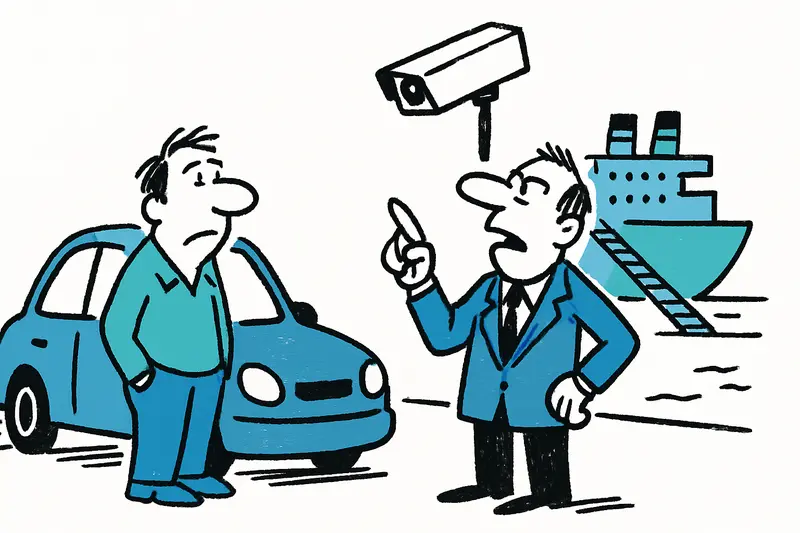
The harbor smells of diesel and brewed coffee in the morning, the ferry to Alcúdia moves into the basin, holidaymakers push suitcases across the quay. It is in exactly these places that the Island Council now wants to count: Five new cameras are to be installed at two ports – Alcúdia and Palma – to record the number of vehicles entering and leaving and to specifically identify license plates of foreign origin and rental cars, a topic also discussed in Rental Car Cap: Between Traffic Calming and Holiday Stress – What Mallorca Must Consider Now. This is part of a much larger project: Hundreds of new devices are to be installed in Mallorca's road network; the first phase begins in the Tramuntana, where plans for Cameras on the Ma-10: More Safety or Silent Surveillance? have been discussed, preparations take place between April and May, the first cameras are reportedly arriving in June and the system is expected to be operational by October 2026.
Briefly: Facts you need to know. The Island Council has asked the port authority for approval; five port cameras are planned (two in Alcúdia, three in Palma). This comes alongside infrastructure spending covered in €525 Million for Balearic Ports: Palma, Alcúdia and the Big Question of How. On a larger scale, installations are planned that would deploy 105 speed measurement devices and vehicle counters, 105 surveillance cameras and 20 noise monitors across the island. Similar deployments have sparked debate, for example Hidden speed cameras in the Balearic Islands: safety or trap?. A contract worth more than €700,000 was awarded for this package. It is also planned that the national traffic authority (DGT) will get access to the camera data — that is, to data that documents the movement of vehicles to and from Mallorca.
Critical analysis: What money and technology cannot solve. First, there is the question of proportionality. Vehicle counting and noise measurement can make sense to detect bottlenecks or to prevent illegal street racing. But the automatic analysis of license plates quickly moves into another dimension: individual movement patterns become tangible. Second, the legal situation: Who is allowed to store the images, for how long, and on what legal basis? Third, the practice: In Mallorca there is a noticeable administrative backlog with re-registrations. If authorities do not schedule appointments in time and temporary plates expire, affected people face fines or even harsher penalties — even though they are not actually to blame for the delays.
What is missing from the public discourse. Conversations often revolve around “German license plates” and control numbers, but few explain transparently how personal data will be handled. There is a lack of clear breakdowns: Who has access, how long are raw images retained, which algorithms filter out license plates, and which body checks for errors? Equally overlooked is the effect on tourism: A stark image of widespread surveillance can strain the relationship between guests and hosts if communication is lacking.
An everyday scene from Palma: At Moll Vell on a windy morning, a man with a German license plate stops in front of a café to quickly buy bread. He is a resident, but his re-registration has been stuck at the office for months; his temporary plate has been extended — or maybe not. If a camera counts him in the future and the data goes to the DGT, it will not be the on-site situation but the interpretation of a dataset that decides possible consequences. Such moments show that technology without functioning administration and fair processes can lead to injustice.
Concrete solutions before the cameras are rolled out: First, make transparency rules binding: publish clear information on data storage, deletion periods and access rights. Second, a pilot phase and independent evaluation: before counting island-wide, measurements should initially be carried out anonymously to test the technology and the analyses. Third, administrative relief: if controls become stricter, the re-registration office must be staffed up; it is contradictory to collect more data while the authority cannot act quickly enough. Fourth, provisional arrangements for affected people: automatic grace periods or temporary exemptions when delays are caused by the administration. Fifth, privacy by design: wherever possible, systems should only deliver aggregated figures and license plate identification should only be activated when there is a concrete suspicion.
Who is liable if the technology makes mistakes? Algorithmic recognition rates are not perfect; confusions are possible, especially with dirty or partially obscured plates. There needs to be a clear complaint and review procedure before fines are imposed. Otherwise people risk financial hardship due to administrative backlog or technical false alarms — that would be a peculiar island price to pay.
Punchy conclusion: More measurement points can help manage noise, speed and traffic flows — many here want that. But the announced expansion is not sufficient without rules: Those who count must also explain who is being counted, how long traces remain and how incorrect decisions are corrected. Otherwise the stated aim of creating order will be overshadowed by the feeling that the island is being watched even more closely while people wait for appointments. A better idea would be: strengthen the administration first, then monitor — not the other way around.
Frequently asked questions
Why does Mallorca want to install new cameras at the ports?
Will the new cameras in Palma and Alcúdia identify foreign or rental cars?
When will Mallorca’s new traffic cameras start working?
How many cameras are planned for Mallorca’s road network?
Are traffic cameras in Mallorca meant to improve road safety or surveillance?
What happens if Mallorca’s cameras make mistakes with license plates?
What should residents in Mallorca know about data privacy with the new cameras?
Could delays at the re-registration office affect drivers in Mallorca?
Similar News

Ancient Piece Brought to Light: Guardia Civil Recovers Roman Anchor Fragment off North Coast of Mallorca
Divers from the Guardia Civil recovered a massive iron piece from Roman times off Mallorca's north coast. The roughly 35...

Who Benefits from the Half‑Hourly Flight on the Edge? Aena, Investments and the Island's Interests
Almost one billion euros is flowing into Son Sant Joan. The figures show the scale of investment and expected beneficiar...
Are the Balearic Islands the Southern Border of Europe? A Reality Check on Immigration
The Balearic Islands are again calling for EU aid after a sharp rise in arrivals by sea. Conflicting priorities between ...

"Expensive chaos" and many open questions: What clients can do when a lawyer suddenly stops responding
Several clients complain that a well-known German lawyer in Mallorca has been unreachable for months. Key question: What...

TV tip: 'The Last Problem' — Mallorca as the setting of a classic crime
A classic whodunit on Mallorca: A new miniseries set in spring 1959 brings storm, an isolated hotel and a dense web of s...
More to explore
Discover more interesting content

Can Cap de Bou

Townhouse Lleo 72
