
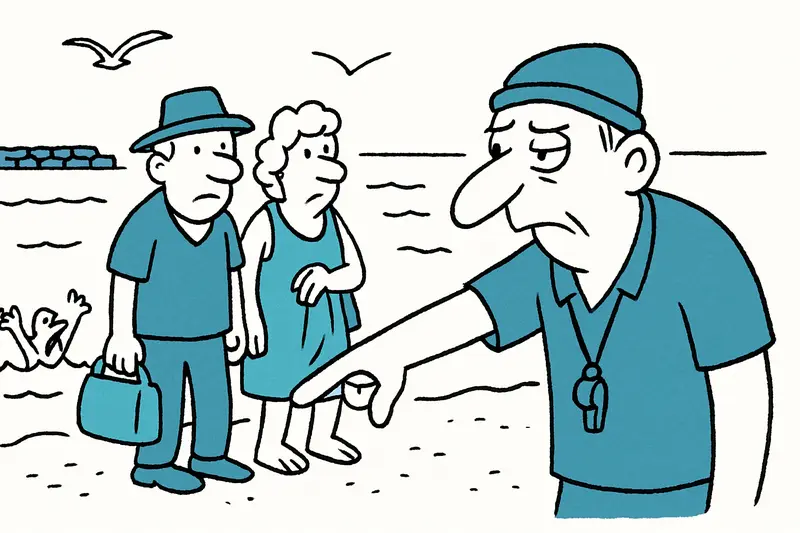
Caution at Cala Estancia: Why the popular beach in Can Pastilla is currently a risk
Caution at Cala Estancia: Why the popular beach in Can Pastilla is currently a risk
Rescue workers warn: Cala Estancia in Can Pastilla currently has no operational lifeguard station, no showers, no toilets and no buoys. What this means for bathers — and what should happen quickly.
Caution at Cala Estancia: Why the popular beach in Can Pastilla is currently a risk
Can a beach without basic infrastructure still be considered safe?
In the early morning, when EMT buses are still dropping people off with coffee cups and seagulls circle above the parking lots of Can Pastilla, Cala Estancia looks harmless: shallow water, two breakwaters, a few walkers. Behind the idyllic façade, however, there is currently a real problem for everyone who wants to swim here — especially older holidaymakers and families from Germany who like to come to this beach. Lifeguards from Palma report that there is currently no operational lifeguard station. Medical services, public toilets, showers and accessible facilities are also missing. The buoys that separate the bathing zones from boat traffic are not in place.
The key question is simple: Is what is there now enough to reliably protect people? From the perspective of the experts who work at the water every day, the answer is no. If there is neither a functioning station nor a marked bathing area, response times in accidents become longer, rescuers have less equipment available, and the rescue process is more complicated — precisely when seconds count. Such gaps have had tragic results elsewhere, as Tragedy in Son Bauló: Small Cove, Big Questions — How Safe Are Mallorca's Unassuming Beaches? reports.
A sober analysis: Public beaches need a minimum level of equipment to be operated safely. Available parking spaces and the good bus connection are useful, but they do not solve the core issue of hazard prevention; local disputes over parking, such as Purobeach and the parking lot at Cala Estancia: Who has priority at the water?, complicate management. Without toilets and showers hygiene suffers; without accessible facilities a significant portion of the population is excluded; without buoys the risk of collisions between swimmers and boats increases. All of this together raises the likelihood of incidents that could be avoided.
What is missing from the public debate is the logistics behind such omissions: Who is responsible at short notice when a season is about to begin? The Palma city administration is responsible for beach equipment and safety, and lifeguard shifts are often organized in cooperation with private service providers. If funding, tenders or approval procedures get stuck, there is room for mistakes — and little time before the beach opens.
A look at everyday life: On a sunny day in April you see families with blankets, retirees taking their daily walk, and bicycle couriers zooming past the sea. A German couple I met asked where they should find help in an emergency. The answer: uncertain. Such scenes are typical for a place that is frequented but lacks basic services.
There are concrete, short-term measures that can be implemented. First: install mobile rescue posts — robust, certified containers or temporary tents with rescue and first-aid equipment that can be set up in a few days. Second: rent portable toilets and mobile showers until permanent facilities are built. Third: deploy visible buoy lines and put up clear signs marking bathing zones and informing boat captains. Fourth: coordinate more closely with the emergency number 112 and the local maritime police so that response routes are clearly regulated. Fifth: hire additional seasonal staff at short notice or reinforce existing rescue services with qualified volunteers under the guidance of professionals.
In the medium term it is about sustainable solutions: a permanent medical station, accessible access with ramps, disabled toilets, permanent shower facilities and regular maintenance. Funding could come from municipal funds, tourism infrastructure grants or a special levy for beach maintenance — these are not new ideas, but tried-and-true components used in other municipalities on the island.
What is still missing in the public debate is transparency: concrete timelines, responsible parties, deadlines. People who come to the beach have a right to know whether a rescue post will be operational this weekend or not. A clear indication of temporary measures would also reduce uncertainty.
Conclusion: Cala Estancia is a beach with potential — but at the moment not a place you can rely on for safety. Short-term, pragmatic steps could significantly reduce risk, while medium-term investments would permanently improve the infrastructure. The coming weeks are crucial: if tourism and everyday life increase again there, authorities should show that safety is not a matter for weighing up but a priority.
An appeal to locals and visitors: pay attention to signage, avoid areas without buoys, inform companions about emergency numbers and behave cautiously in the water. And a tip to those responsible: a container, a few buoys and a sign reading "Caution: temporary facility" would already calm many people — it does not always have to be the big solution for people not to get hurt.
Frequently asked questions
Is Cala Estancia in Mallorca safe for swimming right now?
What is missing at Cala Estancia beach in Can Pastilla?
Why are beach buoys important at Cala Estancia in Mallorca?
Can families and older visitors still go to Cala Estancia beach?
What should I pack if I plan to visit Cala Estancia in Mallorca?
Who is responsible for beach safety at Cala Estancia in Palma?
What can be done quickly to improve safety at Cala Estancia?
Is Cala Estancia a good beach choice in Mallorca if I want full facilities?
Similar News
Ancient Piece Brought to Light: Guardia Civil Recovers Roman Anchor Fragment off North Coast of Mallorca
Divers from the Guardia Civil recovered a massive iron piece from Roman times off Mallorca's north coast. The roughly 35...

Who Benefits from the Half‑Hourly Flight on the Edge? Aena, Investments and the Island's Interests
Almost one billion euros is flowing into Son Sant Joan. The figures show the scale of investment and expected beneficiar...

Are the Balearic Islands the Southern Border of Europe? A Reality Check on Immigration
The Balearic Islands are again calling for EU aid after a sharp rise in arrivals by sea. Conflicting priorities between ...

"Expensive chaos" and many open questions: What clients can do when a lawyer suddenly stops responding
Several clients complain that a well-known German lawyer in Mallorca has been unreachable for months. Key question: What...

TV tip: 'The Last Problem' — Mallorca as the setting of a classic crime
A classic whodunit on Mallorca: A new miniseries set in spring 1959 brings storm, an isolated hotel and a dense web of s...
More to explore
Discover more interesting content

Can Cap de Bou

Townhouse Lleo 72
