
Tragedy in Son Bauló: Small Cove, Big Questions — How Safe Are Mallorca's Unassuming Beaches?
A rescue attempt at Son Bauló ended fatally. The question arises: do the small, often unsupervised coves have enough protection, information and equipment?
Tragedy in Son Bauló: Small Cove, Big Questions
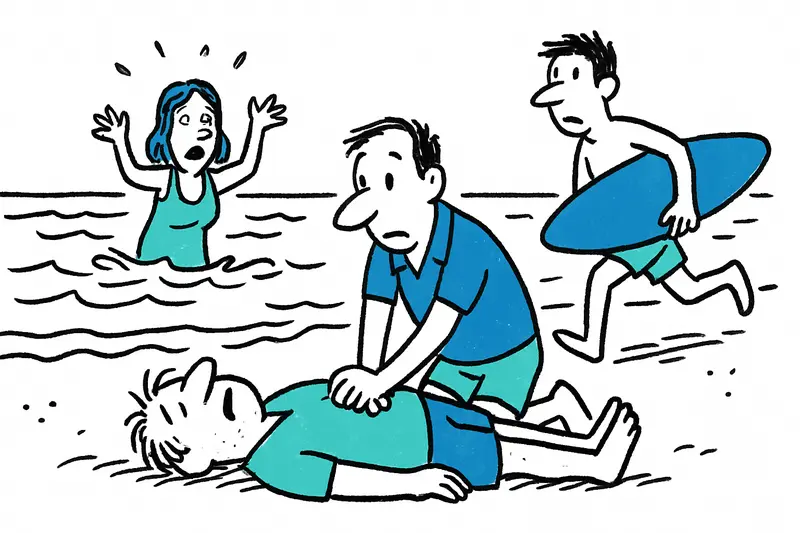
In the late afternoon the pebbly shoreline of Son Bauló turned into a scene one does not expect here: screams mixed with the chirring of cicadas, the pine trees cast long shadows, and the sea gurgled with an unexpected unrest. A 67-year-old man apparently jumped into the water to save his 47-year-old wife, as reported in Fatal rescue attempt in Son Bauló. The man died on the beach despite resuscitation attempts; the woman is seriously injured in hospital.
How did the rescue unfold — and why was it not enough?
Witnesses describe frantic minutes: a surfer used his board as a support platform, an on-duty lifeguard and locals dug in the sand, pulled the couple ashore and began resuscitation. A doctor and paramedics took over later. The Guardia Civil documented the situation, as local reporting notes in Tragedy at Son Bauló: 67-year-old dies after rescue attempt. That is all. But a bitter feeling remains: why weren't the crucial minutes bridged better? Why was standard equipment missing at some access points?
The central question: Are protection, information and equipment sufficient?
Son Bauló is one of those "small paradises" appreciated by locals and families. That very tranquility carries risks. Fewer visitors often means: no permanent lifeguard service, rarely visible information signs and sometimes no lifebuoy within reach. A light breeze, a local current or a half-hidden wave can be enough to turn a quiet day at the beach into a rescue operation.
In public debate we hear too little about the combination of language barriers, missing infrastructure at side entrances and the lack of local knowledge among many tourists. On site, helpers reported that information boards were small or only in Spanish, a point underscored in Intento de rescate mortal en Son Bauló: qué debe cambiar tras el drama en la playa. Some access paths seemed like from another time: idyllic, but not sufficiently prepared.
Underestimated factors: bystander effect, missing equipment, tourists without local knowledge
Many highly committed helpers had no rescue line or lifebuoy at hand. And rescue attempts out of love or panic without proper training are dangerous — not only for those to be rescued but also for the helpers. Tourists who do not know how to read local currents or where safe exit lines are located are particularly at risk. An elderly man who regularly walks in Son Bauló summed it up briefly: "You don't expect it. The seagulls scream, children play — and suddenly everything is different."
What is often missing from the discussion
Less talked about are organizational small things that can save lives: clear marking of danger zones, reliable emergency numbers at every access and regular checks of rescue equipment. Also little attention is given to the role of local hosts and holiday apartment owners who could inform guests — a simple flyer or a notice with multilingual safety instructions would help a lot.
Concrete, quickly implementable proposals
- Multilingual information signs at all access points: Notices on currents, maximum bathing depth, escape routes and behavior in an emergency in Spanish, Catalan, English and German.
- Basic equipment at every beach access: Lifebuoys, throwing lines and clearly visible emergency numbers. These things cost little but save minutes in critical situations.
- Local training: Basic resuscitation and rescue courses for hosts, beach cafés and neighborhoods. A few hours can bring significantly more safety.
- Flexible rescue services and technology: Seasonal reinforcement, mobile rescue teams, occasional drone or boat deployments for remote coves.
- Digital warning systems: A simple app or digital map with current wind and current data, warnings and locations of equipment would be a major benefit — especially for visitors without local knowledge.
Police, municipality and neighborhood must work together
The Guardia Civil's investigations will clarify the facts. At the same time, a serious debate about responsibility and prevention is needed: who provides the signs? Who checks lifebuoys? Who trains volunteers? Son Bauló is not an isolated case. Many small coves on Mallorca share the same weaknesses.
Our thoughts are with the bereaved and the helpers. These sad minutes remain in memory — as a warning, not just as news. If grief leads to concrete responsibility and better equipment, similar tragedies might be prevented. The sea here is beautiful, unpredictable and deserves our respect: loud, quiet, sometimes treacherous. And sometimes a small measure decides whether an afternoon becomes a tragedy or a narrowly averted emergency.
Frequently asked questions
How safe are Mallorca's smaller coves for swimming?
What should I check before swimming at a beach in Mallorca?
When is the best time of year to swim in Mallorca?
What should I pack for a day at a quiet beach in Mallorca?
Is Son Bauló in Mallorca suitable for families?
Why do some Mallorca beaches not have lifeguards all the time?
What should I do if someone gets into trouble in the sea in Mallorca?
Are there enough warnings and rescue tools at Mallorca's beach access points?
Similar News

Maribel: Five Decades of Service – Housekeeper from Peguera Celebrated with a Special Honor
Over 50 years in the hotel business: María Isabel “Maribel” Molinos was honored in Palma at the Nit del Turisme by Unive...
Orange Alert over Parts of Mallorca: Are We Prepared?
Dark clouds and an announced wet spell have triggered an Orange alert in parts of Mallorca. A reality check: what's miss...

Sundair & Co.: Sale speculation and what it could mean for Mallorca
Rumors about a possible sale of the airlines Sundair and Fly Air 41, which belong to Schauinsland-Reisen — and whether b...
Anne Wünsche in Mallorca: A job offer with a catch — who fits the role of personal assistant?
Influencer Anne Wünsche has left Berlin and is urgently looking for a full-time personal assistant in Mallorca. Why the ...
Daily from New York: Palma Between Boom and Strain
United will increase the Newark–Palma route to daily flights in 2027 using Boeing aircraft (231 seats). What does the in...
More to explore
Discover more interesting content

Can Cap de Bou

Townhouse Lleo 72
