
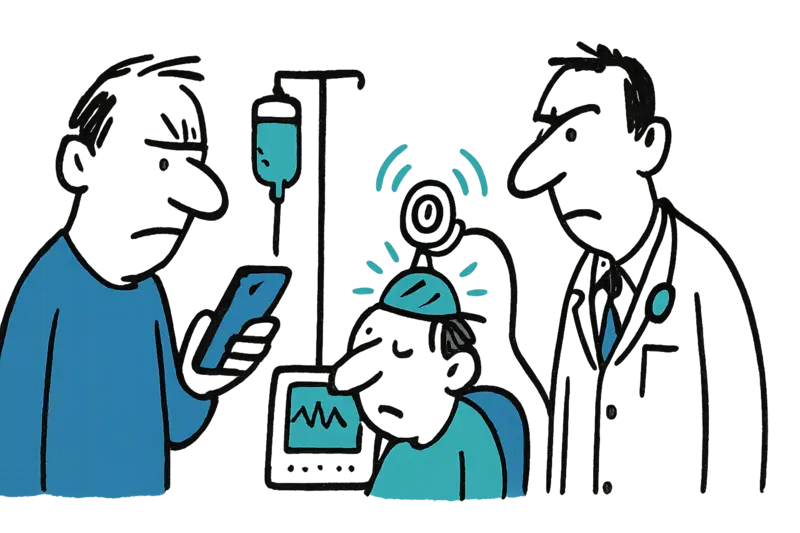
Ketamine, rTMS and Short-Term Intensive Therapy: A Critical Look at the Dr. Scheib Concept
Ketamine, rTMS and Short-Term Intensive Therapy: A Critical Look at the Dr. Scheib Concept
A new treatment package combines ketamine-assisted psychotherapy, rTMS and neurofeedback in a two-week intensive phase. What does the concept promise and which questions remain open?
Ketamine, rTMS and Short-Term Intensive Therapy: A Critical Look at the Dr. Scheib Concept
Key question: Can a compact program of ketamine infusions, intensive psychotherapy and neuromodulation really produce lasting improvement in severe depression—and if so, for whom exactly?
In Palma there is currently a lot of talk about new forms of therapy. In front of cafés in Santa Catalina you can see people frowning at their smartphones, searching for answers. The concept presented here combines several components: ketamine-assisted psychotherapy, repetitive transcranial magnetic stimulation (rTMS), neurofeedback and other methods. It sounds modern and offers an attractive idea: to achieve as much as possible in a few weeks.
Critical analysis
Scientifically, it is known that ketamine can rapidly relieve symptoms in some patients. rTMS has a demonstrable effect for certain forms of depression. But combined programs are not automatically better than well-executed single treatments. Important questions remain: How large was the study group that reported the BDI-II decrease from an average of 29 to below 11? Was there a control group, randomized allocation, or independent follow-up? The statement that many patients remained improved a year later is encouraging, but without transparency about concurrent treatments and relapse prevention it is difficult to evaluate.
Another issue is selection bias: short-term intensive offers often attract people who can free up time and afford the costs. Who covers the expenses, how is the indication determined, and how is aftercare organized? Ketamine can cause side effects and, rarely, psychotic symptoms; this requires clear safety protocols and medical supervision. rTMS and neurofeedback are technology-driven procedures—their success depends heavily on the quality of the equipment, protocols and staff experience, a point illustrated by Virtual Reality at Hospital d'Inca.
What is missing from the public discourse
The public discussion often emphasizes the rapid effect of ketamine and less the question of long-term strategies: how can a two-week effect be carried into sustainable everyday life? Also rarely discussed: comparison with established care pathways (outpatient psychotherapy, antidepressant medication, combined treatment plans) and possible interactions with other therapies. Transparency about costs, waiting times and access is often underrepresented in reporting.
A scene from Palma
On Passeig Mallorca, where postcard weather mixes seagulls and delivery vans, I meet a woman who, after a short week-long stay in a clinic, says: "The time there was intense, almost like a small retreat. It helped me, but at home everything is different." Such voices show: intensity creates change, but everyday life tests every therapy.
Concrete solutions
1) Transparent studies: disclosure of study design, size, dropout rates and concomitant therapies. 2) Registries and aftercare: a regional registry for ketamine-assisted treatments could document side effects and long-term outcomes. 3) Involvement of primary care physicians: clear handover protocols to continuing doctors and therapists, a topic relevant to the Balearic Islands plan to place 25 psychologists in primary care. 4) Cost and access models: discussions with health insurers and private payers about reimbursable models; scholarship places for financially disadvantaged patients. 5) Qualification standards: certifications for personnel administering ketamine, rTMS or neurofeedback.
These steps would not only increase safety but also build trust—particularly important on an island community where recommendations quickly spread among friends and neighbors, as in the story of a German therapist who built a small finca near Llucmajor.
Concise conclusion
The concept combines established and newer procedures in a compact form—that is not a wrong approach. What matters, however, is not the mix itself but scientific transparency, quality control and well-thought-out aftercare. For people in Mallorca this means: stay curious, but ask concrete questions—about the evidence, the risks, the costs and returning to everyday life. Only then can a promising program become a responsible option for those who need help.
Note: This assessment is based on the available information about the therapy offering and on generally known findings about ketamine and neuromodulation. It does not replace medical advice. If you are interested in further details, direct contact via the practice's provided channels is recommended.
Frequently asked questions
What is ketamine-assisted therapy and could it help with severe depression in Mallorca?
How should I evaluate the evidence for a short-term intensive program that includes ketamine, rTMS and neurofeedback in Palma?
What are the safety concerns with ketamine in depression treatment?
How do costs and access work for ketamine/rTMS programs in Mallorca?
What should I ask a Mallorca clinic offering these therapies before starting?
How does this intensive program compare with established care pathways in Mallorca?
What about long-term effects and aftercare for Mallorca therapies?
If I am visiting Mallorca and want to explore these options, where should I start a careful inquiry?
Similar News
When the Golf Swing Aches: Help from Palma for Back, Knee and Shoulder
Many people head to the tees in Mallorca – but a sharp pain can end the round. An orthopedic clinic in Palma combines di...
Finally Rain on Mallorca: Lluc and Llucmajor Lead — and Why It's Good for the Island
Heavy rain hit the Tramuntana hinterland around Lluc on Wednesday. Figures, everyday impressions and a pragmatic outlook...
Who wanted to kill Dr. Aslani? The open questions after the attack in Marbella
A 57-year-old German cosmetic surgeon was shot dead in his clinic in Marbella. Investigators are examining a possible co...
Prison Pilgrim Flees on Return: How Safe Are Prison Outings?
After a supervised pilgrimage to Santiago, an inmate ran off along the Carretera de Sóller and was recaptured near the o...
Ryanair cuts seats: Why Mallorca's winter schedule is at risk — and who can really solve it
Ryanair is cutting 700,000 seats in Germany this winter. What that means for flights to Mallorca, who loses out — and ho...
More to explore
Discover more interesting content

Can Cap de Bou

Townhouse Lleo 72
