
In Spain I'm German, in Germany I'm Spanish – Lea Marks between island and stage
In Spain I'm German, in Germany I'm Spanish – Lea Marks between island and stage
Lea Marks, 28, born in Mallorca, celebrates her film debut in 'Tal vez'. A portrait about home, the art of accents and the choice to commute between Barcelona and the island.
In Spain I'm German, in Germany I'm Spanish – Lea Marks between island and stage
On the way from the airport to the city center it smells of hot asphalt and espresso. Suitcases click, somewhere in a side street a busker plays guitar — these days that's often how an evening in the capital begins. For Lea Marks, such an evening started differently: she wanted to see a film and suddenly found herself on the red carpet, with flashbulbs in her face and two agents arranging interviews within ten minutes.
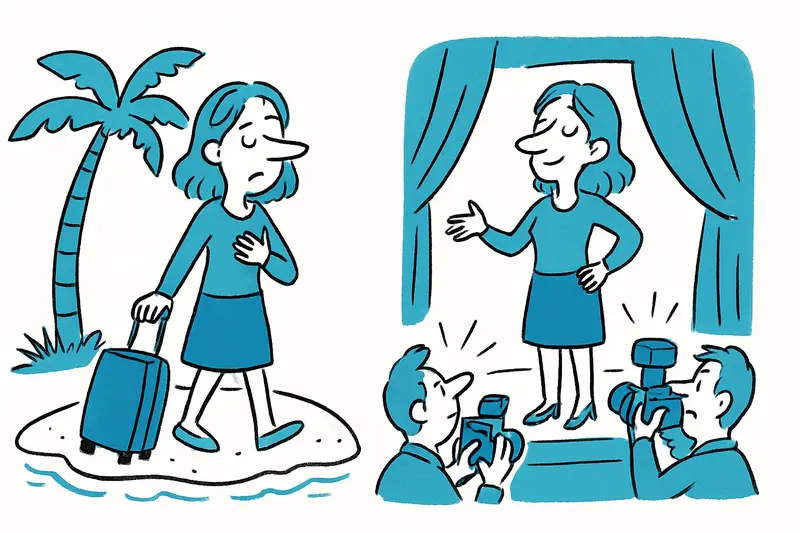
The actress's story reads like a special kind of island journey. Born in 1998 on Mallorca, she grew up between Spanish and German words. Her parents, Anja and Jan Marks, still live on the island; she herself has chosen Barcelona as her residence but keeps returning. This in-between world is not a problem for her, rather an advantage: "I'm actually content with being nothing and at the same time everything," she says about the identity that others often try to classify quickly.
From the school play to the cinema
Her first appearance was in a school play: Captain Hook in a performance at the private school San Cayetano. Theater at the Teatre Sans in Palma accompanied her until she was sixteen. Then she went to a boarding school in England, later studying acting and creative writing in Bristol. She speaks fluent English, Spanish and German — and, she says with a smile, can switch a Spanish 'r' on and off with a German timbre. A skill that came in very handy for her new role.
'Tal vez', the directorial debut of Arima León, is set in Spain in 1968. In the filmic world the legendary trapeze artist Pinito del Oro meets a young writer; Lea plays Inge, a German woman who initially speaks Spanish with an accent and whose language becomes more fluent over the years portrayed. For Marks it was not guesswork: "My parents speak Spanish with a German accent, that's what I heard my whole childhood. I can simply switch it on and off."
The detour that led to the role
Her career has not been a straight path. After her studies Covid came along, she did another master's degree and worked for a time as a teacher — pragmatic and responsible, as she says herself. She had already appeared as an extra in a well-known series. An audition for another film then led to a call from a casting director: perhaps she was the right casting for Inge. Such detours may sound unpredictable, but for Lea they are part of the profession.
On the island, between the cliffs and the busy promenades, she learned to combine performance and everyday life. She translates texts on the side so she is not dependent solely on acting — a second pillar that gives her peace. "You have to be able to dream and play, but at the same time stay realistic," she explains, sipping a café con leche while the awnings rustle in the sun.
Why that's good for Mallorca
That an actress born on Mallorca debuts in a Spanish feature film is not only a personal success, but also a small cultural signal, as recent stories about local productions How a Small Mallorca Film Conquered the Netflix World show. This strengthens the feeling that Mallorca is more than just summer and beaches — voices are emerging here that are heard in Madrid, Barcelona or even London, and the island also hosts international shoots like Morticia at Mal‑Pas: Catherine Zeta‑Jones films surprising commercial in Mallorca.
For young people on the island Marks's path is an invitation: you can stay, return or fly away from here — and still maintain a connection. Whether rehearsing at the Teatre Sans or at a family dinner in a patio in Palma, such stories linger.
Outlook
Lea speaks of future plans with a surprising mixture of pragmatism and longing. In ten years she sees herself still between Barcelona and Mallorca, perhaps with recurring roles in series that shape characters over several seasons. One dream is a role that is allowed to grow — a kind of multi-part acting puzzle where she can accompany the changes of a character.
On the Plaça, when the bells slowly strike the hour and the day's heat cools, that doesn't sound like utopia. It sounds like a career built step by step — with an accent, with translations as a second pillar, and with an island in the heart.
Why do we like reading this? Because it shows: Mallorca is both starting point and home port. For Lea Marks the island is more than a place of memories. It is an anchor from which one experiments with the world — and perhaps one day returns to.
Frequently asked questions
How did Lea Marks' Mallorca upbringing shape her acting career?
What language skills helped Lea Marks in her film role Inge in Tal vez?
Why did Lea Marks describe her career path as detours rather than a straight line?
What does Mallorca offer actors beyond beaches?
How does Lea Marks see balancing life between Mallorca and Barcelona in the future?
What does Lea Marks appreciate about the island's everyday life, like moments on Plaça?
Why does Lea Marks translate texts, and how does that support her acting?
What does Lea Marks' film debut say about Mallorca's place in Spanish cinema?
Similar News

More water than last year: Mallorca's reservoirs breathe easier
September rain refilled the Tramuntana's reserves: overall fill around 35 percent, Cúber at 40.42 percent, Gorg Blau at ...
Three Luxury Hotels in Banyalbufar: Lots of Money, Many Questions
A Danish investor plans three exclusive accommodations in Banyalbufar — including the historic Son Valentí. The announce...
2.1 tonnes of cocaine on sailing yacht off Spain's coast – a reality check for the coastguard
A 14-metre yacht was seized with 2.1 tonnes of cocaine. Who monitors the ports, how does the international hunt succeed ...

Heat Bonus in Mallorca: 100 Euros Extra for Outdoor Staff at MarSenses
MarSenses pays employees who worked outdoors in August an extra €100 as recognition. Lighter uniforms, reduced hours for...
Renovating in Mallorca: What You Really Can Do Without Neighbour Consent
Many think they can do whatever they want in their apartment. That's partly true — but only as long as structural elemen...
More to explore
Discover more interesting content

Can Cap de Bou

Townhouse Lleo 72
