
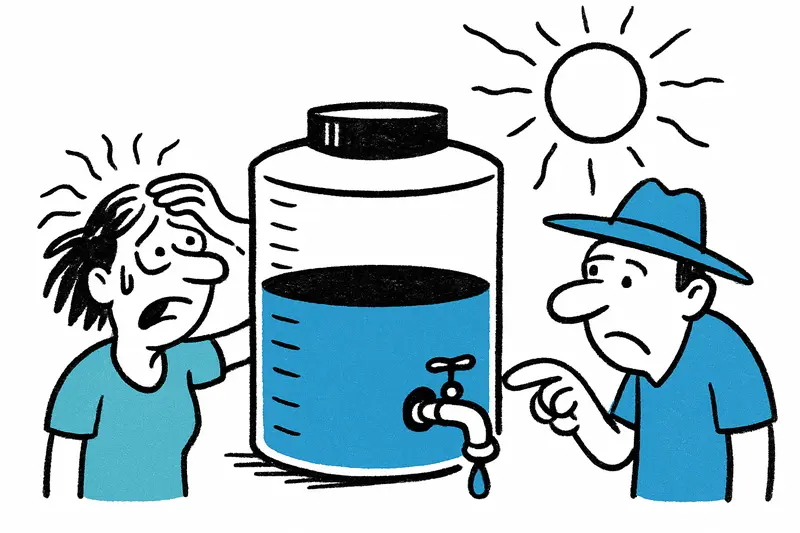
Less rain, more heat: why Mallorca's water reservoirs should be alarming
Less rain, more heat: why Mallorca's water reservoirs should be alarming
According to April figures, the Balearic Islands' water reserves have fallen to 50 percent. A look at regional differences, missing debates and concrete measures for Mallorca.
Less rain, more heat: why Mallorca's water reservoirs should be alarming
Key question
How long can the island keep its drinking water supply stable if dry, very warm Aprils become the new normal?
Brief findings
The responsible ministry reports an overall fill level of the water reserves for the Balearic Islands of 50 percent in April, four percentage points less than in March. For Mallorca the figure thus falls from 54 to 50 percent; Menorca and Ibiza also record declines. The national weather agency Aemet points to a noticeably drier April: 27.4 liters per square meter instead of the usual 42.9, about 36 percent below the mean. The month was also significantly too warm.
Critical analysis
The numbers are sober, but the effects on the ground are more visible: in the mountains of the Serra de Tramuntana the steep slopes turn brown earlier than before, and at reservoirs like Gorg Blau the shoreline is more pronounced. The problem is not only a single fill level but the direction. Less rain plus higher evaporation means reserves are used up faster, even if the overall percentage still looks “half full.” Regionally the data show differences: some demand areas – such as Palma-Alcúdia and parts of the Tramuntana – improved slightly, while others like the island’s interior lowlands remain at alert level.
What is missing in public discourse
The debate stays too focused on monthly figures. There is a lack of clear framing in terms of trends: How often do dry, very warm months occur in succession? How do lower rainfall levels affect aquifers and agriculture? Many people only think about the next summer and not the next drought period. It is also rarely clearly explained how locally differing reservoir levels are used over the year — this blurs the urgency in municipalities that still have “normal” values.
An everyday scene from the island
In the late afternoon on Plaça Weyler in Palma, seniors sit by the fountains, children play, watering cans stand next to a café’s pale potted plants. On the way toward Gorg Blau you can see drip hoses hanging in irrigated olive groves, while on some fincas the lawns are already turning brownish. These small observations show: water here is not abstract – it affects home gardens, agriculture, the small bars.
Concrete solutions
1. Transparent trend communication: a publicly accessible dashboard with monthly and yearly progress that links reservoir, groundwater and rainfall data. 2. Leak detection and network modernization: many losses occur in the distribution network; targeted investments save more water in the long term than temporary restrictions. 3. Tariff design and incentives: tiered pricing for high consumption and support programs for efficient irrigation (drip irrigation, sensors). 4. Rainwater and wastewater reuse: small collection systems at municipal level, expansion of greywater and grey+ recycling in commercial and tourism businesses. 5. Landscape management: reforestation, soil-building and measures against erosion increase water storage in the soil. 6. Regional coordination: shortages affect individual demand areas; therefore municipal, island and regional plans must be better coordinated.
Practical steps for households
Anyone with a garden can switch immediately: less lawn, more Mediterranean drought-tolerant plants, early-morning watering and drip systems. Restaurants and hotels can reduce sealed surfaces and use greywater. Small measures add up – people notice this quickly in a dry season on their bills and in the visible greenery.
Clear conclusion
50 percent fill is not yet an emergency, but the trend is serious. If warmer, drier springs occur more often, the current waiting approach will no longer be enough. Mallorca now needs a mix of better information, technical upgrades and realistic incentives — otherwise wells, gardens and harvests will be the first clear witnesses of a missed transition.
Frequently asked questions
Is it a good time to visit Mallorca in winter?
Can you swim in the sea in Mallorca during the cooler months?
What should I pack for a trip to Mallorca in the off-season?
What is Mallorca like for sightseeing when the weather is cooler?
Is Palma de Mallorca worth visiting in the quieter season?
Are Mallorca beaches still enjoyable outside the main summer season?
What is Alcúdia like to visit in Mallorca during the low season?
What kind of activities work best in Mallorca when it is not beach weather?
Similar News
Magaluf: Watchtower Alarm – Lifeguards Pull Unconscious Beachgoer from the Water
After a drama in the late afternoon, two lifeguards at Magaluf beach rescued an unconscious 44-year-old man. He was stab...
Turquoise in the City: How dangerous is the color play of the Sa Riera?
The Sa Riera in Palma suddenly turned turquoise — a pretty motif, but behind the effect lies a discharge of saline waste...

Jeckliner at Sunnesching: Cologne spirit sets sail from Palma
In September 2027 the Mein Schiff 2 briefly becomes a floating carnival stage: four days with Cologne bands, comedy and ...
Finally Home: Mike and Leyla Heiter Buy Villa with Sea View in Mallorca
The reality TV couple Mike and Leyla Heiter have bought a house in Mallorca with a roof terrace and sea view. An Instagr...

Arrest after series in Palma: Who protects apartments from repeat offenders?
The National Police arrested a man in Palma who investigators say may have broken into several apartments. In one incide...
More to explore
Discover more interesting content

Can Cap de Bou

Townhouse Lleo 72
