
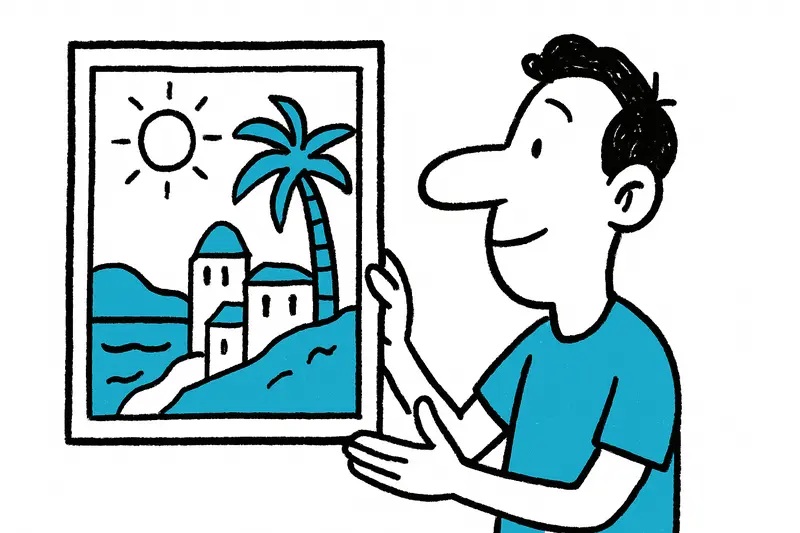
A Love Letter in Images: How a Munich Native Sees Mallorca Anew
A Love Letter in Images: How a Munich Native Sees Mallorca Anew
Patrick Morarescu has lived on Mallorca for ten years and photographs the island with a distinctive perspective. His series present nature, festivals and people and invite readers to rediscover familiar places.
A Love Letter in Images: How a Munich Native Sees Mallorca Anew
Patrick Morarescu brings calm and perspective to the island's visual bustle
On a hot morning, when the cicadas chirp in the Aleppo pines and the heat hangs over Passeig Mallorca, many places feel familiar and matter-of-fact. Then you leaf through the pictures of Patrick Morarescu and realize: you have never looked at this island so closely. The Munich-born photographer has lived on Mallorca for about ten years and has built a dense portfolio here that links nature, everyday life, festivals and architecture.
Morarescu began photography at a young age and has experimented in different fields over decades. Time spent in studios, training in Munich and a long period of artistic work have left their mark. Parallel to his photography he developed a stage persona with which he performed. Under this pseudonym self-portraits and actions were created that aimed not only to provoke but to ask questions: How do we present ourselves? What roles do we wear in everyday life?
On Mallorca he focused his attention on island phenomena that are otherwise overlooked: the light that lies flat over a bay in the morning; the hand movements of fishermen at the quay; feast days that swing between tradition and tourism. From these observations nearly ten thematic series have emerged. They are not documentary travel pictures in the classical sense, but rather studies in composition and presence: short, precise moments that give a place a voice.
His work has had international stops: exhibitions in museums and appearances at festivals are part of his career, as well as publications in specialist media. The range shows that his images are not only understood locally but enter a larger dialogue with photography and performance.
On my way to the harbor I often meet people who pause when a photo stops them. An older man recently explained to me at the fish market that an image had shown him the steps of his village anew. Such reactions show why this work is valuable for Mallorca: it makes the familiar visible and turns the gaze away from the postcard image toward small, independent stories.
An striking aspect of Morarescu's work is the role of presence. His strategy is simple and yet demanding: conscious, present photography. When the photographer is truly in the moment, he says, the spirit of a place is revealed. In his series you can see the result: calm compositions, often with a human accent, that leave room for reflection.
For the island this is more than a pleasant extra. Such photographic work nourishes Mallorca's cultural diversity and offers an alternative to pure leisure aesthetics. They are an invitation to both locals and visitors: look more closely, be surprised by what lies behind the door and behind the façade.
Specific dates and locations of upcoming exhibitions can vary, but those interested can look for works by local photographers in galleries and cultural centers or discover small exhibitions in villages. A walk through Palma, a café on the Plaça or an afternoon in Portixol can be starting points to begin seeing again.
In the end there remains a feeling you know from sunset on the promenade: warm air, gull cries, and the conviction that the island still holds surprises. Morarescu's pictures are an invitation to find those surprises and to walk through Mallorca a little more mindfully.
Frequently asked questions
When is the best time to visit Mallorca for beach weather?
Do I need a car to get around Mallorca?
What should I pack for a Mallorca trip?
Are there family-friendly beaches in Mallorca?
Is swimming in Mallorca safe year-round?
What are popular outdoor activities to try in Mallorca?
How can I check Mallorca's weather and sea conditions before planning a day out?
What are practical sun safety tips for time on Mallorca's beaches?
Similar News
From the Reality Studio to the Pitch: Aleks Petrovic Makes Mallorca His Base
The former participant in numerous TV shows moves from Dubai to the island and launches a project with FC Germania Mallo...

When the Phone Falls Silent: Concern for Sarah Joelle in Mallorca — and What It Reveals
After days without a response, the TV personality's unreachability in Mallorca sparked concern. Shortly afterwards an al...

Ultraluxury on the Ground: Four Seasons Jet in Palma — a Reality Check for Formentor and the Island
A high-priced flight crosses Mallorca and its guests stay for days at the Formentor resort. What does the island get bes...

Death of a Witness and the Justice Backlog: Why the Kegel Brothers Trial Matters in Mallorca
A witness in the Playa de Palma fire case has died, and the trial against eight German holidaymakers has been delayed un...
Champagne Reception, Red Carpet and Mini Originals: The Pre-Nit del Art at Gallery Mensing
Almost 400 guests, champagne, pop-art feats by Tom Boston and a raffle for the Parkinson's foundation: Gallery Mensing t...
More to explore
Discover more interesting content

Can Cap de Bou

Townhouse Lleo 72
