
Wild Overtaking on the MA-13: Why the Hard Shoulder Must Not Become a Shortcut
Wild Overtaking on the MA-13: Why the Hard Shoulder Must Not Become a Shortcut
On the motorway between Inca and Palma, drivers move onto the hard shoulder in morning traffic jams to overtake other vehicles. This is dangerous — and legally prohibited. What's missing in the debate, and how could the problem actually be solved?
Wild Overtaking on the MA-13: Why the Hard Shoulder Must Not Become a Shortcut
Key question: Why do drivers repeatedly use the hard shoulder as an exit — and who will stop them in future?
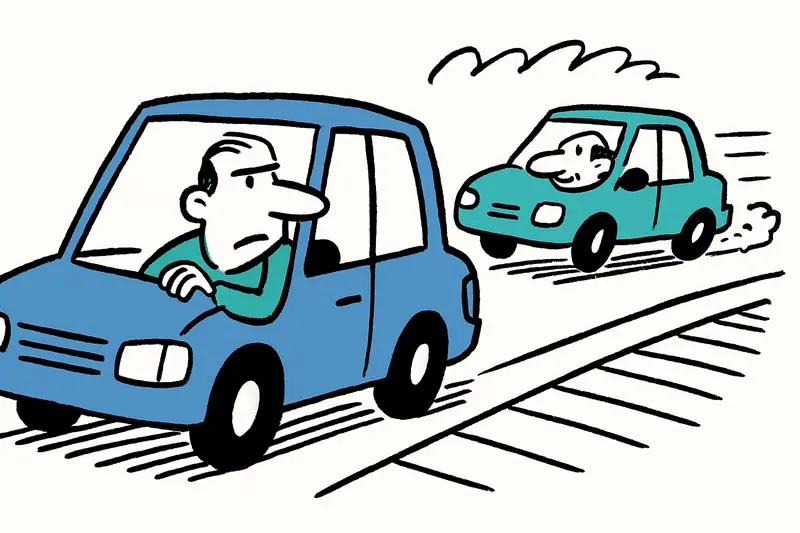
In the early morning, when the sun still lies low over the Sierra de Tramuntana and thousands of commuters are forced into a slow line on the MA-13 from Inca towards Palma, it is seen more and more often: cars that move from the right lane onto the hard shoulder to bypass slow queues. A passerby posted a video online; the footage shows several vehicles using the hard shoulder as a makeshift overtaking lane near exit 12 (Santa María/Sencelles) and merging back in further ahead. This is not a trivial offence but a recorded traffic violation.
The road situation: traffic jams, red taillights, blaring lorries, sometimes a cyclist waiting at the exit — a scene familiar to many people from Mallorca. In such moments the hard shoulder appears as a temptation: free, paved space right next to a sea of standstill. But this temptation brings real risks. The hard shoulder is primarily for breakdowns and emergencies; sudden re-entry can lead to collisions such as a head-on crash on the Ma-13 near Alcúdia, trigger braking chains and block access for emergency vehicles.
Critical analysis: Why does this happen so often? Partly it is frustration. Commuters under time pressure see a gap as a quick solution. Partly there seems to be a lack of perception of being monitored: where there is little traffic enforcement, willingness to bypass rules increases. And thirdly, the infrastructure at some bottlenecks is simply insufficient: if a motorway stretch is regularly overloaded, the behaviour we observe now almost inevitably creates routines of avoiding the queue.
What the public debate has so far insufficiently examined is the combination of supply and control: there are hardly any transparent figures on how often such maneuvers on the MA-13 actually lead to accidents, as seen in the severe rear-end collision between Inca and Palma. Data on the frequency of police checks or targeted measures at particularly affected exits is also missing. Often overlooked is the commuters' perspective: what alternatives does someone who depends on this route daily and suffers from travel costs and time pressure actually have?
Another blind spot is coordination between traffic authorities and municipalities; incidents like the crash at the MA-13 access in Son Cladera show how local conditions prompt residents to demand speed reductions. Local traffic light phases, access to industrial areas or school start times can shift traffic flows. Without this coordination, bottlenecks arise where drivers' patience breaks.
Concrete approaches: enforcement, information and infrastructure must work together. In the short term, a visible police presence during the affected morning hours would act as a deterrent. Mobile speed cameras, random video reviews and targeted checks by traffic police can increase the perceived risk for rule-breakers. It is important that violations are not only subject to fines but consistently punished with points on the driving licence — especially where overtaking on the hard shoulder is accompanied by reckless driving.
In the medium term, better information offerings help: electronic signs before bottlenecks that inform about traffic jams and restricted lanes, and targeted campaigns showing the concrete consequences of such overtaking maneuvers (accident examples, impeded rescue operations) reach commuters more directly than general appeals.
In the long term, infrastructural measures are necessary. Some bottlenecks can be eased by small structural changes: hard shoulders with emergency bays instead of a permanently passable verge, better coordinated access and acceleration lanes at exits, or examining whether temporary separation elements make sense in particularly critical places. At the same time, public transport supply must be improved: align train and bus connections so that commuters actually have an attractive alternative.
What we see in everyday life: a bus driver on Plaça Major in Inca who sees off his passengers with a tired smile; café owners who see the same faces pass by every morning; and temporary traffic lights at construction sites that suddenly turn red when a lorry merges. These small impressions explain why some drivers are willing to break the rules: there is often a lack of long-term perspective and an immediate visibility of consequences.
What is missing in the current discourse is a binding plan that combines enforcement and alternatives. Appeals to reason are necessary but not sufficient. A visible strategy is needed: targeted checks at peak times, transparent accident statistics for the affected sections, information offers for commuters and medium-term investments in traffic infrastructure and public transport.
Punchy conclusion: Those who use the hard shoulder as a shortcut risk not only heavy fines — in extreme cases up to €500 and 6 points on the driving licence — but endanger lives. If we want traffic on Mallorca to become safer, it is not enough to simply admonish individual rule-breakers. We need visible enforcement, clear data and practical alternatives for those who commute every day. As long as this threefold strategy is missing, the hard shoulder remains both a temptation and a risk.
Frequently asked questions
Is it legal to drive on the hard shoulder on the MA-13 in Mallorca to pass traffic?
Why do drivers on the MA-13 near Palma keep overtaking on the hard shoulder?
What are the risks of overtaking on the hard shoulder in Mallorca?
What penalty can you get for using the hard shoulder on Mallorca roads?
Are police likely to check hard shoulder overtaking on the MA-13?
What should drivers in Mallorca do if the MA-13 is jammed in the morning?
How can traffic on the MA-13 between Inca and Palma be improved?
Why is the hard shoulder on Mallorca motorways reserved for emergencies?
Similar News
Nipping Sea Creatures: Why Bathers in Cala Major and Elsewhere Should Be Cautious
In Cala Major, bathers have reported being nipped by small fish. What is behind it, how can problems be avoided — and wh...
Forced eviction in Santa Catalina: When a 65-year-old slept in her car and showered on the beach — a question of responsibility
The story of Pilar López from Santa Catalina represents a problem affecting many Mallorcans: How can an island with a bo...
New traffic rules from October 1: What Mallorca visitors and locals need to know
From October 1, 2026, Spain will implement far-reaching changes to traffic regulations. Important for Mallorca: greater ...
More water than last year: Mallorca's reservoirs breathe easier
September rain refilled the Tramuntana's reserves: overall fill around 35 percent, Cúber at 40.42 percent, Gorg Blau at ...
Three Luxury Hotels in Banyalbufar: Lots of Money, Many Questions
A Danish investor plans three exclusive accommodations in Banyalbufar — including the historic Son Valentí. The announce...
More to explore
Discover more interesting content

Can Cap de Bou

Townhouse Lleo 72
