
Major Bust Against Burglary Gang: What the Mallorca Raid Reveals
Major Bust Against Burglary Gang: What the Mallorca Raid Reveals
After the arrest of 15 suspects for numerous burglaries in rural communities, the question arises: Is police work sufficient, or are prevention and controls missing in rental cars and fencing networks?
Major Bust Against Burglary Gang: What the Mallorca Raid Reveals
15 arrests, five in pre-trial detention – but the case raises more questions than answers
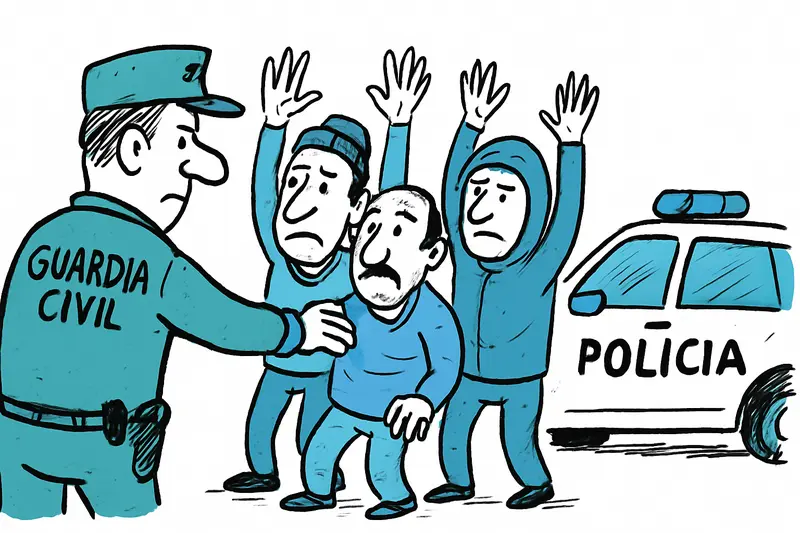
The Guardia Civil reported a large operation this week: 15 people were arrested in connection with a series of burglaries in occupied homes in the island's interior; five of them are currently in pre-trial detention. Investigators attribute the cases to at least 18 offences, affecting small towns such as Pina-Algaida, Santa Eugènia, Sencelles, Consell and Campos. Authorities named an apartment in Son Gotleu as a logistical center. According to investigators, the accused come from Morocco and countries south of the Sahara.
Key question: How could such crimes take place over a long period despite regular police presence on the island? Who supported the organization — and where do prevention and controls fail?
The investigation paints a picture of perpetrators working in a division of labor: scouting, observing, exploiting gaps in rental car controls and then moving stolen goods through intermediaries. Reports mention forged documents, cars rented via third parties and measures taken to monitor towns to evade detection. During a chase in Pina-Algaida an escape vehicle is said to have rammed a patrol car; another manhunt between Calvià and Palma ended in an arrest, similar to Arrest in Capdepera: After shots at a checkpoint — what does it reveal about security and rental-car crime?.
Critical analysis: on paper the Guardia Civil and local Policía Local cooperate, but in reality there are information gaps, highlighted by cases like Palma on edge: Seven arrests after daytime burglary spree – what now?. Rental car companies, investigators say, played a role: vehicles were deliberately rented via third parties or provided with manipulated contracts (as seen in After Cash Robbery in Playa de Palma: What the Risky Escape in a Stolen Rental BMW Reveals About Mallorca's Security Gaps). Such gaps cannot be closed by raids alone. When document checks, digital verifications and internal audits in the rental industry are weak, spaces emerge that criminal structures can exploit.
What is missing from the public debate: the discussion quickly focuses on the origins of the accused. That is understandable, but incomplete. Also needed on the agenda is the interplay of shortcomings in rental practices, regional security strategies and the role of fencing networks – for example anonymized sales channels in urban neighborhoods where stolen goods are resold according to investigators, as in After nine burglaries in Palma: Arrest brings relief — but questions remain. Without this perspective, prevention remains symbolic politics.
A slice of everyday life in the island interior: it is early morning, cicadas sing above the village square in Sencelles. In the café at the crossroads, next to the agricultural center, a baker discusses the raid with the taxi driver. "We always thought the police were close enough," says the baker. A farmer points to the narrow country road, where hardly anyone passes at night: "Here one car with a foreign plate is enough, and you don't notice it until the alarm goes off."
Concrete solutions: first, stricter controls and digital validation requirements for rental car contracts; regular unannounced audits in rental companies; mandatory registration and identity checks at pick-up. Second, better networking: a fast information channel between the Guardia Civil, Policía Local and the mayors of affected villages could quickly consolidate observations. Third, preventive measures on site: promote affordable security technology for country houses, support programs for visible lighting and CCTV in particularly affected places. Fourth, education and incentive systems for neighborhood watches; local residents know routines best and can give early warning. Fifth, targeted investigations against buyer structures: expose fencing networks in urban areas where the loot often ends up, according to investigators.
Legal and social framework remain important: controls and tougher sanctions must not turn into blanket stigmatization. Crime must be consistently prosecuted, while transparent procedures and clear rule-of-law treatment are necessary. Son Gotleu, for example, is a neighborhood with many social challenges — locating perpetrators there is one thing, combating the root causes another.
Conclusion: the Guardia Civil operation dismantled an organized structure and provided important investigative leads. But raids are always only part of the answer. If Mallorca wants to sustainably bring peace to rural neighborhoods, it needs technical, administrative and social measures in parallel: better verification processes for rental cars, stronger local networking, targeted work against fencing flows and support for vulnerable residents. Only then will not only perpetrators be caught, but the conditions for negligence will be reduced.
What remains: Investigations are ongoing. Further arrests are possible. For the people in the affected villages: stay vigilant, take alarms seriously and report observations immediately — and politicians must ensure structural gaps are closed.
Frequently asked questions
What happened in Mallorca with the burglary operation and which areas were affected?
How do rental car practices enable criminal networks in Mallorca, and what reforms are suggested?
What steps are proposed to improve coordination among authorities in Mallorca to prevent burglaries?
What can residents in Mallorca do to reduce the risk of being burgled?
Are more arrests expected after the Mallorca raid?
Why is fencing networks and buyer structures a focus in Mallorca's crime prevention?
What long-term measures could Mallorca implement to reduce burglaries in rural areas?
What is the current status of the case and what should residents expect going forward?
Similar News

Cap Vermell Grand: Second Michelin Key – a Gift for the East
The Cap Vermell Grand in Capdepera has been awarded its second Michelin key. For the region this elevates the luxury off...

Eurowings lets four aircraft carry names – a friendly idea that also reaches Mallorca
Eurowings is launching a campaign: four Airbus A320s are to carry the first names of people who help others in everyday ...

From the Reality Studio to the Pitch: Aleks Petrovic Makes Mallorca His Base
The former participant in numerous TV shows moves from Dubai to the island and launches a project with FC Germania Mallo...

When the Phone Falls Silent: Concern for Sarah Joelle in Mallorca — and What It Reveals
After days without a response, the TV personality's unreachability in Mallorca sparked concern. Shortly afterwards an al...

Ultraluxury on the Ground: Four Seasons Jet in Palma — a Reality Check for Formentor and the Island
A high-priced flight crosses Mallorca and its guests stay for days at the Formentor resort. What does the island get bes...
More to explore
Discover more interesting content

Can Cap de Bou

Townhouse Lleo 72
