
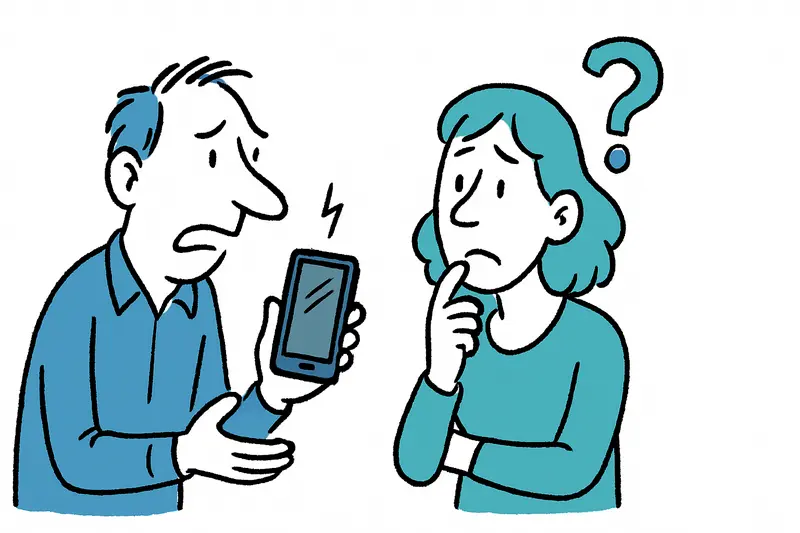
When the Phone Falls Silent: Concern for Sarah Joelle in Mallorca — and What It Reveals
When the Phone Falls Silent: Concern for Sarah Joelle in Mallorca — and What It Reveals
After days without a response, the TV personality's unreachability in Mallorca sparked concern. Shortly afterwards an all-clear was issued. A reality check on privacy, panic, and practical questions.
When the Phone Falls Silent: Concern for Sarah Joelle in Mallorca — and What It Reveals
Key question: How should you react when a prominent person suddenly cannot be reached?
On a late afternoon in Palma, when the sun still warms the Passeig and cups clink at the plaza cafés, a silenced phone is often enough to set off discussions. So began the recent commotion around the 37-year-old reality TV personality who lives and works in the island's social circles: a close confidant reported that he had not been able to reach her for around two weeks. The report spread within hours — until concern turned into a brief all-clear: the woman was said to be well, but her phone had apparently been stolen.
The situation presents a dual problem. On one hand is the natural fear of people who have responsibility for children, family or professional obligations. On the other hand, adult individuals have a right to self-determination and privacy. In the concrete case, the tip was decisive: the confidant, who is also the godfather of the youngest child, emphasized that the lack of contact would be unusual. He contacted the authorities and finally went public because his personal alarm level was high.
Critical analysis: What went well, what didn't? Positively, the confidant's clear response was good: he documented his concern, checked with the police and sought support among those close to her. Those are the right first steps when there is a close relationship. Problematic, however, was the rapid escalation into the public sphere without additional, verifiable information — a dynamic similar to a Palma case in which an Instagram update confused the family. Online reports and wild speculation can quickly distort the picture and unduly burden relatives — and the person involved herself, if she is later found safe and feels attacked.
In public debate there is often a lack of a sober middle ground: how do you combine care with respect for the autonomy of adults? Authorities rightly point out that an adult decides for herself with whom she has contact. That is legally correct, yet for relatives the practice remains difficult, especially when small children are involved. Moreover, there is no clear, widely known checklist for worried confidants — what to do before making a public plea for help?
An everyday scene in Mallorca: in a bakery at the Mercat de l'Olivar, neighbors stand at the counter, hear the news on the radio and discuss it. The older women refer to times when people used to check in person, the younger ones say a tracking pin on phones solves many things. Both viewpoints encounter practical limits: technology can fail, and asking about someone at a stranger's home brings its own problems — even phone tracking that in one case led to an arrest in Palma has limits.
Concrete approaches that could help:
1) Step-by-step approach before going public: First check personally known contacts (family doctor, neighbors, mutual acquaintances), then file an official report with the police, and only afterwards public inquiries — and if going public, state clear facts rather than emotions. This protects those involved and reduces false rumors.
2) Secure the children: If children are involved, caregiving issues should be clarified at short notice (emergency family contacts, guardian arrangements, inform daycare/school). That reduces immediate risks and pressure.
3) Technical precautions: Regular backups and activated device location services help find lost phones; SIM blocking and quick theft reports to the network operator prevent misuse.
4) Sensitive public communication: Anyone going public should phrase things deliberately: what is confirmed, what is speculation? That protects those affected and reduces false rumours.
5) Know the authorities and reporting channels: On Mallorca as elsewhere: in serious danger call information on the 112 emergency number immediately; for inquiries that do not demonstrate acute danger, the local station is the right first point of contact.
What sticks from this case? The swift all-clear — a trusted contact reported that the person was fine and had lost her phone — shows that not every worry amounts to an emergency. At the same time, the case shows how quickly private uncertainty can become public uproar once social media enters the picture.
Concise conclusion: When the phone falls silent, the best response is often a calm, structured sequence of steps: check, contact, inform the authorities, then only broaden the inquiry. In Mallorca, between plane trees and the smell of the sea, we should remain sensitive: concern is human and justified, but hysteria helps no one — except perhaps the rumor mills. Better is to connect neighborhood networks and official channels so that care does not become careless panic.
Frequently asked questions
When is Mallorca’s best time of year for sunny beach days?
What should I pack for a Mallorca beach holiday?
Is the sea around Mallorca safe for swimming, and what should I watch for?
How is privacy balanced with concern when someone stops replying in Palma, Mallorca?
What steps should I take before going public if someone in Mallorca seems unreachable?
How can families protect children when a parent in Mallorca is uncontactable?
What should I do if my phone goes missing in Mallorca?
What authorities should be contacted in Mallorca for urgent danger versus non-urgent inquiries?
Similar News
Ultraluxury on the Ground: Four Seasons Jet in Palma — a Reality Check for Formentor and the Island
A high-priced flight crosses Mallorca and its guests stay for days at the Formentor resort. What does the island get bes...
Death of a Witness and the Justice Backlog: Why the Kegel Brothers Trial Matters in Mallorca
A witness in the Playa de Palma fire case has died, and the trial against eight German holidaymakers has been delayed un...
Champagne Reception, Red Carpet and Mini Originals: The Pre-Nit del Art at Gallery Mensing
Almost 400 guests, champagne, pop-art feats by Tom Boston and a raffle for the Parkinson's foundation: Gallery Mensing t...
Break-in in Cala Rajada: How Three Tourists Were Robbed in Their Sleep
In the early morning hours a holiday home near Son Moll in Cala Rajada was visited by a burglar. Three German holidaymak...
Between Palma and Hamm: Harry Mensing, his galleries and the energy of the Nit de l'Art
Gallerist Harry Mensing connects Mallorca and Germany with a clear idea: art must touch personally. For the 30th Nit de ...
More to explore
Discover more interesting content

Can Cap de Bou

Townhouse Lleo 72
