
Bomb threats in Europe: Why airlines and airports are in a frenzy — a reality check for Mallorca
Bomb threats in Europe: Why airlines and airports are in a frenzy — a reality check for Mallorca
A wave of bomb threats grounded flights at the end of the week and led to evacuations and military jet escorts. What does this mean for travelers, airports — and for Mallorca?
Bomb threats in Europe: Why airlines and airports are in a frenzy
Key question
How safe are flights right now when series of email threats can cripple entire routes, and why do low-cost carriers seem to be affected more often?
Critical situation description
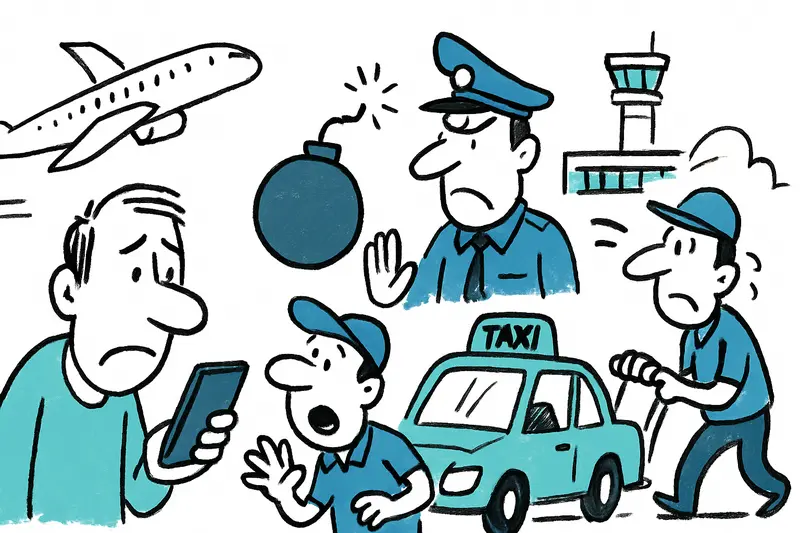
Last week, authorities in several countries reported email bomb threats that resulted in evacuations, diversions and even military jet escorts, including an aborted takeoff in Basel. Routes from major cities such as Madrid, London and Copenhagen were affected; in several cases, flights operated by the low-cost carrier Ryanair were targeted by such warnings. On one diversion, an aircraft landed at a French military airfield and 151 passengers and six crew members were brought ashore; in other locations, explosive ordnance teams searched aircraft — without finding explosives.
Critical analysis
This series highlights two problems: first, the high vulnerability of civil aviation to anonymous threats sent by email. Second, the organizational strain on airports and security forces that repeatedly have to go to full alert. Email as a delivery medium is easy to abuse; intelligence or police checks take time. At the same time, airports and airlines are forced to act with maximum caution — which is correct, but it consumes massive resources and damages trust, as with recent reports about an alleged fake captain on wet-lease flights.
What is missing in the public debate
There is extensive reporting on individual incidents, but far less on systemic causes: How are threats technically verified? Why is there no uniform EU-wide guideline for prioritizing such reports? What role do airlines' IT security processes play in filtering forged messages, such as the cyberattack that disrupted flights to Mallorca? The economic and psychological consequences for airports in peripheral regions like Mallorca are rarely discussed: hours-long closures hit small suppliers, taxi drivers and seasonal staff harder than the major operators.
A day-to-day scenario in Mallorca
On a morning at Passeig Mallorca there is the smell of strong coffee from a bar, at Son Sant Joan stressed staff already hurry along the baggage belt, and announcements crackle over the loudspeakers. A taxi driver from Platja de Palma says he has spent more hours at the airport in recent days because return flights are delayed. Arriving holidaymakers stare at their smartphones in confusion while rolling suitcases scrape over the tiles — the chain reaction to a threat becomes visible here: fewer flights, fewer guests in restaurants, shuttle buses standing idle for longer.
Concrete solution approaches
1) Standardized verification protocols for threat emails: technical authentication, metadata analysis and rapid cross-checking mechanisms between authorities. 2) EU-wide coordinated priority criteria: not every anonymous threat should trigger the same full alert; a tiered model could allocate resources more precisely. 3) Joint rapid-response teams at busy airports: specialist units that can make quick on-site decisions instead of long waits for regional units. 4) Better passenger communication: transparent but calm information reduces panic and relieves health services. 5) Law enforcement and international cooperation: unmask anonymous perpetrators via digital traces combined with preventive legislation against hoax threats.
Why these proposals are practical
They do not aim for less security but for smarter gradation and faster action. That means more capacity for real threats and fewer unnecessary operational interruptions for airports like Son Sant Joan, whose local economy is sensitive to flight cancellations.
Punchy conclusion
Readiness to respond remains the top priority, but permanent alarm is not a solution. Europe needs technical, legal and operational standards so that an anonymous email threat signal does not trigger the same flood of measures every time. For Mallorca this means fewer uncontrolled disruptions, more reliable information for travelers and better coordination between the airport, airlines and authorities. The island can rely on alertness — but it also deserves a smarter system.
Frequently asked questions
How safe are flights in Europe when email bomb threats happen?
Why do some threats lead to a full security alert while others do not?
How could threats impact Mallorca's airports and local economy?
What practical steps are proposed to improve threat response across Europe?
What happened in actual incidents involving European routes?
Are there any practical tips for travelers at Mallorca's airport during a threat situation?
Why is clear passenger communication important during threats?
What broader changes are suggested to prevent hoax threats from causing repeated disruptions?
Similar News
Why Housing Construction in Mallorca Is Stalling: A Reality Check
Construction plans gather dust, investors hesitate: A look at approval backlogs, cost drivers and concrete steps that co...
FC Germania: Coach Poker in Mallorca — Coup or Blind Gamble?
Negotiations with a former national-team player, an interim coach after a 9:0 win and several new signings — yet FC Germ...
Watch Robbery at Playa de Palma: The Ruse That Targets Tourists
Two alleged robberies at Playa de Palma: A man is said to have taken luxury watches worth a total of €34,000 from touris...
Bitter legal battle over Air Berlin assets: Mallorcan employees continue fighting
Almost nine years after the collapse of the German airline, 43 former employees in Mallorca are still claiming €924,760....
From Van to Gyros: The Repede Family Builds a New Life in Mallorca
A Romanian-Greek cook, an Italian partner, three children — and two beach venues: how the Repede family is shaping their...
More to explore
Discover more interesting content

Can Cap de Bou

Townhouse Lleo 72
