
My Heart Pulled Me to Palma – How a German‑Austrian Couple Is Putting Down Roots Here
From a short trip to everyday life: Constanze and Sven swapped an autumn holiday for Passeig shop windows, the scent of ensaimadas and small German‑speaking meetups in Santa Catalina. A plea for arriving slowly.
From a short trip to everyday life by the sea
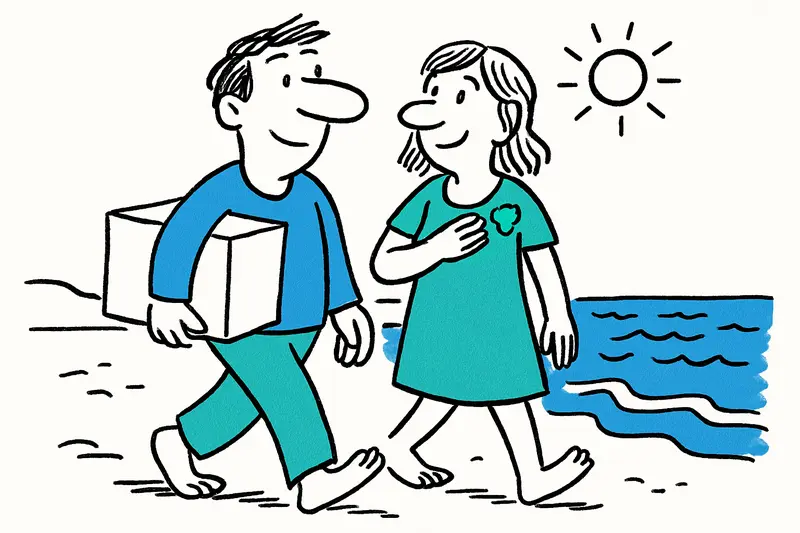
It began with one of those walks Mallorca is known for: wind driving salt across the promenade, seagulls crying, a church bell ringing somewhere. For Constanze from Vienna and Sven from Hamburg it wasn’t a postcard moment but an impulse to decide. A fall holiday stayed in their minds; a few months later the boxes arrived. Today they live in Palma, have the Passeig on their doorstep and a small espresso ritual in the morning – sometimes with a view of the Punta and the slowly awakening harbor promenade. Their steady connection to the island is echoed in A New Start with a Suitcase and Heart: Birgit Schrowange Stays Connected to Mallorca.
Why Palma?
"The sea has something calming," says Sven, pointing to the long waves at Playa de Palma. Constanze adds laughing: "My heart felt lighter here immediately." It isn’t the tourist scenes that captivate them, but the sensory impressions: salty air, the smell of freshly baked ensaimada, the clatter of the tram, hair in the wind. For both, Palma is not a stage but a city to be discovered piece by piece.
Work stays digital, encounters become local
Professionally they remain connected with Germany and Austria. Both work as coaches – Constanze in communication and leadership, Sven in couple work. Sessions often run over a screen, but the couple wants more than a digital mailing address. So they organize small German‑language meetups in Santa Catalina, give workshops in the culture café and invite people to discussion rounds at a finca. No large events, more neighborhood care: real, direct encounters instead of seminar spectacle. Stories of relocation and seasonal work on the island are explored in In Germany I was often alone: Why Sali swapped Düsseldorf for Mallorca.
A visible promise
Instead of rings they had island outlines tattooed on their forearms. Not a romantic cliché, says Constanze, but a daily compass: while brushing teeth, shaking hands in a café, looking out the window. A small sign that says: We are staying – but we don’t want to be those who arrive loudly and then disappear.
Routines between market, Tramuntana and sea
On weekends they explore the island at the pace of a regional train: market in Sineu, strolling through the old town, breathing the pine‑and‑stone air of the Tramuntana (Serra de Tramuntana UNESCO World Heritage listing). Evenings they walk barefoot along the shore until their feet crunch with salt. "We don’t want to put work and life in boxes," says Constanze. "There is still enough room for leisure."
With respect for the island
Being new mainly means listening. They get to know the neighbors, orient themselves to local rhythms – the market cry on Saturday, children’s laughter in the square, the quiet music from the bar late in the evening. Constanze, who experienced early blindness in her biography, brings a special sensitivity. Today she uses that experience to help people become more visible – empathetically, without pathos.
Why this is good for Mallorca
Newcomers like them don’t bring crowds but everyday life: they fill small cafés with conversations, book the finca for the weekend, rent apartments long‑term instead of clustering them for holiday guests. Their work model – digitally connected, locally rooted – creates demand for places for encounters: culture cafés, neighborhood initiatives, market stalls. Incidentally, they also strengthen small incomes and neighborhood cohesion; similar dynamics are described in Emigrants on the Island: Two Couples Start Anew – How Mallorca Benefits.
A modest outlook
Big plans? Maybe someday. For now it’s about the small rituals: a coffee at ten, a short coaching session with a client in Vienna, a sunset walk. Their message to others: start slowly, enter the island with respect, seek out and help shape local spaces. This is not a loud change but a gentle arrival. And Palma gains a couple that stays — with coffee, conversations and a tattoo as a quiet compass.
Frequently asked questions
What is everyday life like for people who move to Palma, Mallorca?
Why do some people choose Palma, Mallorca, over a short holiday stay?
Is Mallorca a good place for remote work and coaching or consulting?
What are good ways to settle into local life in Palma, Mallorca?
What are the best weekend trips from Palma, Mallorca?
When is the sea around Palma, Mallorca, pleasant enough for a walk or a swim?
What is Santa Catalina in Palma, Mallorca, like for meeting people?
Why do some newcomers to Mallorca rent long term instead of staying in holiday-style accommodation?
Similar News
The End of the Cheap Ride? Why Mallorca Is Hit Harder by the Fuel-Price Shock
Gasoline and diesel average close to two euros per liter. What this means for commuters, supply chains and renters in Ma...
Relaxed liquid rules in Munich: What Mallorca travelers will notice
At Munich Airport the 100-milliliter rule will be lifted at all checkpoint lanes — thanks to new CT scanners passengers ...
For 45 Years on Mallorca — and Then This: How a Market Visit in Santa Ponsa Became a Lesson
A woman who has lived on the island for decades lost money and important documents at the Mercat Setmanal in Santa Ponsa...
10 percent surcharge on the beach: How legal and transparent is the extra charge at Playa de Muro?
A German part-time resident noticed days after a restaurant visit in Playa de Muro that the bill included a flat ten per...
Body near the Llevant Market: What this death says about our city
A man was found dead on Sunday afternoon near the Llevant Market. Police say the death appears natural. The scene raises...
More to explore
Discover more interesting content

Can Cap de Bou

Townhouse Lleo 72
