
Military plans at Cap Pinar: Is Alcúdia about to lose part of its everyday life?
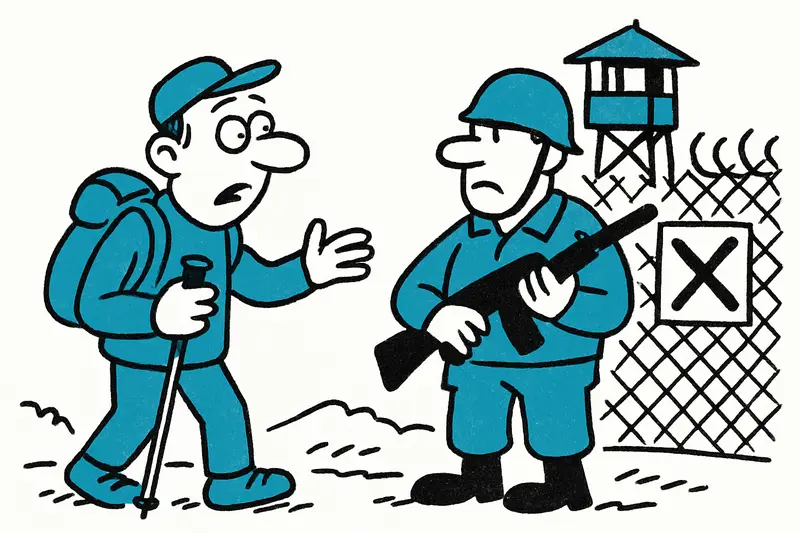
Madrid plans to expand the military area at Cap Pinar. For hikers, restaurateurs and the municipality of Alcúdia, more than a footpath is at stake. The key question: can security be reconciled with everyday life on the ground?
Cap Pinar — a slice of Mallorca with contested value
Early morning at the tunnel entrance: wind tugging at the pines, the smell of coffee from thermoses and the first steps up to the Niu de s'Àguila. Right here, where the path narrows and the view makes voices quieter, there may soon be less room for this everyday scene. Madrid apparently intends to significantly enlarge the existing training and shooting range at Cap Pinar — formally designating it as an area of "national defense interest", a development described in coverage of the dispute over military expansion at Cap Pinar. The area: roughly 145 hectares, from the tunnel entrance up to the viewpoint.
The central question
Can a militarily justified need for expansion be reconciled with the rights of residents, walkers, religious celebrations and local restaurateurs? Or is this the first step to cutting one of Alcúdia's most natural and popular spots off from public life for an extended period?
What exactly is at stake
Popular routes such as the one to the Penya de Migdia or the Niu de s'Àguila could be temporarily or permanently closed in the future. Also affected would be the small chapel above the bay, the campsite, the youth hostel and the restaurant at s'Illot — places where locals plan the season, families picnic, and where, in the afternoons, orders of Pa amb oli may dwindle. The municipality has announced an objection; concerns about festivals and the celebration of the Mare de Déu de La Victòria are real.
What is often missing in the public debate
Many talk about lost hiking trails. Less attention is paid to two questions: the ecological and the operational. First, a permanent military presence could change the local flora and fauna — not just through noise from exercises, but also through exclusion zones that develop differently than lightly used footpaths. Second: how do closures affect rescue and recovery operations? If rescuers at an accident are slowed down by permit procedures, that is not a theoretical but a practical problem.
Voices from Alcúdia — everyday life against military machinery
"When I walk up the steps to Victòria with my dog in the morning, I don't want soldiers in the way," says a woman at the car park, just before the church bell calls for midday rest. A tour operator fears stricter controls, fewer guests and thus lower income. In the tavern at the port people are already talking about how fewer walkers would dampen orders of Pa amb oli and Ensaimadas. These are simple, everyday consequences — but existential for many.
Analysis: decision-making paths and power relations
The planned reclassification as an area of "national defense interest" is a crucial turning point: it limits municipal participation. Whether Madrid can legally take this route depends on national laws and potentially regional agreements. Since 2012 there has been a civil-military agreement for coordinated guided visits — a precedent that shows solutions are possible when both sides negotiate. But the agreement could be renegotiated or unilaterally adjusted. This argues for early, transparent talks rather than later faits accomplis. The debate sits within broader conversations about the island's military role in the Mediterranean, discussed in coverage of Mallorca's role in the new Mediterranean military strategy.
Concrete opportunities and approaches
An abrupt "either-or" helps no one. Pragmatism could look like this:
1. Time windows instead of total closures: Exercises in clearly defined, short periods, with mandatory local and digital announcements for visitors.
2. Shared use: Expand the 2012 civil-military agreement — including clear rules for guided visits, emergency services and cultural events.
3. Transparency and environmental assessment: Independent environmental and noise studies to examine effects on flora, fauna and cultural sites before final decisions are made.
4. Regional mediation: A round table with the Ministry of Defense, island authorities, the Ayuntamiento of Alcúdia, conservation groups, tourism professionals and citizen representatives.
5. Compensation and support packages: Short-term aid for affected businesses and long-term measures to strengthen sustainable tourism offerings.
What should happen now
Alcúdia must insist on being heard early and substantively. At the same time there is an opportunity to modernize the use of the area: instead of general lockdowns, clear rules could be created that respect both military training needs and local daily life. A digitally controlled permit and information system, regular exercises with open communication and fixed protection times for cultural events would be pragmatic steps.
Outlook
The wind at Cap Pinar will continue to whistle. Whether more soldiers than walkers will cross the paths in the future depends on negotiations and political decisions. For many residents and businesses it's about more than a few meters of path: it's about an everyday life they take for granted — the smell of the sea before a climb, the quiet at the Niu de s'Àguila, the clatter of a guide counting their group. A compromise is possible, but it must be sought now. And for anyone planning to climb this weekend: take a close look at the notices at the tunnel entrance. Details can change quickly.
Frequently asked questions
Can you still hike at Cap Pinar in Mallorca?
What is the weather like for walking in Cap Pinar, Mallorca?
Is Cap Pinar in Mallorca still open to the public?
What could the military plans mean for Alcúdia residents?
Can you visit the Niu de s'Àguila in Mallorca if Cap Pinar is restricted?
Will the chapel above the bay in Cap Pinar stay open for celebrations?
Why are people in Mallorca worried about the Cap Pinar expansion?
What should walkers check before going to Cap Pinar, Mallorca?
Similar News
Release after bloody attack in Palma: Why the court's decision raises questions
An 18-year-old who allegedly inflicted a serious neck injury on a man at Plaza Gomila using a wristwatch wrapped around ...
Kidnappings in Inca: Three young men forced into car trunks and abused in the forest – a reality check
In Inca, three 18-year-old men were forced into car trunks by masked assailants at the Plaça des Bestiar, taken to a for...
Spreading Massification: The Brake That Still Has Much Work to Do
Marga Prohens announces limits on volume tourism. The measures sound harsh — but are they enough to save everyday life, ...

Through the Keyhole onto the Party Yacht: How Daniela Katzenberger Is Planning Her 40th on Mallorca
Daniela Katzenberger turns 40 and wants to celebrate it on the island — likely with a boat, cake and her mother. A relax...
By Boat Instead of the Road: Palma's Water Bus — a Reality Check
The 'Bus Nàutic' launches in two stages — but questions remain over interim operations, fares and environmental requirem...
More to explore
Discover more interesting content

Can Cap de Bou

Townhouse Lleo 72
