
University Access Roundabout: More Safety — But Is It Enough?
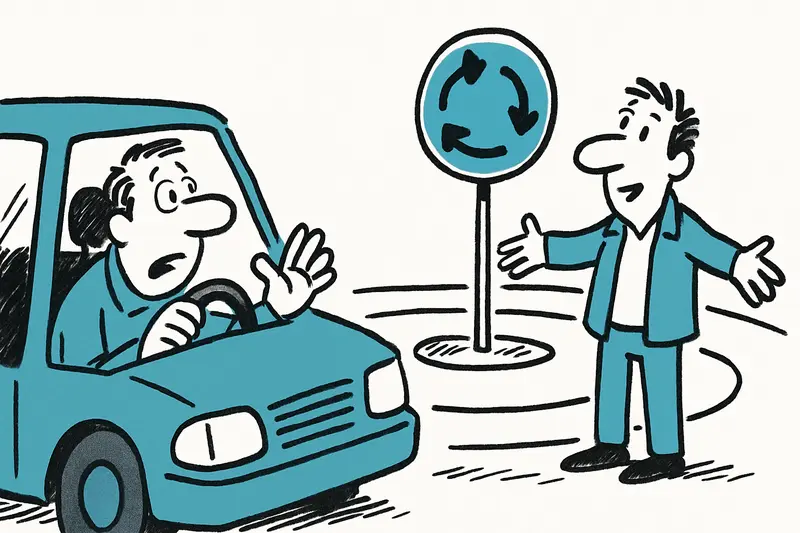
The Island Council and the University of the Balearic Islands are planning a roundabout at the main entrance of the campus on the road to Valldemossa. The aim: fewer risky left turns and a calmer traffic flow. But several questions remain open — from cycle lanes to construction schedules and long-term effects.
University Access Roundabout: More Safety — But Is It Enough?
Gone are the days when brakes squealed and horns sounded between pine trees and the campus cafeteria during the morning rush at the university access road to Valldemossa. The Island Council and the University of the Balearic Islands have agreed to build a compact roundabout at the main entrance. Cost: around €850,000, planned groundbreaking: early 2026 — if everything goes smoothly. This sits alongside other local traffic measures reported in Palma aims to ease congestion: roundabout expansion, FAN access and 13 small roadworks.
The central question
Is a roundabout at this location the best answer to a traffic problem shaped daily by an estimated 40,000 vehicles? The idea is plausible: less stop-and-go, fewer risky left turns, smoother traffic flow. But a roundabout is not a cure-all. The key question remains: how will the measure not only improve car safety but also provide secure routes for cyclists, pedestrians and buses — and how will collateral damage during construction be minimized?
What is planned — and what remains open
Officially, the project foresees a compact roundabout directly at the access point, with clear lanes, pedestrian crossings and improved signage. Technical checks and traffic simulations are currently underway; detailed planning, tenders and final approvals are still pending. Similar timelines and potential disruption are expected for nearby works, including the reconstruction of the roundabout at the TÜV station in Son Castelló, scheduled from 2026.
What the figure 40,000 does not say
40,000 vehicles a day sounds like a motorway on-ramp — yet this road is an island street with limited space, pedestrians and bicycle commuters. The traffic mix is heterogeneous: buses, delivery vans, students with bikes and schedule commuters. Many conflicts arise because left-turning vehicles block lanes or because cyclists slip through at similar speeds to cars. A roundabout calms motorized traffic, but it can create new risks if cycle paths are not separated and crossings are not raised.
Underestimated points — and suggestions
A few aspects have been underrepresented in the public debate so far:
1. Cycling safety: Instead of only lanes for cars, the roundabout should be planned with protected bike lanes or dedicated cycle routes. A painted advisory lane is not enough — island winds, gravel and e-scooters demand clear separation.
2. Pedestrian crossings: Raised zebra crossings with good lighting and tactile elements for visually impaired people help more than a simple marking. Debates about the design and utility of new pedestrian and cycle bridges over the Via de Cintura show how critical design choices are for real accessibility.
3. Public transport priority: Buses need clear entry and exit points, possibly with priority signal phases. Otherwise the roundabout risks unnecessarily delaying delivery traffic and buses.
4. Construction-time management: Officials promise temporary traffic lights and use of holiday periods. Practical suggestions: night work at critical points, temporary diversions with clear signage and a hotline for commuters — so that every morning coffee trip does not become a lottery.
5. Landscaping and maintenance: A roundabout is also an urban space. Native, drought-resistant plants from the Tramuntana, simple maintenance plans and low planting heights improve visibility and reduce long-term costs.
Concrete opportunities
Properly implemented, the roundabout offers real improvements: fewer rear-end collisions, smoother traffic at peak times, better access for delivery vehicles and emergency services. For the neighborhood it is also a visible sign that infrastructure is being invested in — in a part of the island where space is scarce and car use is high. A successful project could also serve as a model: how can campus traffic be organized more sustainably overall? Similar relief proposals for Palma, such as Millions for Mallorca's Roads: Many Construction Sites, Few Guarantees, illustrate the wider debate about road investment, while local measures like roundabout expansion and FAN access projects aim to ease congestion.
What I heard on site
Between the smell of fresh espresso from a nearby cafeteria and the occasional screech of braking buses we spoke with staff and students. Marta from the library laughed: 'Finally no more five-minute jams just to get onto the campus.' A student who cycles daily pointed to the crossings: 'If they remain just marked, that's not enough. We need safe crossings.' Such voices show: a roundabout can do a lot, but not everything.
Looking ahead — and an appeal
The coming months are decisive: tenders, detailed planning and involving local users. My appeal to the Island Council and the University: take the voices of cyclists and pedestrians seriously, implement separated cycle routes, plan construction phases so that teaching is barely disrupted, and set up an evaluation plan for accident figures after completion. Then a well-intentioned roundabout can become a genuinely good project for the campus and the neighborhood.
I will keep following this. As soon as the diggers roll and the first roundabout stone is set, you will hear from me here — with the sound of construction noise, pine needles and hopefully less honking.
Frequently asked questions
Will the new roundabout at the University of the Balearic Islands actually make traffic safer?
When is construction of the University access roundabout in Mallorca expected to start?
How much will the new roundabout at the University of Mallorca cost?
What changes are planned for cyclists and pedestrians at the Mallorca university entrance?
How busy is the road to the University of the Balearic Islands in Mallorca?
Will the roundabout at the Mallorca university entrance affect buses and public transport?
Will there be disruption during construction of the University roundabout in Mallorca?
Why do local planners in Mallorca want a roundabout instead of the current junction near the university?
Similar News

Release after bloody attack in Palma: Why the court's decision raises questions
An 18-year-old who allegedly inflicted a serious neck injury on a man at Plaza Gomila using a wristwatch wrapped around ...
Kidnappings in Inca: Three young men forced into car trunks and abused in the forest – a reality check
In Inca, three 18-year-old men were forced into car trunks by masked assailants at the Plaça des Bestiar, taken to a for...
Spreading Massification: The Brake That Still Has Much Work to Do
Marga Prohens announces limits on volume tourism. The measures sound harsh — but are they enough to save everyday life, ...

Through the Keyhole onto the Party Yacht: How Daniela Katzenberger Is Planning Her 40th on Mallorca
Daniela Katzenberger turns 40 and wants to celebrate it on the island — likely with a boat, cake and her mother. A relax...
By Boat Instead of the Road: Palma's Water Bus — a Reality Check
The 'Bus Nàutic' launches in two stages — but questions remain over interim operations, fares and environmental requirem...
More to explore
Discover more interesting content

Can Cap de Bou

Townhouse Lleo 72
