
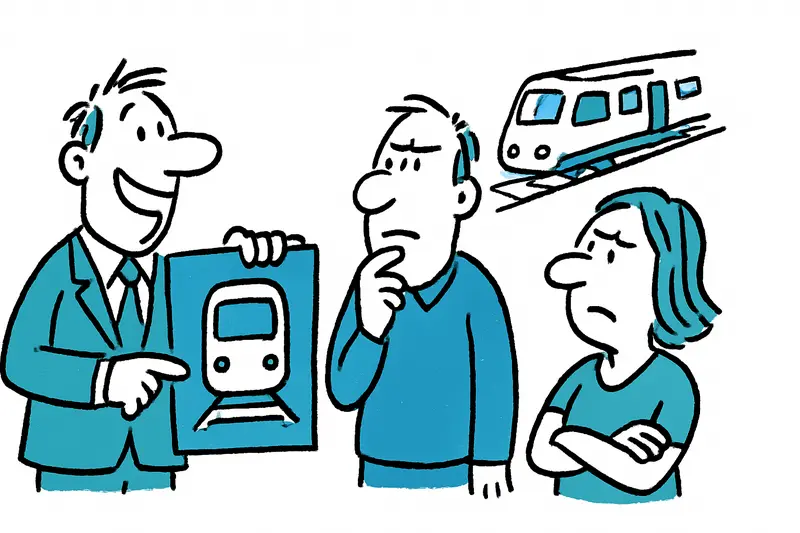
New safety system for Mallorca's trains: Building trust or just a tech show?
New safety system for Mallorca's trains: Building trust or just a tech show?
The Balearic government is introducing a new safety system for rail traffic. But negotiations with employees continue — and important questions remain unanswered.
New safety system for Mallorca's trains: Building trust or just a tech show?
Between the presentation in Palma and threats of strikes: What is missing from the plan?
Can a control system set up on the platform build trust if staff continue to talk about work stoppages? This question hangs over Palma station like the public address announcement that echoes through the hall on an ordinary morning between espresso and luggage.
On the day of the presentation, politicians stood on the platform, including President Marga Prohens. The project was described as a step toward more modern infrastructure. At the same time, serious talks are taking place behind the scenes between SFM (Serveis Ferroviaris de Mallorca) and the employees: negotiations concern safety standards, working conditions and responsibilities, as discussed in More Staff for Mallorca's Trains: Is That Really Enough?. The employees are therefore threatening strikes.
My assessment is critical: technology alone does not solve staffing questions. A new system can catch signaling errors, coordinate automatic brakes, or centralize track information. But if train staff, maintenance teams and safety officers are not involved in planning and deployment, a gap arises between paper and everyday practice. And gaps are dangerous on tracks.
Where are the sticking points specifically? First: transparency. The timing, responsible parties and testing procedures for the new system have so far only been sketchily communicated to the public. Second: financing and maintenance. Who will bear the follow-up costs for software updates, spare parts and staff training? Third: co-determination. Employees want to have a traceable say — not be confronted afterward with new rules. Fourth: emergency plans. How do control centers and staff react when components fail? Credible scenarios are missing here.
These questions are underdiscussed in the public debate. Instead, images of presentation banners and symbolic launches dominate. What has hardly been debated so far: the long-term role of SFM as operator, the concrete inclusion of independent safety assessments, and a clear timetable for phased implementation; parallel debates around projects such as New Rail Link to Calvià: Opportunity or Traffic Illusion? show the stakes. Passengers — commuters from Marratxí, tourists with suitcases on the Passeig Marítim, students from Interià — often remain mere extras, although they are directly affected.
A realistic everyday picture: It is 7:30 a.m. at Palma-Estació Intermodal. The coffee machine hisses, a train comes in, conductors check tickets, a parcel courier squeezes through. On the screen a message blinks: "Delay due to technical problems." It is precisely in such moments that it becomes clear whether a system works — not at its presentation on a podium.
Concrete solutions: 1) A staged rollout plan with pilot lines, clear milestones and publicly accessible test protocols; 2) mandatory, independent safety reviews by external expert groups with publication of results; 3) binding co-determination rules: works council and technical staff involved at every step; 4) transparent financing: operating costs and reserves for spare parts shown in the budget; 5) mandatory training for all shifts and emergency drills in real-life scenarios; 6) a mediation office for conflicts between SFM, staff and government to defuse strike threats through swift mediation.
These points are not revolutionary, but pragmatic. In Mallorca we often have a pragmatic culture: roll up our sleeves, test, adapt. That is exactly what must happen here — without symbolic inaugurations, but with honest work on the platform.
What remains to be done? The government should disclose the technical details, bring SFM and employees to a binding table, and inform passengers transparently about test phases. Without these steps, the project risks becoming a pure tech show that makes headlines but does little in everyday life.
Conclusion: Rail safety is more than gadgets and ceremonies. It lives from rehearsed procedures, from staff who have confidence in the technology, and from clear rules for maintenance and financing. The presentation in Palma can be the starting signal — if it is the beginning of a transparent process and not the end of the debate.
Frequently asked questions
What is the new safety system for Mallorca's trains meant to do?
Will the new train technology in Mallorca actually make travel safer?
Why are Mallorca train employees threatening strikes over the new safety system?
Is Palma station getting a full train safety upgrade?
What should passengers in Mallorca expect while the new train system is being tested?
Who will pay for maintaining the new train safety system in Mallorca?
What role do independent safety checks have in Mallorca’s train project?
What are the main concerns about Mallorca’s new train safety system?
Similar News
Rental Car Theft in El Arenal: What This Incident Reveals About Our Gaps
A teenager steals a running rental car in El Arenal, flees on foot, climbs over walls and is caught by the Guardia Civil...
Red Rope in Palma's Library: What Helps Against Selfie Tourism — and What's Missing
Palma's city library cordoned off an area with a red rope to keep selfie tourism away from reading and working activitie...
Fort San Carlos: Museum, Harbor Dispute — and a Conflict That Demands Answers
The military museum at Fort San Carlos sits right on Palma's harbor, with unexpectedly quiet rooms filled with cannons a...
Old Town Under Pressure: When a Doorway Becomes a Sleeping and Shower Place
For months a woman has been living with a parasol, a clothes rack and personal belongings next to the social welfare off...
When Shopping Weighs Heavier: Mallorca Demands a Tax Pause on Food and Fuel
Rising prices are putting pressure on households and agriculture. The Balearic Islands are calling for temporary tax rel...
More to explore
Discover more interesting content

Can Cap de Bou

Townhouse Lleo 72
