
Nighttime Fire at the German Christmas Market in Palma: Was It Arson?
Nighttime Fire at the German Christmas Market in Palma: Was It Arson?
In the early hours a fire broke out at the entrance to the German Christmas market on Paseo Sagrera/Parc de Sa Feixina. Decorations were destroyed; investigators do not rule out arson. A reality check: How did it come to this, and what is missing from the public debate?
Nighttime Fire at the German Christmas Market in Palma: Was It Arson?
Alarm around 2:45 a.m., destroyed decorations, investigations underway
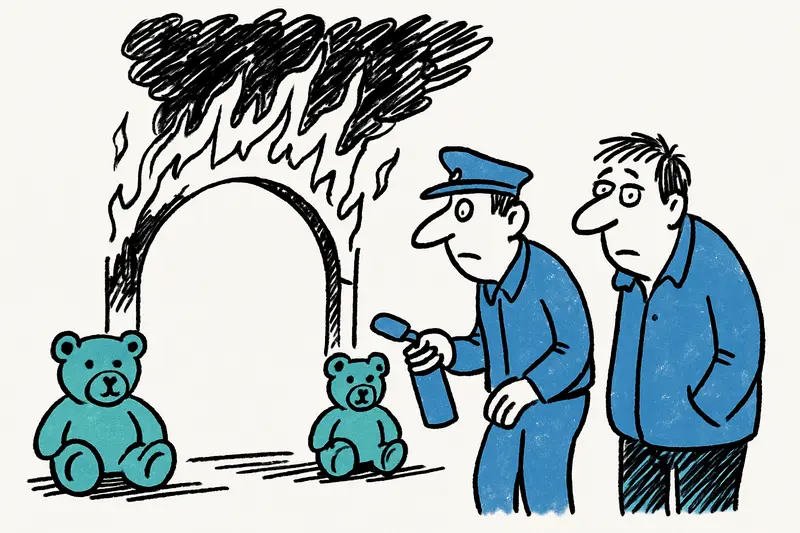
In the night leading into Sunday, emergency services reported a fire at the entrance of the German Christmas market between Paseo Sagrera and Parc de Sa Feixina in Palma. Around 2:45 a.m. residents and night-shift workers noticed smoke and flames at the entrance gate; the fire brigade arrived quickly and the police assisted with extinguishers from patrol cars. The glittering gate structure with two large plush teddy bears burned down, while the historic facade behind the market remained intact. Three security staff on site said they had not seen anyone ignite the blaze; investigators do not rule out intentional arson.
Key question: Can tensions between organizers, residents and the city’s permitting practices escalate so far that property damage or arson becomes the result? This question must not be used merely as a rhetorical alarm – it needs to be specified.
Critical analysis: Several facts are certain, others are missing. It is clear that the installation at the entrance was completely destroyed and that fire brigade and police reacted quickly. Unclear are the market’s exact safety measures, whether cameras monitored the area, and how the permit requirements addressed fire safety and choice of materials. It also remains open what conflicts actually existed before the opening: there were Residents protest Christmas market in Sa Feixina Park, and at minimum the mood beforehand was tense.
The public debate is dominated by two camps: some complain about commercialization and the occupation of the park, others criticize the city administration for lacking a clear stance that should mediate between cultural offerings and neighborhood interests. What is often missing is a concrete engagement with safety issues: which building permits were issued? Were fire-retardant materials required? Was a risk assessment performed for the installed decorations? Without these details the discussion remains at the level of feelings; these tensions are further explored in Christmas Market Dispute in Palma: Between Mulled Wine and Displacement.
Everyday scene from Palma: As the sirens still wailed, a jogger on Paseo Sagrera stood with his hood up and did not light a cigarette but simply shook his head. From an apartment on the first floor there was the smell of espresso; a neighbor had half-opened the roller shutters and watched as firefighters wiped away the last embers. This is how the early hours look here – a mix of routine and the brief shock that a burning Christmas decoration in the morning causes.
What is missing from the public discourse: precise demands and pragmatic proposals. Blanket condemnations or plaintive defenses of the market do not help. Instead, residents, organizers and the city need transparent information about permitting procedures, safety requirements and funding channels. Only in this way can it be understood whether an event in public space is a burden or a benefit for the neighborhood; the event’s organization and vendor allocation disputes are discussed in Christmas Market Peace in Danger: 'Christmas in Palma' Divides Vendors.
Concrete solutions: First: The city of Palma should routinely require an independent fire safety assessment for large temporary events, including inspection of the materials used at the most prominent entrances. Second: cameras or other surveillance measures should not be seen as a cure-all but are useful at critical points – of course in compliance with data protection rules. Third: a simple, written dialogue mechanism between organizer and residents could collect complaints before and during the event and enable quick remedies (noise measurements, regulated delivery times, emergency contacts). Fourth: event conditions should require a minimum security presence and regular checks by the Guardia or city inspectors, especially at night. Fifth: for decorations the city should mandate fire-retardant classes; wooden structures are possible but not combined with highly flammable decor.
There are also simple, immediately implementable steps: alarm buttons for security, better-trained stewards, extinguishing agents within reach of main entrances and clearly marked escape routes. In addition, the permit should document who is financially liable for damage – that creates accountability.
Another aspect: The perception of events in historic and densely built neighborhoods is sensitive. A market that wants to appear “Nordic” must measure itself against Mediterranean realities: narrow streets, old buildings, the nighttime sleep of residents. Organizers should accept this and actively engage with the neighborhood – too often this only happens once complaints get loud.
Pointed conclusion: A burning teddy arch is more than a broken decoration – it is a warning sign. Whether arson or negligence is to blame will be clarified by the police. Regardless of the outcome, Palma must learn the lesson: events need clear, enforceable rules and an open line to the people who live next door. Only then can one prevent protest from turning into damage.
Next steps: The city and the organizers should be transparent about the progress of the investigation and simultaneously order short-term safety improvements. For residents it would be a small sign of reassurance if a dialogue format were offered this week – without rhetorical gestures, with clear responsibilities.
Frequently asked questions
What happened at the German Christmas market in Palma during the night?
Was the fire at Palma’s Christmas market suspected to be arson?
How safe are temporary Christmas markets in Palma?
Why has the German Christmas market in Palma caused local tension?
What safety measures should Palma require for large seasonal events?
What should residents in Palma do if they are worried about a market or event nearby?
What was damaged in the fire at the German Christmas market in Palma?
How quickly did emergency services respond to the Palma market fire?
Similar News
Who Bears the Burden? Mallorca Between Tenant Protection and Landlord Fears
Madrid's new housing decrees strengthen tenant rights — but on Mallorca concern is growing: will the law drive small lan...
On the Edge: What Mallorca's Airport Loses If a Major Low-Cost Carrier Falters
The company that operates numerous connections from Palma to France and domestically is negotiating with creditors to re...
Ballermann star Frenzy wins 'Villa of Temptation' and donates prize money to Mallorca animal rescue
Ballermann singer Frenzy won the German reality show and donated the remaining prize money — around €14,080 — to an anim...
70 Trees Removed on Avenida Jaume I: What's Happening in Santa Ponça?
On October 1 the final redevelopment phase on Avenida Jaume I in Santa Ponça begins: 70 trees and old streetlights are t...

When a Boundary Is Crossed: The Case of Isi Glück and the Responsibility of Venue Operators
The singer from Mallorca reports an assault backstage in Halle. A clear guiding question, analysis of missing protective...
More to explore
Discover more interesting content

Can Cap de Bou

Townhouse Lleo 72
