
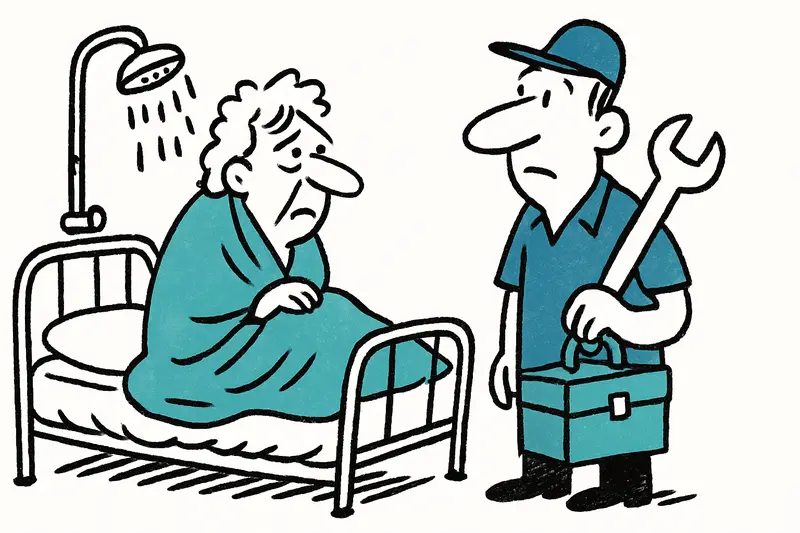
No hot shower, broken mattresses: What is going wrong at Joan March
No hot shower, broken mattresses: What is going wrong at Joan March
Patients at the Joan March hospital in Bunyola report at least four days without hot water, broken flushes, non-working special mattresses and no bottled water at meals. Nursing shortages appear to play a role. A reality check and concrete suggestions.
No hot shower, broken mattresses: What is going wrong at Joan March
Lead question
How can it be that in a public hospital on Mallorca patients have to go without hot water for several days — and what consequences does this have for care, hygiene and trust?
Critical analysis
Patients at the Joan March hospital in Bunyola report that hot water was not available in the facilities for at least four days. In addition, residents mention broken toilet flushes in some areas, lack of drinking water at dinner and non-functioning special mattresses. Taken together, these deficiencies point not only to a technical fault but to a system in which maintenance, material supply and staffing are not synchronized, as seen in the long-term neglect of the Espigol Beach complex in Son Bauló reported in Enough is enough: Can Picafort's neglected squatted Espigol Beach complex and the failure of those responsible.
Hot water is more than a comfort: it is part of hygiene protocols that reduce infection risks according to CDC guidelines on environmental infection control in health-care facilities. If functional mattresses for respiratory patients are missing, treatment practices suffer directly. And even seemingly small things — bottled water at dinner — become sources of frustration when procedures fail. That nursing staff encouraged those affected to file complaints suggests the problem is known and that employees cannot solve it alone.
What is missing from public debate
Discussions about hospital quality often focus on bed numbers and investments in large equipment. We rarely talk about the small infrastructure points that determine everyday life: hot water production, regular maintenance of bed equipment, functioning sanitary systems and logistics for catering. The interfaces between the operator, technical service and nursing staff also remain too often invisible. Missing transparent information — for example about the cause, duration and responsibility for outages — breeds mistrust rather than confidence; similar local issues of trust and responsibility have been highlighted in reporting on housing problems in Noise, rings, deposit gone: Colònia de Sant Jordi and the problem with dubious landlords.
A scene from Bunyola
Imagine the corridor of Joan March on a cold January morning: the view outside over the plain, a pale sky, the muffled roll of a wheelchair in the hallway. In a room a woman sits with a blanket, trying to get used to the lack of a hot shower. On the bedside table there is a bottle of water that no one refills because the catering system apparently did not provide for supply. At the end of the ward two nurses whisper, visibly tense because of staff shortages and waiting repair workers. Scenes like this shape people's trust in the system.
Concrete solutions
1) Immediate measure: provide a temporary hot water supply — electric instant heaters for affected wards or water containers with warming boxes until the system is repaired. 2) Technical inventory: independent maintenance inspection of the hot water system, sanitary installations and mattress stocks; a clear schedule for repairs. 3) Catering logistics: ensure that each ward stocks sufficient bottled water; in the short term a contract with a local supplier can help, in line with WHO guidance on water, sanitation and hygiene in health care facilities. 4) Staff and priorities: review deployment plans and set priorities in case of staff shortages — especially for equipment that saves lives (oxygen, respiratory mattresses). 5) Transparency requirement: post and publish patient information — cause of the outage, expected duration, contacts for complaints. 6) Chain of responsibility: operator, hospital management and technical service must agree on fixed response times for infrastructure failures.
Why the proposals are realistic
Many measures do not require a multi-million budget. Temporary hot water solutions and water deliveries are affordable in the short term; maintenance checks can be completed in weeks. What matters is that responsibilities are clearly assigned and management makes quick decisions. Otherwise responsibility shifts to nursing staff and patients — exactly what is currently being reported.
Pointed conclusion
It's not just about cold showers. When basic things like hot water, functioning mattresses and clean toilets falter, the most vulnerable are affected first. Those who promise medical care must also ensure the basics. At Joan March the link between technology, logistics and personnel planning appears to be missing. An open timetable for fixing the defects, short-term temporary measures and a clear assignment of responsibilities would already restore a lot of trust. And one more thing: the voices from the rooms should not be the only alarm system.
Frequently asked questions
Why are patients at Joan March hospital in Mallorca complaining about basic facilities?
How long can a hospital in Mallorca go without hot water before it affects care?
What should patients do if the hospital in Mallorca does not provide basic services?
Does broken hospital equipment in Mallorca affect patient safety?
Is Joan March hospital in Bunyola facing a maintenance problem?
What matters most for hygiene in a Mallorca hospital?
Where is Joan March hospital in Mallorca?
Why do small infrastructure failures in Mallorca hospitals matter so much?
Similar News
On the Brink: Volotea Fights for Survival — What Palma Can Expect Now
Volotea is negotiating its debts and plans to downsize its fleet. What consequences does this have for Palma, employees ...
Persistent rain ahead: What Mallorca's everyday life needs to know now
Aemet announces several days of showers with a peak expected on Monday. A sober reality check: who is at risk, what is m...

New trick at Palma Airport: suitcase stolen from the belt — a reality check
On September 28 a 36-year-old allegedly stole a suitcase from the baggage belt of a 51-year-old German passenger at Palm...
Urgent Clearing of Palma's Torrents: Flood Prevention or Symptom of Short-Sighted Planning?
The city of Palma is responding to storm forecasts and has cleared several torrents. We ask: Is the short-term clearing ...

Evaneos and Mexico: A Reality Check for Sustainable Travel
Travel advertising often reads like a promise: local, sustainable, unique. But how deep do these promises really go? A c...
More to explore
Discover more interesting content

Can Cap de Bou

Townhouse Lleo 72
