
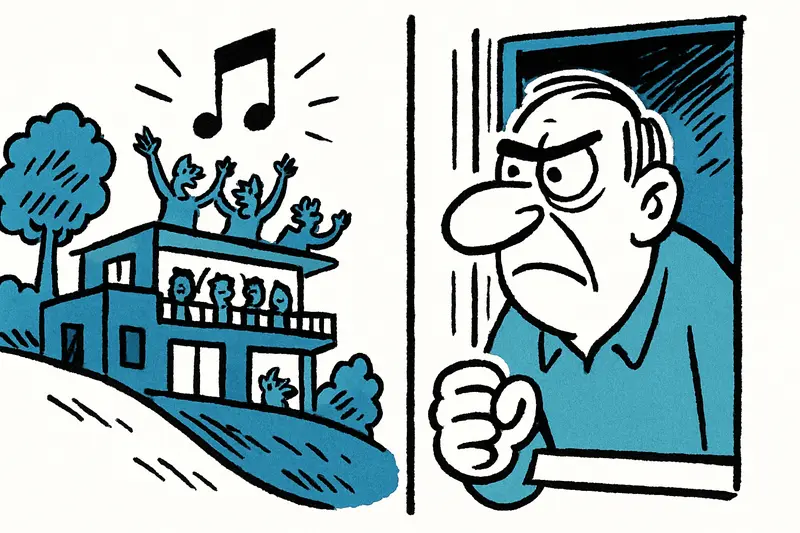
Noise in Puntiró: When a Luxury Villa Becomes a Permanent Party
Noise in Puntiró: When a Luxury Villa Becomes a Permanent Party
In Puntiró a luxury villa is again causing nightly noise, overcrowded parties and a bewildered neighborhood. Who monitors rentals when license numbers allegedly don't match?
Noise in Puntiró: When a Luxury Villa Becomes a Permanent Party
Evenings in Puntiró: the air smells of jasmine and grilled meat, television noise drifts from some houses, a dog barks in the distance — and at a villa up on the hillside music thumps deep into the night. Neighbors report that two to three times as many people show up there regularly as the paperwork supposedly allows. Complaints and e‑mails to authorities have been piling up for years. Those affected feel left alone.
Key question
Why do rules against noisy rental parties on Mallorca work so poorly — and which loopholes allow a luxury property to turn into a long‑term source of disturbance?
Critical look: What is really going wrong here
The facts reveal a clear pattern: high demand for exclusive villas, short‑term rentals to larger groups, repeated loud parties and complaints from immediate neighbors. In addition, there is the accusation that the villa was listed on platforms with a different license number than the one officially assigned. It is also claimed that the owner lives in the neighborhood and remains silent about the allegations, as covered by Parties, nudity, overcrowded villas: residents in Es Puntiró demand action. All of this creates a classic conflict between tourist use and residential quality of life.
Inspectors are often reactive rather than preventive: complaints are recorded, fines can be imposed, but interventions such as immediate closures or technical measures (e.g. soundproofing) are rare or delayed. Platform operators, intermediaries and owners operate in a grey area where transparency and rapid sanctions are lacking, as seen after the sale of holiday villas in Son Espanyolet.
What is missing from the public debate
There is a lot of talk about "party tourism", but rarely about the mechanics: How are license details checked? Who compares listings with official registers? What role do intermediaries and payment systems play that enable the quick organization of large groups? Even less discussed is how neighbors can receive effective immediate help — not just complaints, but real, immediate protection mechanisms against recurring noise disturbances.
Everyday scene
An evening walk along the quiet streets of Puntiró makes it clear: the streetlights, the cicadas, the Balearic evening mood. Then a bollard, a car driving by too loudly, the murmur of voices from a terrace. A neighbor pulls down the shutters, a retiree in the plaza café shakes his head. These small, daily reactions show that the problem is not abstract — it affects people's sleep, family meals and the care of their gardens; other neighborhoods have reported similar disturbances, for example Nighttime Noise and Speeding in Nou Llevant: German Residents Demand Quiet.
Concrete solutions
1. Rapid on‑site checks: A municipal team should be able to inspect within 24 hours of receiving a complaint. This reduces neighbors' frustration and establishes facts. 2. Matching listings and licenses: A mandatory interface between the city register and the major rental platforms could uncover false license numbers more quickly. 3. Noise sensors with legal effect: Mobile, calibrated measuring devices would allow breaches of limits to be proven and fines to be triggered immediately. 4. Harsher sanctions for repeated violations: tiers of fines, temporary rental bans and, in extreme cases, the revocation of the tourist license. 5. Intermediary obligations: Platforms must at least disclose contact details of the responsible party and cooperate when alerted. 6. Resident mediation: A local ombudsman could mediate between owner and neighborhood before the situation escalates. 7. Sensitive parking regulations: Many conflicts also arise from additional cars in narrow streets; temporary parking bans during events relieve residents.
What authorities and owners should do
Authorities need faster, less bureaucratic intervention options. Owners must take responsibility: clearer house rules, limits on guest numbers, fixed quiet hours and a local contact person. Whoever owns a property at a high price — the value of roughly €2.6 million is being mentioned — has a duty not to harm the surroundings. Platforms, in turn, must ensure the accuracy of the stated license numbers and block listings when discrepancies occur.
In short: My conclusion
The situation in Puntiró is not an accident but a symptom of systemic gaps: lack of transparency, sluggish controls and profit‑driven rental practices. Neighbors need immediate help, not months of paperwork. If Mallorca seriously wants to balance tourism and quality of life, the island administration must act faster, more decisively and more visibly. Otherwise, evening walks will be left with nothing but the dull thump of a party no one wants to hear anymore.
Frequently asked questions
Why are noise complaints around rental villas in Mallorca often so hard to resolve?
Can a short-term rental villa in Mallorca host more guests than its licence allows?
What can neighbours in Puntiró do about repeated late-night noise from a villa?
How can Mallorca authorities check whether a rental listing has the right licence number?
What should villa owners in Mallorca do to avoid party noise complaints?
Are noise sensors useful for enforcing party limits in Mallorca?
What makes Puntiró a sensitive area for villa noise problems in Mallorca?
What sanctions can Mallorca use against repeated noise offences at a rental property?
Similar News

Palma Chases Wealthy US Tourists — The Key Question: Who Should the City Actually Serve?
The city is investing more than €200,000 to attract high-paying visitors in several US cities. A good idea — but what is...

Enough swimming: Why Port de Pollenca is louder than the sea
More than 200 people formed a human chain in Port de Pollenca — not only as a protest but as a wake-up call. Guiding que...

Mysterious disappearance in Alcúdia: Where is 24-year-old Lisa B.?
Since August 3 there has been no trace of 24-year-old German Lisa B. The family has traveled to Mallorca and urgently re...

From the Ruhr Area to the Tramuntana: Thorsten Legat and the FC Germania Mallorca Adventure
The former pro has not only taken the coaching role on Mallorca but also moved into a small island shared house, set amb...

Silent Conquest: What Mallorca's Wildlife Can Do Against Introduced Snakes
For years non-native snakes have been appearing on Mallorca. Who monitors the import routes, how effectively do authorit...
More to explore
Discover more interesting content

Boat Tour with BBQ along Es Trenc Beach

Private transfer from Mallorca Airport (PMI) to Pollensa
