
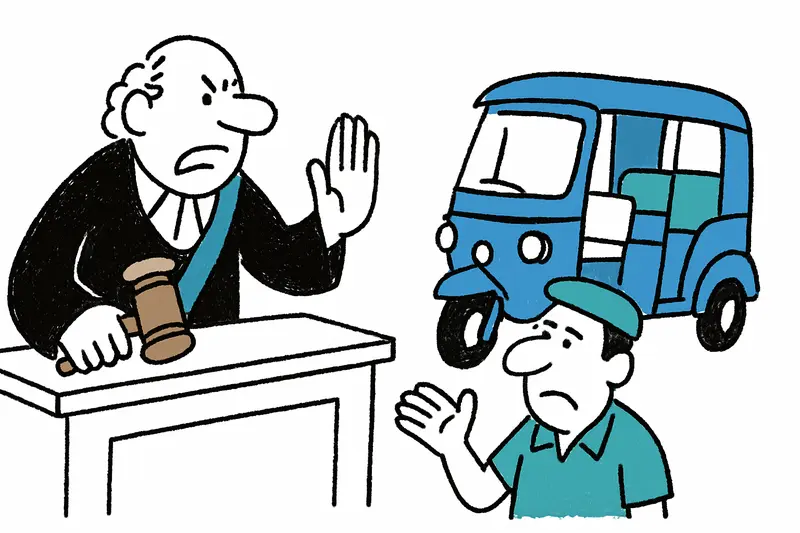
Court Confirms Tuk‑Tuk Ban in Palma – Opportunities, Problems and Solutions
A court has upheld the ban on tuk‑tuks in Palma's old town. For residents this means more peace and quiet, for operators existential worries. An opportunity for a smart reassessment of downtown mobility — if the city now plans more than just fines.
Court Confirms Tuk‑Tuk Ban in Palma – Who Wins, Who Loses?
On a late morning, when the Plaça Major smells of bread and espresso and seagulls circle above the Passeig Marítim, Palma almost seems as usual. Still, a court today created legal clarity: the ban issued in August on tuk‑tuks for tourist tours in the old town remains in force.
The key question is simple but important: Does the ban serve the public interest — or does it merely shift problems elsewhere and hit small businesses and drivers disproportionately hard?
The city administration has been stopping two companies for weeks that offered tours through narrow alleys with three‑wheeled vehicles. Reason: missing special use permits and a business model that, according to the town hall, was not intended. Residents of neighborhoods like La Lonja and Santa Catalina had repeatedly complained — loud engines in the early hours, pedestrians confused in the narrow old‑town streets, risky maneuvers amid tourist flows. For many, it was too colorful a new element in an otherwise familiar cityscape.
On the other hand are the operators: invested capital, booked tourists, jobs. On the small verge near the market I heard a driver say: “We needed clarity, but this is a hard blow.” And that's true: Quickly acquired vehicles, often with combustion engines, are not something that can simply be unwound.
What the decision means in practice
Anyone who continues to carry passengers without a special use permit risks fines and suspensions. The city announced tightened controls, as shown by reporting on Palma takes stock: 7,700 fines — success or just performative toughness? But enforcement is not automatic: in tight urban space every inspection costs time, personnel and logistical planning. The question of whether to store towed vehicles long‑term or return them after violations remains a practical challenge for the on‑site police.
A previously little‑noticed point is the displacement effect theory: bans can push supply into neighboring districts or unofficial offers — less visible, harder to monitor and possibly less safe. Moreover, the regulation hits seasonal workers and micro‑entrepreneurs harder than larger providers.
Ecology, noise and reality
Arguments for the ban: traffic safety, noise protection and uniform rules in passenger transport, as reflected in New Taxi Rules in Mallorca: Caps, Ramps and the App — Will the Plan Match the Island's Rhythm? Many tuk‑tuks are loud and run on combustion engines — this fits poorly with the city's debate on clean air and nighttime quiet. Yet environmentally, differentiated rules would be more sensible than a blanket ban: small electric mobile transport solutions could combine the advantages of tuk‑tuks (small size, maneuverability, tourist appeal) with urban requirements.
What should happen now
In my view Palma now needs more than fines. Three concrete proposals:
1. Pilot project for approved electric vehicles: Instead of banning everything across the board, a clearly regulated trial with electrically powered three‑wheelers or mini‑shuttles could be started — with noise and speed limits, fixed fares and defined routes that avoid sensitive alleys.
2. Clear, fair licensing rules and transition periods: Operators need transparent conditions and transition periods, similar to debates around the Unified Taxi Tariff in North and Central Mallorca — Relief for Passengers or a New Problem for Drivers? Investments should not become worthless overnight; retraining, subsidies for conversion to electric drive or integration into existing shuttle networks would be more socially acceptable paths.
3. Integration into a micro‑mobility concept: Palma needs a comprehensive strategy for the last mile — from bikes to minibuses. Approved micro‑hubs at the port or parking areas could host tuk‑tuk‑like services without overburdening the old town.
And enforcement?
Strict controls are necessary, but they must be targeted. A combination of fines, warnings, technical inspections (noise, emissions) and the offer of legalization routes reduces the risk that services are pushed into the grey market.
For residents this initially means: fewer unregulated vehicles in narrow alleys and more quiet when visiting the early bakery. For tourists it means: a piece of "colorful traffic" disappears — or returns in a more environmentally friendly form. Whether everyone likes that is open; between La Lonja and Santa Catalina I heard voices welcoming the ban and others already missing an alternative electric offer.
The political task is now clear: Palma's administration must not treat the court decision as an endpoint but as a starting point — for rules that reconcile traffic safety, noise protection and economic reality. Otherwise a cat‑and‑mouse game between inspectors and inventive providers threatens. And nobody wants that: neither the night owls on the promenade nor the drivers who drink their morning espresso at the Plaça Major.
Frequently asked questions
Is the tuk-tuk ban in Palma still in force?
Why did Palma ban tuk-tuk tours in the old town?
What happens if tuk-tuks keep operating in Palma without a permit?
How does the tuk-tuk ban affect tourists in Palma?
Are electric tuk-tuks still possible in Palma?
What is happening in La Lonja and Santa Catalina after the tuk-tuk ban?
What alternative transport options does Palma need in the old town?
Is the tuk-tuk ban in Palma likely to stay permanent?
Similar News

When coercive fines aren't enough: Could holiday rental owners soon face prosecution?
The island administration is stepping up action against unauthorized holiday rentals: high daily coercive fines up to €5...

Palma Airport on an Expansion Course — Who Decides How Much Growth the Island Needs?
Aena and Madrid are planning multi-million euro investments for Son Sant Joan and project higher capacities. Concern is ...

Who Gets Left Out? Why Overbookings Will Hit Many Mallorca Travelers This Summer
On hot check-in days at Son Sant Joan, frustrated travelers pile up. New figures from Reclamador.es show that a large sh...

When the Handyman Came: How an Engagement Ring Disappeared in Mallorca and What It Says About Trust
During a repair in Andratx a highly personal engagement ring went missing — a case that calls not only for punishment bu...

How Burglars Test Fincas in Mallorca — and What You Can Do About It
The Spanish National Police warn of a simple but effective trick: small markings on doors reveal whether a finca is occu...
More to explore
Discover more interesting content

Can Cap de Bou

Townhouse Lleo 72
