
Who Owns Palma? When Luxury Quietly Repaints the Working-Class Neighborhoods
In Palma's Eixample, investors are turning old rental buildings into glittering condominiums. What remains of neighborhood life, everyday shops and the voices in the stairwell? A critical assessment — and concrete proposals for a cityscape that also belongs to locals.
The central question: How much city can the market bear?
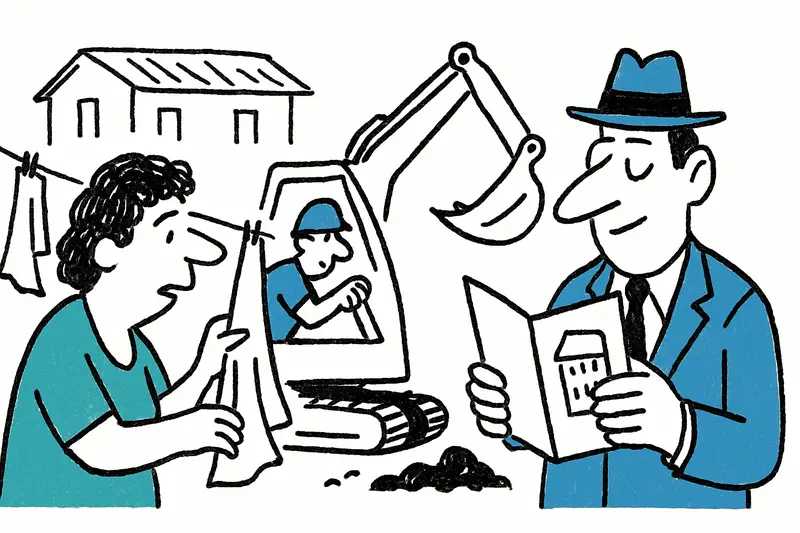
When the Avenidas are bathed in warm yellow late in the afternoon, you hear the usual mix of engines, voices and the distant hammering of a construction site. In some stretches of street that hammering has recently become the loudest sign of a profound change: rental buildings where laundry once hung on lines in the courtyard now get double-glazed windows and brochures bearing names like "Comte 16". The central question is simple: who owns Palma when urban life becomes a commodity?
From everyday life to profit: the mechanics of conversion
You can see the pattern across the Eixample, where luxury is taking over working-class neighborhoods: an investor buys an entire building, divides it, renovates it, and sells individual studios and penthouses – five- to six-figure prices per square meter are no exception on some streets. On Calle Gilabert de Centelles or Blanquerna Sur the process can be observed in fast motion. The facade remains while the interior life is erased: a bakery is replaced by a boutique, a shoemaker by a coworking space. It is legal, often profitable – and for many neighbors existentially disruptive.
What is often missing from the debate
Public discussion often focuses on statistics, ownership structures and tourist numbers. Less often addressed are the fragile social networks that are lost when affordable housing disappears. The neighbor across the way, who has lived in the old building since the 1990s, does not talk about protest signs – she talks about greetings in the stairwell that stop coming and a feeling of quiet displacement. Such everyday signals are hard to measure, but they form the social glue of a district: improvised childcare, the shop that sells rolls in the morning, regulars at the café who help each other with repairs.
Incentives, rules and political gaps
Why can this happen so unimpeded? One reason is that legal and tax frameworks often reward investments rather than long-term residence. vacancy taxes, regulations on conversions to ownership and rules on social housing vary – and in many cases the political will for tougher measures is lacking. At the same time, international comparisons give investors ammunition: Palma is still "cheap" compared with London or Barcelona. For the balance of the city, however, that is not an argument but an invitation.
The lost sounds of a city
The aesthetics remain: historic tiles, balconies, wooden windows. But behind the facade everyday sounds fall silent: the clatter of pots, the chatter in the stairwell, the baker's morning bell. In their place new sounds arrive: real estate agents on the phone in English, delivery boxes, couriers and the quiet conversations of potential buyers. This shift in the soundscape is not vandalism; it is the result of economic logic – and it has concrete consequences for neighborhood life and the local economy.
Concrete: What should be done
Silence is not a strategy. There are practical measures that administration, municipalities and citizens could think through together:
1. Strengthen conversion rules: Link permits for conversions from rentals to ownership to conditions – quotas for affordable housing, priority allocation to local buyers or pre-emptive purchase rights for municipalities.
2. Vacancy and misuse taxes: Tax building parts that remain unused for long periods or are repurposed for tourism more heavily and earmark revenues for social housing.
3. Support for local businesses: Rent subsidies, shopfront packages or reduced business taxes for long-standing operators – so that the bakery, the shoemaker and the greengrocer can survive.
4. Promote alternative ownership forms: Community land trusts, cooperatives and tenant collectives as instruments to permanently take land out of the market.
5. Participation and transparency: Make neighborhood councils mandatory participants in conversion projects so that residents' voices are not heard only after the excavators arrive.
Opportunities, not just problems
This should not sound only negative: renovated buildings bring better insulation, safer wiring and tidier streets. Smart regulations could reconcile the drive to renovate with social protection: renovate yes, displace no. Pilot projects – a converted rental building with social quotas, a subsidized row of shops for traditional trades – could show that a city can remain attractive without selling its soul.
If you stroll through the Eixample on a Saturday: notice the lampposts, the new signs, the baker's voice. And ask yourself in passing: who is this street really for?
Frequently asked questions
Why are parts of Palma’s Eixample changing so quickly?
Can renovated apartments in Palma still be part of everyday neighbourhood life?
What happens when local shops disappear from a Palma neighbourhood?
Why do some residents in Palma feel quietly displaced?
What is driving the conversion of rental buildings into owned apartments in Palma?
What policy tools could help keep Palma’s housing more affordable?
Is Blanquerna in Palma changing in the same way as other central streets?
What do neighbourhood councils in Palma have to do with redevelopment projects?
Similar News

Release after bloody attack in Palma: Why the court's decision raises questions
An 18-year-old who allegedly inflicted a serious neck injury on a man at Plaza Gomila using a wristwatch wrapped around ...
Kidnappings in Inca: Three young men forced into car trunks and abused in the forest – a reality check
In Inca, three 18-year-old men were forced into car trunks by masked assailants at the Plaça des Bestiar, taken to a for...
Spreading Massification: The Brake That Still Has Much Work to Do
Marga Prohens announces limits on volume tourism. The measures sound harsh — but are they enough to save everyday life, ...

Through the Keyhole onto the Party Yacht: How Daniela Katzenberger Is Planning Her 40th on Mallorca
Daniela Katzenberger turns 40 and wants to celebrate it on the island — likely with a boat, cake and her mother. A relax...
By Boat Instead of the Road: Palma's Water Bus — a Reality Check
The 'Bus Nàutic' launches in two stages — but questions remain over interim operations, fares and environmental requirem...
More to explore
Discover more interesting content

Can Cap de Bou

Townhouse Lleo 72
