
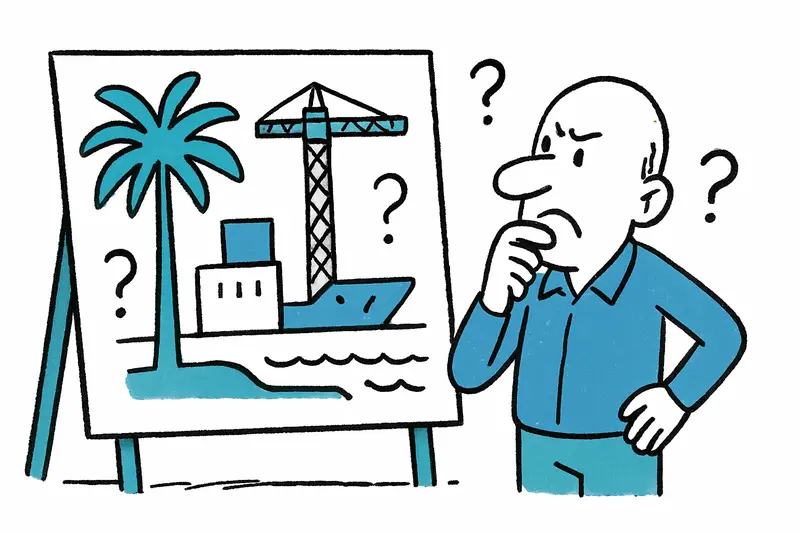
Palma plans port redevelopment until 2035 – lots of space, many open questions
Palma plans port redevelopment until 2035 – lots of space, many open questions
A master plan for 400,000 square meters, over €200 million and works in four phases until 2035 – the redevelopment of Palma's port sounds ambitious. But where are the sticking points? A critical assessment from everyday life on the quay.
Palma plans port redevelopment until 2035 – much space, many open questions
Master plan on 400,000 square meters, budget: over €200 million. Key question: Who will really benefit?
The rough facts are clear: The port of Palma is to be redesigned on roughly 400,000 square meters. More public spaces, green areas and offerings for leisure, culture and education are planned. Examples include Palma plans a new exhibition center – will modernization and quality of life fit together? The final plan should be ready before summer 2026; the works are scheduled in four phases until 2035, and the total budget is more than €200 million.
Key question
Key question: Will the project proceed so that the people of Palma feel the benefits of the redevelopment but do not have to pay the price — ecologically, socially and economically?
The answer is not only in numbers. On the Passeig Marítim, on a windy morning, you can see it: joggers pass pensioners with coffee, fishermen at the Moll Vell mend their nets, children climb over bollards, seagulls screech above the diesel smell from the ferries. This everyday mix makes up the harbor today. Will it remain when large excavators move in?
Critical analysis
The master plan creates space for the new, but space alone does not resolve conflicts. €200 million sounds like a lot, but with infrastructure projects of this scale, follow-up financing, cost increases and additional expenses are common, and broader regional funding debates such as €525 Million for Balearic Ports: Palma, Alcúdia and the Big Question of How complicate priorities. There are risks in three areas: operations and logistics, ecology and social consequences. While cruise, ferry and cargo handling must continue, the redevelopment must not disrupt supply or jobs. At the same time, the harbor mole is an ecologically sensitive coastal strip — interventions can harm marine habitats and increase coastal erosion. Finally, the upgrading of the waterfront risks driving up prices; small shops, fish stalls and workshops could be displaced.
What's missing in the public debate
The debate often focuses on space and architectural models. Officials rarely speak openly about long-term operating costs, concrete protection measures for fish and seagrass, or procedures to allow local fishermen to continue working. A clear scenario for extreme weather and sea level rise — the issue of climate adaptation — is also missing so far in public presentations. And: who monitors the contracts? Transparency in tenders and impact assessments is discussed too little — as seen in Palma plans redesign around the Gesa building - redevelopment with question marks.
Concrete approaches
A few concrete steps could be planned immediately: First, a published environmental impact study together with an action plan for port use and marine ecosystems before major works start. Second, a phased construction management that takes into account when cruise and ferry seasons run so trade and tourism do not collapse. Third, binding commitments to local businesses: temporary hubs, replacement spaces and preferential allocation rules for commercial spaces along the new promenade. Fourth, integrate climate protection — infiltration areas, raised quay walls in sensitive places, natural shore zones instead of pure concrete walls.
Practical measures on site: test areas for new greening concepts at the Moll Vell, temporary pontoons for fishermen, night work bans in residential areas and an independent citizens' advisory board to monitor construction progress, noise and wastewater. In addition, part of the budget should be guaranteed for ongoing maintenance (not just construction) — a common mistake with large projects is that subsequent upkeep is lacking.
Everyday scene as a touchstone
Imagine the evening on the Passeig: someone playing guitar, a vendor with grilled sardines, tourists taking photos. If planning succeeds, this mix will remain and gain benches, shade and green niches. If it fails, the promenade will turn into a neat but sterilized walking area without the rough edges that make Palma what it is.
Concise conclusion
The master plan offers opportunities. But opportunities must be delivered — through clear, verifiable commitments, real participation and technical solutions against climate and ecological damage. Whoever only beautifies the harbor but ignores uses, costs and nature will end up paying for expensive repairs. Palma doesn't need a smooth poster harbor, but a harbor that works: for people, the economy and the sea alike.
Image: Port Authority of the Balearic Islands (APB)
Frequently asked questions
What is planned for Palma port by 2035?
When will the final plan for Palma port be ready?
Will Palma’s port redevelopment affect cruise and ferry operations?
Could the redevelopment of Palma’s port make the waterfront more expensive?
What environmental concerns are linked to Palma port redevelopment?
Can fishermen still work at Palma’s Moll Vell during the port works?
What should residents in Palma expect during the port redevelopment?
What changes are planned around the Passeig Marítim in Palma?
Similar News

"Expensive chaos" and many open questions: What clients can do when a lawyer suddenly stops responding
Several clients complain that a well-known German lawyer in Mallorca has been unreachable for months. Key question: What...

TV tip: 'The Last Problem' — Mallorca as the setting of a classic crime
A classic whodunit on Mallorca: A new miniseries set in spring 1959 brings storm, an isolated hotel and a dense web of s...

Nipping Sea Creatures: Why Bathers in Cala Major and Elsewhere Should Be Cautious
In Cala Major, bathers have reported being nipped by small fish. What is behind it, how can problems be avoided — and wh...
Forced eviction in Santa Catalina: When a 65-year-old slept in her car and showered on the beach — a question of responsibility
The story of Pilar López from Santa Catalina represents a problem affecting many Mallorcans: How can an island with a bo...

New traffic rules from October 1: What Mallorca visitors and locals need to know
From October 1, 2026, Spain will implement far-reaching changes to traffic regulations. Important for Mallorca: greater ...
More to explore
Discover more interesting content

Can Cap de Bou

Townhouse Lleo 72
