
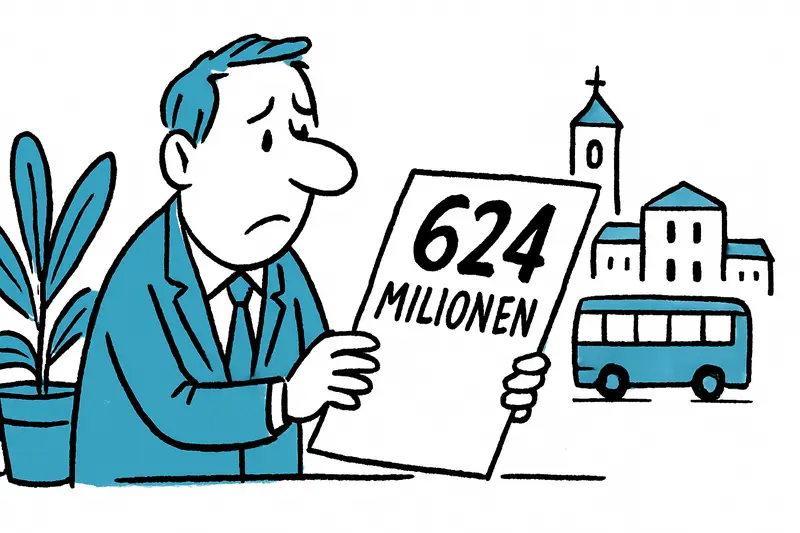
The city of Palma has presented a draft budget of around €624 million. A lot of money will go into squares, transport and housing — but questions about implementation and the timetable remain open.
Big plan, many construction sites: Palma's budget for next year
On a sunny Tuesday morning at City Hall, somewhere between the Plaça de Cort and the city's everyday life, an ambitious budget draft was presented: just under €624 million. This is not pocket money — and the list of projects is long. Those who have their morning coffee on the Passeig will see construction fences more often in the coming months.
The main projects at a glance
At the top of the list is the renovation of the central Plaça Major. Anyone who has been there among market stalls and tourist groups knows the square and its paving urgently need a refresh. Also planned are the redevelopment of the GESA building, a new exhibition ground on the outskirts, and a botanical garden — not exactly projects you can quietly handle on the side.
Infrastructure is also set to look noticeably more modern: sidewalks and street lighting will be extensively renewed, the administration plans new electric buses for local transport and additional bike stations along busy routes. A small side note: those who regularly take line 1 might soon experience quieter, cleaner buses.
Housing, safety and leisure
Part of the budget is earmarked for social housing — an issue that cannot be ignored here. New police stations and investments in sports facilities are also planned. The mayor and stakeholders have emphasized that it's about more than concrete: about quality of life, order and offers for families.
But of course every big plan raises questions: How quickly will the projects actually progress? Who will cover maintenance costs in ten years? And how will small businesses and residents be supported during construction phases? Residents already report uncertainty: tradespeople, shops and market operators are watching closely.
Timeline and expectations
The budget still has to pass the city council, and there will be debates — about priorities, time horizons and the precise allocation of funds. For many in Palma this means: opportunities for better squares and transport, but also months of noise and detours. I will continue to monitor this — and perhaps next time the construction noise starts I'll move elsewhere with a strong coffee.
Conclusion: A lot of money is proposed and many projects make sense. Whether Palma will ultimately become faster, greener and more livable now depends on details, schedules and implementation.
Similar News

Free School Bus for Vocational Students: Greater Mobility from School Year 2026/27
The Balearic government announces that vocational students from the 2026/27 school year can travel to school free of cha...

Temporary halt: Waste transfers from Ibiza and Formentera to Mallorca postponed
A planned trial to move waste from Ibiza and Formentera to Mallorca has failed — for now. Votes in the regional parliame...

Palma announces large investment budget – around 624 million euros
The city of Palma plans to invest heavily next year: streets, public spaces, public transport and housing are on the lis...

Valencia: President Carlos Mazón resigns — 370 days after the flood disaster
Carlos Mazón has announced his resignation — a year after the devastating flood that killed 229 people. No new elections...

New Metro Line M2: Subway Connection to Son Espases Hospital Planned
The city plans its own Metro Line M2 from the intermodal station at Plaça Espanya to Son Espases Hospital. Approval is s...
More to explore
Discover more interesting content

Experience Mallorca's Best Beaches and Coves with SUP and Snorkeling

Spanish Cooking Workshop in Mallorca
