
Palma's Torres del Temple Become a Museum – A New Window into the City's History
Palma's Torres del Temple Become a Museum – A New Window into the City's History
The restored Torres del Temple will open in the first quarter of 2026 as a museum. Using old beams, discovered wall paintings and modern interventions, a place is being created that tells Palma's history from prehistory to the Middle Ages.
Palma's Torres del Temple Become a Museum – A New Window into the City's History
Between town-hall bells and construction noise: how an old pair of towers is given new life
Anyone walking these days through the lanes around the Plaça Cort hears more than the usual cooing of pigeons: hammers, voices, the soft whirr of an elevator not yet in service. Between orange trees and the town hall rises the construction site of the Torres del Temple – a building with roots in the 12th century that is scheduled to open to visitors for the first time as a museum in spring 2026.
The city has taken on the project and invested around 2.4 million euros in the restoration. Mayor Jaime Martínez attended a tour of the work; together with city colleagues he reviewed the state of the restoration. The towers, once part of the fortified complex Gumara, underwent numerous alterations over the past centuries and long served as residential buildings. Before work began, specialists described a condition that had worsened over two decades – cracks, sections at risk of collapse, and neglected wood and stone structures; similar concerns were highlighted in reporting on other city monuments such as Collapse at Palma's City Wall: What Needs to Happen Now.
What looks different today is the result of careful craftsmanship. Specialists uncovered surprising finds during the interventions: original medieval wall paintings in one floor and wooden profiles in one of the oldest rooms. Many of the roughly 200-year-old wooden beams that were initially to be replaced proved to be of a quality that justified reuse; they were secured and integrated into the new construction. At the same time, arches, battlements and lintels were kept visible – elements intended to show visitors the layers of the building's history.
The exterior of the twin towers has gained a new face. The façade revision followed a design that visually unifies the towers and makes the former crenellated crown less prominent. The left tower, whose origin lies in the Moorish period, was largely preserved in its original form; the right tower underwent stronger interventions to address structural issues and to ensure a safe experience for users.
Inside, the concept favors restraint. New interventions – staircases, an elevator and reliable routes through the building – were placed so they do not overwhelm the historic character. The restoration aims to make traces of time readable: cracks, patina, layers of plaster and stone should tell visitors how the building developed and how the city changed.
The planned exhibition is conceived as a panorama: from ancient prehistoric life on the island to the medieval layers of Palma. The city intends to make the rooms accessible to the public and thus provide an additional offering for school groups, historical societies and tourists, complementing larger projects in Palma such as Palma plans a new exhibition center – will modernization and quality of life fit together?. Accessibility has been considered so that people with reduced mobility can also visit the building.
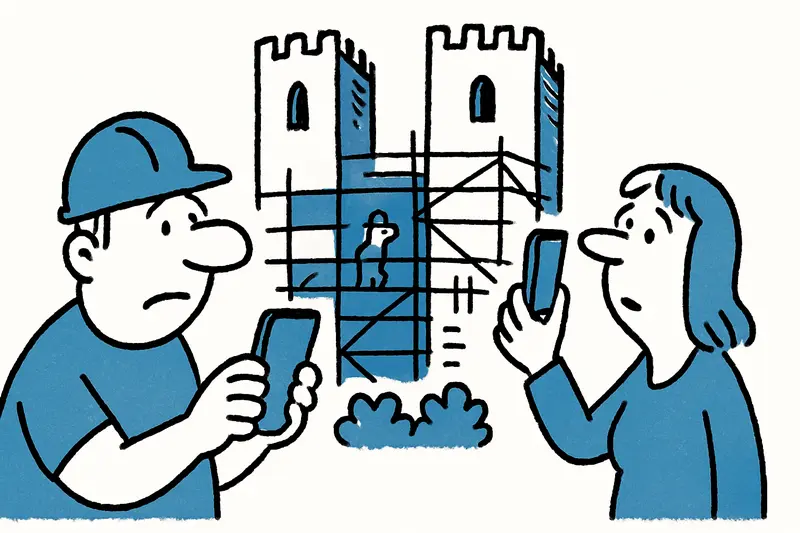
What this means for Palma is better understood in small scenes: on a gray morning light already filters through the scaffold sheeting, a worker wipes sweat from his brow, a student stops to take photos with her phone. Such glimpses of the work on the monument link the past with everyday life – and that may be the real gain. A museum in the old towers will not only display exhibits; it will be a place where neighbors, pupils and visitors can literally touch the city's history.
Those who pass by the Torres del Temple can look forward to a place that is scheduled to open in the first quarter of 2026. It is a small but tangible promise: caring for one's old stones strengthens social bonds and creates space for encounters between generations. After work pauses, it is often the simple things – a reused row of ceiling beams, an uncovered wall painting – that tell stories. And those stories will soon be heard where once a gate to the city stood.
Frequently asked questions
When will the Torres del Temple in Palma open as a museum?
What can visitors expect to see in the Torres del Temple museum in Palma?
Is the Torres del Temple restoration in Palma keeping the historic building intact?
Will the Torres del Temple in Palma be accessible for people with reduced mobility?
Why are the Torres del Temple important in Palma’s history?
How much is Palma investing in the Torres del Temple restoration?
What is the area around Plaça Cort like during the Torres del Temple works?
What were the Torres del Temple used for before becoming a museum in Palma?
Similar News
Bloody clash in Canòdrom Park: What is missing in addressing violence on Mallorca's streets?
At midday on October 23, an 18-year-old man was critically injured in Canòdrom Park in Palma. The attack raises question...
Palma raises bus fares: Who pays the bill for public transport?
Single tickets rise from €2 to €3, airport trips have a reference price of €4.50. It remains unclear whether residents w...
Palma's New Indoor Pool: Sea View, Sunbeds and Space for Everyone
At Aigua Dolça, near the Paseo Marítimo, Palma has a new municipal indoor pool. For a small fee people can now train, re...
How Four Burglars Emptied Ten Houses with a Simple Trick — and What It Means for Mallorca
Four men used the impressioning technique, posed as delivery workers and accepted two years in prison. A reality check f...
Bundles of Drugs, Containers and Open Questions: A Reality Check for Mallorca
3.3 tonnes of marijuana, 80 kilos hidden in golf-ball vending machines and a 44-year-old German released on conditions i...
More to explore
Discover more interesting content

Can Cap de Bou

Townhouse Lleo 72
