
Collapse at Palma's City Wall: What Needs to Happen Now
Collapse at Palma's City Wall: What Needs to Happen Now
A part of the medieval Baluard de Sant Pere has collapsed. The damage to the earthen facade and the long wait for restoration raise questions about responsibilities and urgent action needed.
Collapse at Palma's City Wall: What Needs to Happen Now
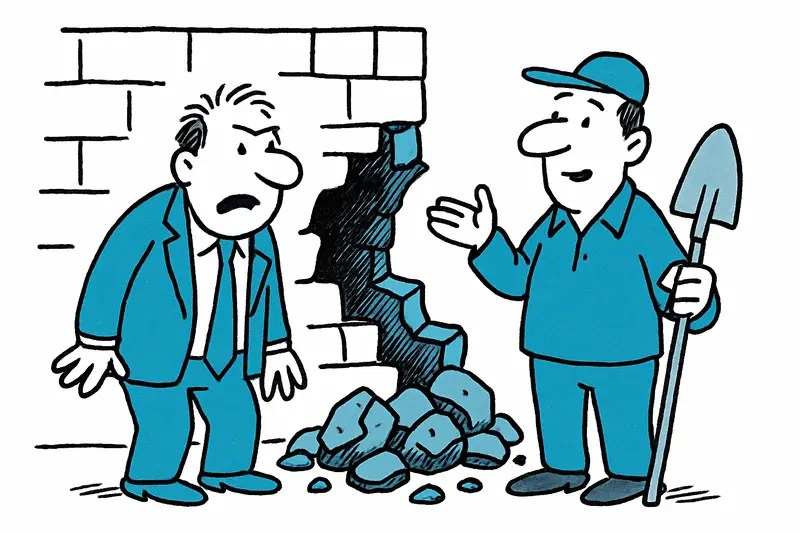
A section of the exterior facade of the Baluard de Sant Pere has broken away – monument conservators call for immediate stabilization
Central question: How can a building classified as particularly worthy of protection be allowed to remain in such a condition for so long that parts of the outer wall simply fall out?
At the Baluard de Sant Pere, on the corner of Calle de la Pólvora and Calle de Sant Pere, a deep hole gapes in the exterior wall of a 14th-century tower following the collapse — as detailed in coverage of the partial collapse at the Baluard de Sant Pere. The structure rests on older foundations that date back to the Islamic period. The damaged shell is made of earth-based building materials—adobe bricks and mortar—that are especially vulnerable to moisture and lack of maintenance. Photographs show a crumbled outer skin, dust and exposed layers, making clear: this is more than a cosmetic defect.
The organization ARCA has already sounded the alarm publicly and lamented the loss of a historical testimony. Representatives of the heritage authorities emphasize that there have been indications and calls for a comprehensive restoration plan for years; it is documented that corresponding requests and reminders were sent to the town hall and the island council. According to sources in the circle, those involved waited at least eight years for concrete measures.
Critical analysis: This incident is not a singular material failure but the result of a combination of lack of preventive measures, unclear responsibilities and missing prioritization. Earthen facades require regular inspection, simple repairs and local expertise—both appear to have been neglected in past practice. When protection status (BIC) and reality diverge, it is often an administrative problem: who pays, who plans, who supervises the work? Similar recent incidents, such as the wall collapse at Palma Airport, underscore how oversight and coordination failures can have immediate consequences.
What is missing from the public debate: So far the discussion has been limited to outrage and finger-pointing. A sober inventory is lacking: which wall sections are particularly vulnerable for earth-construction reasons, which timelines are being observed for preservation, and what resources are needed in the long term? Also insufficiently discussed is how to better promote traditional craftsmanship (e.g. techniques for tapial/rammed earth and earthen bricks) so that sustainable repairs are possible.
Everyday scene from Palma: On a mild December day with grey skies and around 18 °C one can hear delivery vans and the clatter of coffee cups from a small bar on Calle de la Pólvora; pedestrians step around the barrier tape, an elderly woman carries bottles of olive oil under her arm. The wall, taken for granted for decades, suddenly seems fragile; passersby stop, take photos, speak softly. Moments like these show: heritage conservation is not an abstract issue, it touches daily urban life and the identity of the neighborhood.
Concrete, immediately implementable measures: 1) Close off the immediate area to exclude danger to passersby, a step similar to the temporary closures in Cala Major after a structural crack was discovered. 2) Order a professional hazard analysis by structural experts for earthen-built structures (conservators experienced with tapial/earth). 3) Install temporary supports and weather protection to prevent further material loss. 4) Create a digital record (photogrammetry, 3D scan) of the damage so that any restoration begins on a sound basis.
Medium-term solutions: A binding restoration plan with clear deadlines and verifiable funding; a consortium of restorers that involves local craftsmen; and a monitoring system (crack monitoring, moisture sensors) that gives early warning. Funding sources could be combined from municipal budgets, the island council, special heritage protection funds or EU cultural programs. Transparency is important: timelines and responsibilities must be publicly accessible.
A practical proposal for policymakers: Establish a small, earmarked emergency fund for at-risk BIC objects near the city — quickly available, with clear spending criteria for emergency measures. In parallel, training measures for local craftsmen should be promoted; techniques for working with earth and traditional mortars are rare but must not become exclusive specialisms.
Conclusion (concise): If historic walls become a political issue, prevention has failed. Now quick, tangible steps count instead of further announcements. The city and the island council must show that protection status is not just a label, but backed by resources and expertise. Otherwise we will lose not only stones, but pieces of our everyday memory.
Frequently asked questions
Why did part of Palma's city wall collapse?
Is the Baluard de Sant Pere in Palma dangerous to walk near now?
What kind of restoration does a damaged historic wall in Mallorca need?
Why are earthen walls in Palma especially vulnerable?
Who is responsible for protecting historic walls in Palma?
What should Mallorca do when a protected building starts to collapse?
Why are local craftsmen important for heritage repairs in Mallorca?
What happened at the Baluard de Sant Pere in Palma?
Similar News

When coercive fines aren't enough: Could holiday rental owners soon face prosecution?
The island administration is stepping up action against unauthorized holiday rentals: high daily coercive fines up to €5...

Palma Airport on an Expansion Course — Who Decides How Much Growth the Island Needs?
Aena and Madrid are planning multi-million euro investments for Son Sant Joan and project higher capacities. Concern is ...
Who Gets Left Out? Why Overbookings Will Hit Many Mallorca Travelers This Summer
On hot check-in days at Son Sant Joan, frustrated travelers pile up. New figures from Reclamador.es show that a large sh...
When the Handyman Came: How an Engagement Ring Disappeared in Mallorca and What It Says About Trust
During a repair in Andratx a highly personal engagement ring went missing — a case that calls not only for punishment bu...
How Burglars Test Fincas in Mallorca — and What You Can Do About It
The Spanish National Police warn of a simple but effective trick: small markings on doors reveal whether a finca is occu...
More to explore
Discover more interesting content

Can Cap de Bou

Townhouse Lleo 72
