
Passport bought via TikTok stopped at Palma airport: How big is the problem really?
A young man tried to fly to Ireland with a passport purchased on TikTok — the deception was uncovered at Palma airport. What does the case reveal about gaps in security?
Passport bought via TikTok stopped at Palma airport: How big is the problem really?
Key question: How can a passport acquired through social media trading get as far as the airport departure area that the journey only fails at the exit control?
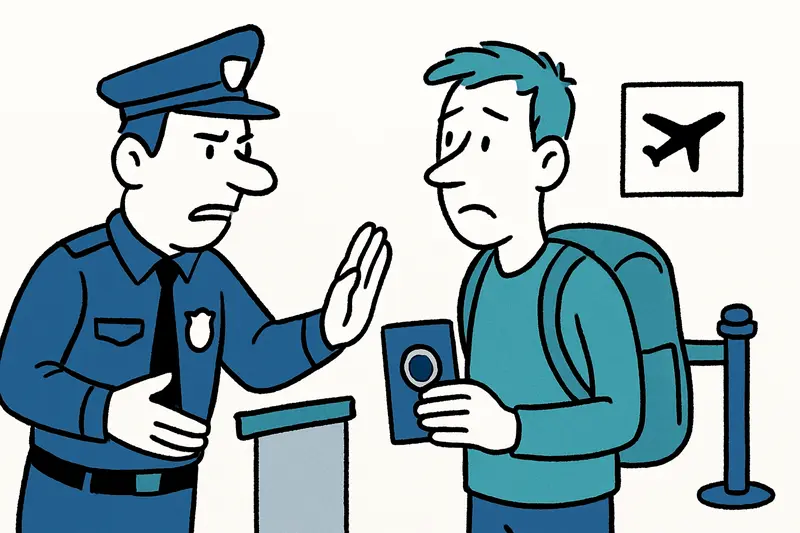
Early on Saturday morning, while the smell of coffee cups and cleaning supplies still hung over the departure hall at Palma airport, the National Police stopped a young man who had checked in for the Ryanair flight to Shannon. During the check at about 6:30 a.m., officers noticed that the presented document did not match the passport photo and several security features were missing. The passport indicated a 30-year-old from Hong Kong — a detail that immediately raised suspicion. It soon became clear: the document was forged. In court the defendant said he had bought the document via TikTok and had not known about the fraud. He was sentenced to four months in prison; the sentence was suspended for two years and a fine of 360 euros was imposed.
The incident is not isolated. Police at the airport say for years that forged IDs at outbound controls are a recurring problem. The modus operandi is often the same: some people enter the Schengen Area legally with genuine papers and then try to travel onward to the United Kingdom or Ireland under different identities.
Critical analysis: Where does it fail?
The exit check is the last barrier between the Schengen Area and third countries. If a forged document is only discovered there, it means several systems in a row did not raise an alarm: the airline at check-in, potential airline scanners, and certainly not the staff at the gates. The problem is multifaceted: staff are often overstretched, many colleagues work seasonally, and visual inspection remains the standard practice in many cases. Modern forgeries look convincing and can bypass the standards used for quick checks.
An often underestimated element is the role of social networks. Platforms with quick video dynamics have become a marketplace for all kinds of services — including illegal ones. Someone who is offered an apparently authentic-looking ID in an app for 50 or 100 euros may not think about criminal consequences. At the same time, many users lack knowledge about how easily such papers can be detected — until the arrest at the airport.
What is missing in the public debate
Public reporting usually focuses on the arrest itself and less on the organizational gaps. There is a lack of honest debate about staffing levels at airports, routine training for airline employees, and technical means for rapid authenticity checks. Almost never discussed is the responsibility of platform operators: how does TikTok prevent illegal offers from spreading on its marketplace? And what prevention work reaches the young people who buy such services?
An everyday scene from Mallorca
Walking along the Vía Alemania toward the airport on an August morning you see the shift changes: buses deliver tourist groups, rolling suitcases rattle, drivers at a coffee machine swap tips about the fastest lane at check-in. In moments like these the world feels routine and safe. Yet exactly in this soundscape weaknesses can be overlooked: an overworked check-in agent, a hurried glance at a document, a gap between a digital boarding pass and a physical ID.
Concrete solutions
1) More practical training: Regular, realistic training sessions for airline and airport staff that also demonstrate new forgery techniques. Hands-on practice helps more than a PowerPoint.
2) Technical upgrades: Mobile document verifiers and UV scanners at check-in points and gates would detect many cheap forgeries early. Biometric linking of the passport photo with the boarding pass should be mandatory where flights to third countries depart.
3) Cooperation with platforms: Authorities should demand rapid reporting channels to social networks so offers for forged documents can be removed and sellers blocked promptly. At the same time, awareness videos are needed on the platforms themselves.
4) Transparent airline checks: Airlines must be required to document identity checks before boarding. Criminal sanctions for repeated failures would send a clear signal.
5) Public information campaigns: Campaigns at universities, among seasonal work intermediaries and in late-night convenience stores to highlight the risks of buying documents and explain the legal consequences.
Concise conclusion
The incident at Palma airport is tedious work for investigators and an embarrassing issue for the person involved, but it reveals something deeper: digital marketplaces are changing routes abroad. The response cannot rely on criminal prosecution alone. Those who seriously want to prevent an increase in deception attempts must work on training, technology, platform responsibility and education at the same time. Otherwise the exit control will remain the place where the last gap is closed — rather than the place where deception is proactively prevented.
Frequently asked questions
How common are forged IDs at Palma airport, and what should travelers watch for?
What practical steps can I take to avoid identity issues when flying out of Mallorca?
What practical steps are recommended to prevent document forgery at airports like Palma?
How does social media play a role in passport fraud affecting travelers in Mallorca?
When is the best time of year to visit Mallorca, and what should I pack?
What basic steps should I take to protect my documents while visiting Mallorca?
How do exit checks work for travelers leaving the Schengen Area from Mallorca?
What signs might indicate a document is forged, and what should I do if I suspect one?
Similar News
Nights Like an Oven: Mallorca Between Heat Trap and Eclipse
Portocolom reported a minimum temperature of 29 °C. AEMET expects an almost cloudless sky for the solar eclipse, but 30–...
Cocaine bundle in Cala Beltrán: What the find reveals about smuggling routes and our coasts
Young people discovered a large bundle with dozens of cocaine packets in Cala Beltrán. The Guardia Civil secured the fin...
Balearic Islands tighten sale of energy drinks to minors: protection or sham regulation?
The Balearic government has proposed a bill that would ban the sale of caffeinated energy drinks to minors and tighten r...
Deutsches Eck expands: New venue in the second row by the sea at Playa de Palma
The cult venue 'Deutsches Eck' is getting a second restaurant at Playa de Palma. Michael and Feli Bohrmann are taking ov...
Up Close with Engine Noise at the Copa: What the Regatta in Palma's Bay Feels Like
Seen from a press inflatable: sail hulls, terse commands and the steady image of the "Hispania". Why the Copa del Rey is...
More to explore
Discover more interesting content

Boat Tour with BBQ along Es Trenc Beach

Private transfer from Mallorca Airport (PMI) to Pollensa
