
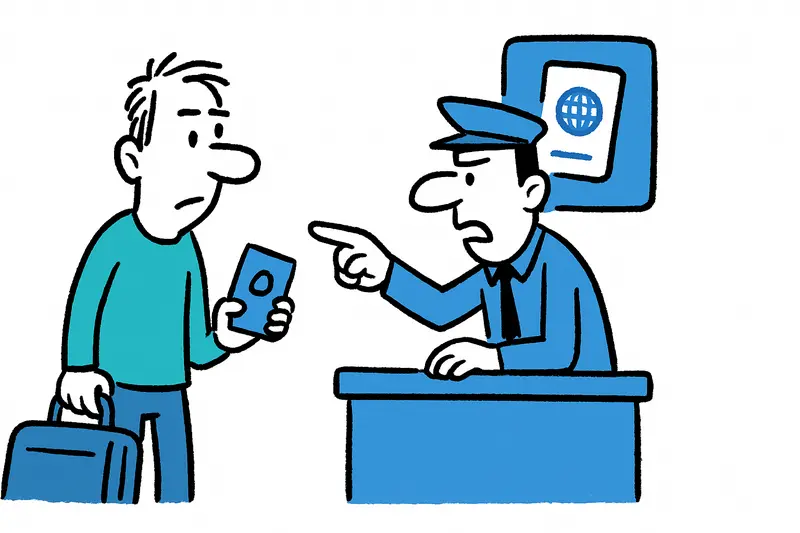
Passport Checks in Menorca: Suspicion Is Not a Verdict
An unusual travel document can prompt an inspection. What happens next is often hard for travellers to see—and calls for a clear distinction between suspicion and proven guilt.
An unusual passport, many unanswered questions
At the airport, passport control is usually a brief moment: open the document, check the photo, glance at the screen, then head to the gate. If something does not match, a routine check can quickly become a matter for the authorities. What exactly such a suspicion means is usually invisible to other travellers. That is precisely why it is worth taking a step back when reading reports about allegedly altered travel documents: What has actually been established—and what is still being investigated?
This is not a matter of semantics. A suspicion is the beginning of an investigation, not its conclusion. A document may raise concerns, and a person may be questioned or checked; that does not automatically mean a crime has been proven. The relevant authorities determine whether someone is criminally responsible according to the applicable rules. When these stages are collapsed into one, a routine check can quickly be turned into a final verdict.
Menorca is more than a holiday backdrop
At Menorca Airport, island life and international travel meet. In summer, suitcases roll across the floor, families gather children and coats, and passengers make one last check that they have the right gate. Even outside peak season, the airport remains a connection to the outside world—for residents as well as visitors. Identity and travel document checks are part of this infrastructure, however unremarkable they may seem under normal circumstances.
Travelling to the United Kingdom is not the same as travelling between two places in the Schengen Area. The political and legal frameworks differ, so travellers should check the entry and document requirements that apply to their nationality before departure. This also applies to connecting journeys and to documents that are not issued in the traveller’s own name. For authoritative requirements, the relevant authorities and airlines are the right sources—not a hurried glance at an old social media post.
What is often missing from public discussion
Brief reports often leave unclear where a check ends and a criminal investigation begins. It is also important to distinguish between a forged document, an alteration to a genuine document, and a mere concern that may later be resolved. Such details are not always public, and it would be wrong to invent them. But when they are missing, the language should remain cautious too.
There is another blind spot: privacy. Details about someone’s origin, age or journey may be relevant to understanding a situation, but they do not make that person guilty. A statement about someone’s origin is no substitute for evidence, nor does it automatically explain why they are travelling. This is especially true in cases where little reliable information is available. Public commentary should not be harsher than the established facts.
For people waiting at the counter, the situation is less abstract. A check can disrupt their own travel plans; others may simply see someone being asked to step aside. The obvious assumption is not always the right one. A brief moment at an airport is a poor basis for judging a stranger—and certainly not an entire group.
What travellers can do
The practical steps may not be glamorous, but they work: check which documents are required for your specific route before booking; make sure the name on your ticket matches the one on your identity document; allow enough time for check-in and processing; and never use identity documents that have been altered, damaged or issued to someone else. If you are unsure about a document, resolve the question before travelling instead of hoping it will be accepted at the counter.
Authorities and public institutions can also communicate more clearly. A brief explanation should state whether a matter involves a check, a suspicion, an arrest or a final court judgment—provided that information may be made public. This not only protects those involved from being judged prematurely. It also helps travellers take the rules seriously without turning every check into a dramatic story.
The line between awareness and prejudgment
Checks must work; no one benefits from documents whose authenticity cannot be verified. At the same time, a check must not become a substitute for a verdict. In Menorca, Palma or any other airport, the same measured approach applies: check carefully, make clear distinctions and claim no more than is known. At the gate, what matters in the end is a valid document. In public discussion, another sound principle matters too: suspicion is a reason to investigate—not the answer itself.
Frequently asked questions
What travel documents should I check before flying from Mallorca to the UK?
Can I assume my identity card is enough for a trip from Mallorca to the UK?
What happens if a passport raises questions at Menorca Airport?
What is the difference between a forged passport and an altered passport?
Does being questioned at an airport in Mallorca mean someone is guilty?
Should the name on my Mallorca flight ticket match my passport?
How much extra time should I allow for airport checks in Mallorca?
Does a traveller’s nationality prove anything about a passport concern in Mallorca?
Similar News

Beyond Manacor: Mallorca’s Balloon Pilot and His Craft
For decades, Ricardo Aracil has taken people over Mallorca in a hot-air balloon. The view from above is the highlight—bu...
When a Baby Suddenly Stops Breathing: Palma’s Emergency Response Put to the Test
Every minute counts in a medical emergency involving an infant. What matters is not only who arrives first, but also whe...
Bus Strike Before Christmas in Mallorca: What Is Confirmed—and What Isn’t
A strike in passenger and freight transport has been announced for December 23 and 24. How severely Mallorca would be af...
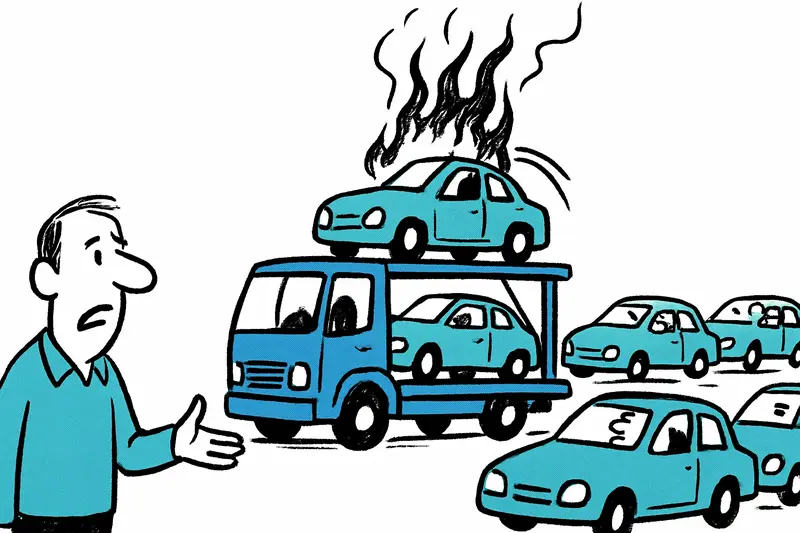
Car Transporter Fire Temporarily Disrupts Access to Palma
A car on a transporter caught fire on Monday morning on the Ma-1 near Portopí. The closure affected rush-hour traffic; t...

Celebrity on Mallorca: Who Benefits from the Big Event?
When familiar faces draw a crowd on the island, a simple question arises: what remains besides photos and talking points...
More to explore
Discover more interesting content

Can Cap de Bou

Townhouse Lleo 72
