
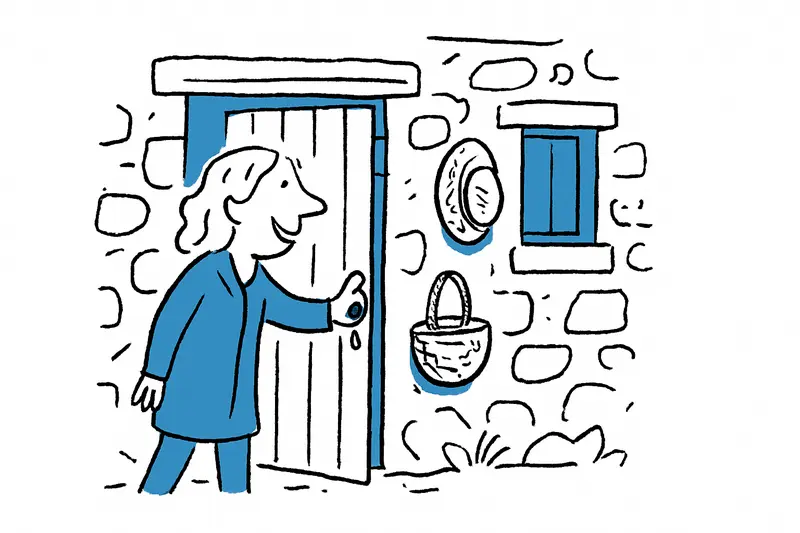
Patricia Kelly opens the door to the Casita in Port d'Andratx – a small listed holiday refuge
Patricia Kelly opens the door to the Casita in Port d'Andratx – a small listed holiday refuge
Singer Patricia Kelly offers a glimpse into her over 100-year-old, listed casita in southwest Mallorca. Renovated with materials from the island, the house feels like a love letter to the local building culture.
Patricia Kelly opens the door to the Casita in Port d'Andratx – a small listed holiday refuge
How an old house, natural stone and keepsakes contribute to the island atmosphere
On the seafront promenade of Port d'Andratx, where fishermen mend nets in the morning and boats rock quietly against the quay wall in the evening, a well-known singer has found her own little corner. Not a pompous estate, but an almost hundred-year-old, listed casita that she and her husband converted into a holiday home. In a recently shown online tour they open the door and show what has become of what was once a ruin.
The renovation is modest but careful: exposed natural stone walls, wooden beams, visible traces of old craftsmanship. Added are details often found in Mallorcan homes — traditional straw hats on the wall, woven bags, simple ceramics. Everything looks as if these things have long lived here, not merely placed as decoration, echoing Mallorca Vibes for the Living Room: Small Rituals, Big Impact.
What stands out: the couple apparently made a point of using local materials and regional crafts — a practice also promoted by Pòrtic Mobles: Furniture with Personality in Palma. This is more than a style statement. For the island it means that old building fabric is treated with respect and that craftsmen and suppliers from the region are involved. Projects like these help keep local knowledge and work alive.
The house is not presented in the video as a museum, but as a place for encounters: a spot where people create memories together. That may sound sentimental, but in the back rooms of the Casita it actually feels that way — warm, intimate, personal. Living room lamps with soft light, a small breakfast table, a window looking onto an inner courtyard: details that make the holiday flat feel like home at the same time.
The owner is still known to many as part of a large musical family. Today she lives with her family near Düsseldorf and commutes between home and the island. Such connections often combine private taste and insider knowledge: keepsakes from one's own life meet local finds — and that creates an atmosphere that is neither touristic nor overproduced.
This kind of publicity has two sides for the island. On the one hand it highlights how attractive Mallorca's architecture and craftsmanship are. On the other hand it reminds us how important responsible handling of listed buildings is. That a historic house is not turned into a sterile holiday flat but into a lovingly used dwelling is a good sign.
Anyone who wants to see the result can find the tour online — easily accessible, without much fuss. Sharing insights like this can inspire imitators: residents and second-home owners might be encouraged to hire local stonemasons, carpenters and textile artists for renovations instead of choosing standardised catalogue solutions, as shown by Birgit Müller: Timeless Kitchen Ideas for Mallorca.
A small everyday observation: at the harbour you often see craftsmen stepping off with sacks, on market days vendors selling old cloths, and in cafés discussions about the latest restorations. Such scenes show that more is at stake in these projects than just a fresh coat of paint — it's about work, identity and also income for people here.
For guests and locals alike the Casita can serve as a quiet appeal: it's not always about size or luxury, but about the quality of materials and the stories behind the things. A Casita that breathes is often more attractive than a villa that only gleams.
In the end the impression remains of a house that shows its years but does not look tired. It invites you not only to take photos but also to stay a little longer, with an open window, sea air and the sounds from the quay. Maybe this is exactly the kind of holiday that has a special value in Mallorca: slower, more local, with respect for what already exists.
Frequently asked questions
What makes the Casita in Port d'Andratx a special holiday retreat?
How does the Casita reflect Mallorca's tradition and craftsmanship?
Is the Casita more like a home than a tourist flat?
What does staying in a listed building on Mallorca involve in terms of upkeep?
What should travelers know about Port d'Andratx harbour life?
Can guests support local creators when staying in Mallorca?
Is this style of small, character-filled accommodation common in Mallorca?
Where can I see the Casita and its renovation online?
Similar News

Stolen Motorcycle in Palma: Fatal Crash in Coll d'en Rabassa Shortly After Theft
A motorcycle parked on Plaza Miquel Dolç in Son Gotleu was reportedly stolen in the early hours. Hours later two men cra...
When More Guests Mean Less: Mallorca's Restaurants at the Limit
Despite record visitor numbers, the revenues of many restaurants are shrinking. Why more visitors don't automatically me...

Ballermann 2026: Heat, crowded promenade and rising prices – how much longer?
Bright sunshine, over 35 degrees in the shade and busy venues at Playa de Palma: Tourists enjoy the parties, restaurateu...

Stolen motorcycle, high-speed escape, deadly crash: An accident in Palma that raises questions
A motorcycle stolen in Son Gotleu ended up hours later on the Cardenal-Rossell in Coll d'en Rabassa in a deadly collisio...

Found dead in Son Gotleu: Dog walk ends fatally — what is missing in the investigation?
A 68-year-old man was found dead on Sunday morning on Tomás Rullàn street in Son Gotleu. According to his partner, he ha...
More to explore
Discover more interesting content

Boat Tour with BBQ along Es Trenc Beach

Private transfer from Mallorca Airport (PMI) to Pollensa
