
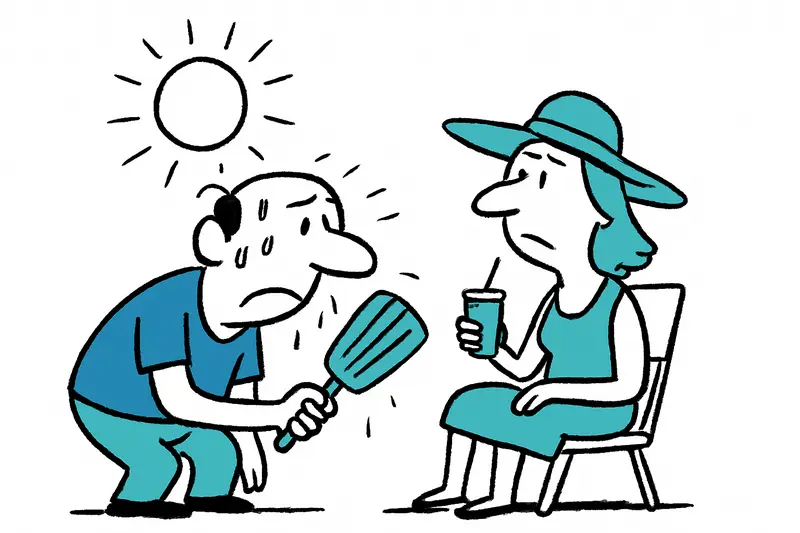
Reality check: Germany hotter than Mallorca – what this really tells us
Reality check: Germany hotter than Mallorca – what this really tells us
Curious weather: while up to 41 °C are expected in Germany, Mallorca remains "only" up to 38 °C. A look at risks, everyday life and what is missing here.
Reality check: Germany hotter than Mallorca – what this really tells us
Key question: Does a somewhat "cooler" Mallorca mean all-clear — or does the report just hide the real problems?
At first glance it sounds like a joke: the German Weather Service (DWD) announces up to 41 °C in places for the weekend, while Aemet reports values around 37–38 °C for Mallorca. Anyone walking along the Passeig Marítim hears the usual clatter of buckets at the fruit stand, sees cafes partly lowering their shutters at midday and scooter riders with cloths around their faces — the heat is by no means gone here.
Brief analysis: Yes, objectively it is hotter in some parts of continental Europe right now. But the "slightly" cooler impression on Mallorca is only relative consolation. The island suffers from nights that barely cool down — Capdepera reported a tropical night of 25 °C, Portopí and Banyalbufar around 24 °C. The sea is heating too: 28.2 °C off Pollença, 26.5 °C near Cabrera. That has consequences for people, water consumption, health and fire risk, as highlighted in Heatwave reaches 42 °C: How Mallorca should cope with the new temperature peak.
Critical point: public discussion often focuses only on daytime maxima. What is missing is a view of cumulative stress. Prolonged heat, tropical nights and warm seas add up. For shift workers, elderly people in old apartments without air conditioning and tourism employees who stand outside for long periods, "only 38 °C" is anything but harmless.
A scene from everyday life: on a Thursday afternoon at Platja de Palma lifeguards sit in the shade of the tower, alternating with drinking breaks. Beach vendors with their coolers move slowly between sunbeds. On the Camí de Sa Riera gardeners complain about drying irrigation channels, while in town the hum of air conditioners in apartments loudly echoes through the narrow streets.
What authorities need to communicate: warning levels are important — Aemet currently issues heat warnings for the southwest, northeast and the island interior — but there is often no translation into concrete behavioral rules for locals and visitors, a gap discussed in Heat alert on Mallorca: How well is the island prepared for infernal heat days?.
Concrete solutions for Mallorca (not theoretical, but immediately implementable):
1. Cooling rooms and extended opening hours for public buildings: Make libraries, community centers and public pool hours available and well publicized on hot days. An entry on Aemet warning pages with local links would help, and similar proposals are outlined in 40 Degrees This Weekend: Mallorca Faces a Heat Test – What Matters Now.
2. Make water supply more visible: Mobile drinking fountains at beach accesses, additional water taps in pedestrian zones and signs pointing to local water distribution points — especially in tourist hotspots.
3. Protection for outdoor workers: Mandatory breaks in shaded areas, adjusted working hours in the cooler morning/evening hours and free hydration packs for craftsmen and construction workers.
4. Night cooling strategy: Plantings, reflective roof colors and promotion of fans in care homes and schools. Tropical nights are the underestimated stress factor.
5. Preventive communication: Clearer, multilingual information at airports, ports and on ferry tickets: "How to protect yourself in heat", plus maps with shady spots and cooling stations.
What is often missing in public discourse is a connection from weather data to concrete municipal measures. Numbers without addresses help little. Also neglected is the question of how tourism must adapt to prolonged heat — not just short-term with fans, but structurally: more Mediterranean tree species in street plantings, canopies on promenades, adjusted bus timetables and more night services for workers.
An additional point: the warmer sea reduces nightly cooling and changes local ecosystems. Swimmers and watersports enthusiasts notice the temperature rise immediately; authorities should make bathing-water temperature reports more visible, for example via beach information and harbor offices.
My conclusion: that Germany is in places hotter than Mallorca is a curious statistic, but not an all-clear. It is a warning signal. We must not rest on relative comparisons. For the people on the island it matters how the heat affects them day and night — and whether there are practical, quickly implementable responses. A few mobile water stations, marked cooling rooms, worker-friendly rules and a louder local communication plan would already change a lot.
When thermometers climb on both sides of the Mediterranean on Saturday, it is not the number alone that counts, but the question: how well are we prepared if it is not just a weekend, but an entire summer?
Frequently asked questions
When is the best time to visit Mallorca if I want warm weather without peak crowds?
What should I pack for a trip to Mallorca, especially for beach days and sightseeing?
How easy is it to get around Mallorca without a car?
Are there family-friendly activities and beaches suitable for kids in Mallorca?
What’s the best way to explore the island’s historic towns without joining a big tour?
What should I know about Mallorca’s weather and sea conditions for swimming?
Are there good day trips from Palma to other parts of Mallorca?
Is Catalan or Spanish more commonly spoken in Mallorca, and do I need language basics?
Similar News
Stolen Motorcycle in Palma: Fatal Crash in Coll d'en Rabassa Shortly After Theft
A motorcycle parked on Plaza Miquel Dolç in Son Gotleu was reportedly stolen in the early hours. Hours later two men cra...
When More Guests Mean Less: Mallorca's Restaurants at the Limit
Despite record visitor numbers, the revenues of many restaurants are shrinking. Why more visitors don't automatically me...
Ballermann 2026: Heat, crowded promenade and rising prices – how much longer?
Bright sunshine, over 35 degrees in the shade and busy venues at Playa de Palma: Tourists enjoy the parties, restaurateu...
Stolen motorcycle, high-speed escape, deadly crash: An accident in Palma that raises questions
A motorcycle stolen in Son Gotleu ended up hours later on the Cardenal-Rossell in Coll d'en Rabassa in a deadly collisio...

Found dead in Son Gotleu: Dog walk ends fatally — what is missing in the investigation?
A 68-year-old man was found dead on Sunday morning on Tomás Rullàn street in Son Gotleu. According to his partner, he ha...
More to explore
Discover more interesting content

Boat Tour with BBQ along Es Trenc Beach

Private transfer from Mallorca Airport (PMI) to Pollensa
