
Photographing a Solar Eclipse Safely: How to Protect Your Eyes and Phone in Mallorca
Photographing a Solar Eclipse Safely: How to Protect Your Eyes and Phone in Mallorca
In the evening the island briefly grows dim. With a few simple preparations you can capture the atmosphere without risking your eyes or camera — from Portixol to Banyalbufar.
Photographing a Solar Eclipse Safely: How to Protect Your Eyes and Phone in Mallorca
Phone, eyes, landscape – how to capture atmospheric images without risk
When the sun briefly appears dimmed in the evening, the island changes: the heat settles heavy over the stones of Passeig del Born, the cicadas grow quieter, and walkers on the Portixol promenade suddenly switch to whispers. That's the moment many want to capture. A few simple rules ensure that this memory doesn't become costly or dangerous.
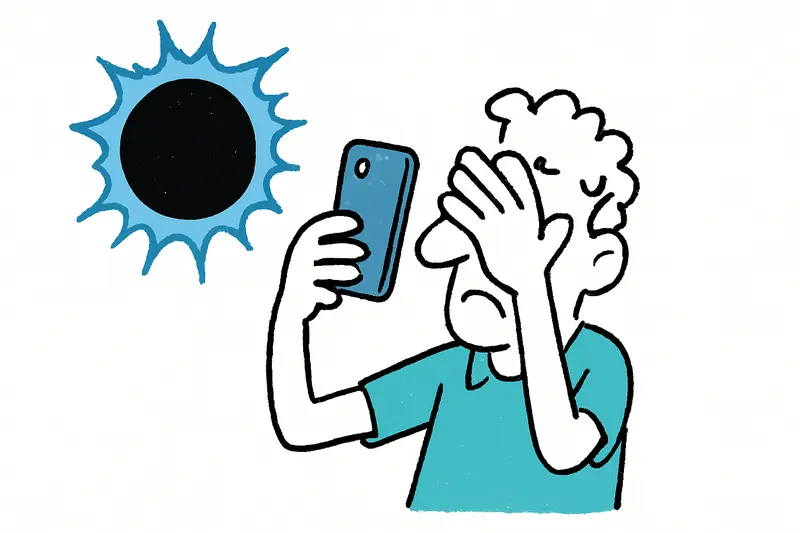
First and foremost: never look directly at the sun without protection. Even a brief glance can leave marks on the retina, which can be painless and yet permanent. In Mallorca we are used to being outdoors safely – the same caution during an eclipse is sufficient.
For smartphone photographers: don't just point and shoot. Modern phone cameras are sensitive. Prolonged unprotected aim at the sun and especially heavy zooming can damage sensors or optics. Ordinary sunglasses do not replace certified sun protection for the camera; improvised filters made from plastic or foil are risky because they neither fully block the radiation nor distribute heat evenly.
What works: a genuine solar filter foil, made specifically for eclipses, can be placed in front of the camera lens if it completely covers the lens and leaves no light gaps. Also practical are specially made sun-protection adapters for smartphone optics, which can be found in photo shops. In any case, it's advisable to use the display as a finder and not to look through an optical viewfinder.
A few technical tips: stabilize the device with a small tripod or mount – on a wind-sheltered balcony in Santa Catalina or at a rocky viewpoint in Banyalbufar this makes a noticeable difference. Tap the sun on the display to lock exposure, and lower the brightness manually so the disk doesn't disappear as a white spot in the image. Rather than using digital zoom, crop later on a computer: it's easier on the lens.
If you use a mirrorless or DSLR camera you have more creative freedom — but also more responsibility. For a large solar disk, telephoto focal lengths around 300 to 500 millimeters are suitable. A proper solar filter in front of the lens is absolutely necessary; regular ND filters are not automatically appropriate. A sturdy tripod, remote release and short exposure times help preserve the details of the disk. And: don't look through the optical viewfinder; use Live View instead.
Photographically interesting is not only the sun itself but the changed light mood: silhouettes against the darkening sky, people looking up, or Palma Cathedral appearing in an unusual tone. If you want to combine landscape and sun, you need to work with multiple exposures or assemble HDR images later. It's practical to take several test shots before the event and note your settings.
A small everyday tip: check the weather forecast shortly before the event at AEMET and look out for local photo shops or amateur astronomers in Palma, who often offer suitable foils and adapters. If the clouds are too thick, it's not a loss — the mood can still be special.
Finally: enjoy the moment. For a few minutes the eclipse brings an unusual calm to the evening in Mallorca. Whether you take a protected phone photo or simply stand among strangers and watch the light — if you stay safe, you'll remember a real experience later, not a technical or health mishap.
In short: Never look unprotected; use certified solar filters; use the display instead of the viewfinder; use a tripod and control exposure; for telephoto shots use a suitable filter; and capture the changed mood photographically. That way the memory of the sky hour in Mallorca stays beautiful — and intact.
Frequently asked questions
What is the best time to visit Mallorca for nice weather and outdoor activities?
Can I swim in Mallorca year-round, and what should I know about the sea?
What should I pack for a trip to Mallorca?
Are there family-friendly beaches in Mallorca?
How can I get around Mallorca without a car?
What are must-see places in Mallorca?
Is it safe to swim off Mallorca’s coast on windy days?
Do I need to learn Spanish to get by in Mallorca?
Similar News
Solar eclipse closures: Is Mallorca's traffic plan fit for the surge?
The Balearic Islands will close access to around 20 viewpoints and beaches between 3pm and 9pm. Key question: do the mea...

Hachiko dead: An accident, deep sorrow — and the question of what dog protection on Mallorca should improve
The dog of actor Martin Semmelrogge was found dead after a desperate search. A look at the events, what's missing from t...
Cristiano Ronaldo and Georgina Rodríguez: Wedding after Mallorca Stay — a Family Celebration
The couple shared a photo of their wedding rings on Instagram. After days on a luxury yacht off Mallorca, they reportedl...

Is the traffic plan sufficient for the solar eclipse? A reality check for Mallorca
On August 12 authorities will close access roads to around 20 natural sites. We ask: Can the plan withstand the rush of ...

Rental car drivers in Mallorca: What you face — and why fines are only half the solution
Cigarette butts, cans, bags: Those who throw waste from their car in Mallorca risk up to €500 fine and six penalty point...
More to explore
Discover more interesting content

Boat Tour with BBQ along Es Trenc Beach
Private transfer from Mallorca Airport (PMI) to Pollensa
