
Postcards more expensive, postal service unchanged? A reality check on the 2026 postage increase
Postcards more expensive, postal service unchanged? A reality check on the 2026 postage increase
From 1 January 2026 a Mallorca postcard to Europe costs €2. What does that mean for tourists, small vendors and the island’s post offices? A critical look with an everyday scene and concrete solutions.
Postcards more expensive, postal service unchanged? A reality check on the 2026 postage increase
Key question: Who ultimately bears the extra cost — holidaymakers, small shops or the public sector?
From 1 January 2026 the postage for postcards within Europe will be €2.00. Until now a postcard cost €1.85; stamps for standard domestic letters will rise from €0.89 to €0.96. The state postal administration announced this as a response to increased costs. On the promenade in Palma, behind the Mercat de l'Olivar, you can hear souvenir shop windows clattering early in the morning and see the first tourists strolling past the postbox — some will not notice the surcharge at all, others will think twice about whether to send a card.
Analysis: At first glance this looks like a small, technical adjustment. But postage is not an abstract price — it is part of the experience of "sending Mallorca": the card with salt-air marks, the hurried signature, the stamp from an island post office. For frequent travellers an extra 15 cents is negligible. For cafés, kiosks and small hotels that sell stamps over the counter, such increases can squeeze margins or create confusion at the till. Above all, it hits people who rely on analogue mail: older residents, small business owners, landlords who send invoices by post, or local club treasuries.
What has been missing from the debate so far: the discussion focuses almost exclusively on the price tag. Hardly anyone asks whether more money will actually buy better services. Will delivery frequency, rural routes or mailboxes be upgraded? How transparent is the cost breakdown behind the price increase? In some villages people report that letters arrive later or that postal workers are overburdened due to staff shortages. These are not mere anecdotes — they show that postage and quality must be considered together.
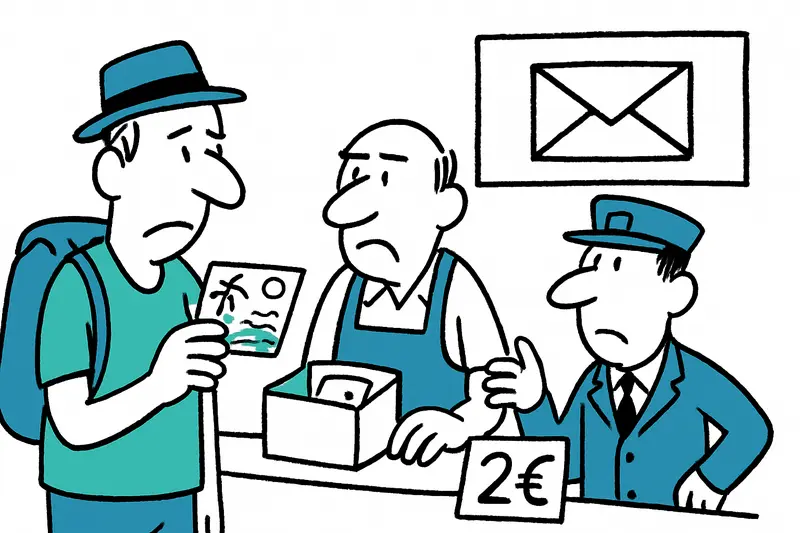
Everyday scene: Tuesday afternoon at the Plaça Major. An elderly woman stands in front of the post office’s yellow counter, three postcards in her hand, and utters a resigned "Vale" because the shop no longer has the right stamps. Next to her a surf shop is selling off its last postcard stock with discounted stamps. These small moments explain a lot about the effect of a price change: it is not just the cent value, it is the availability and the way people continue to maintain analogue connections.
Concrete approaches so that postage increases do not become a nuisance: First, inform and stock till staff in tourist areas and transport hubs in good time and supply them with enough stamps. Second, hotels and tourist services could offer fair-price packages — a bundle with a hotel stamp and stamps that makes farewells easier. Third, municipalities can install additional official postboxes or ticket-capable machines in highly frequented places such as harbour promenades or market halls. Fourth, transparent disclosure of the postal administration’s cost structure would build trust — which costs are actually rising, and what will the money be used for? Fifth, for older people municipal collection times could help, where volunteers or municipal staff assist with stamping and sending.
Some of these ideas can be implemented locally without waiting for Madrid. The Ajuntament (municipality) of Palma or the smaller town halls could coordinate stock levels with post offices — simple agreements save kiosks lost sales and prevent holiday mail from being left behind unintentionally. At the same time it would make sense to promote digital alternatives: e-postcards with a local stamp as a voluntary addition for tech-savvy users, not as a replacement for the analogue option.
Conclusion: The postage increase is not a disaster — but it is a wake-up call: prices change, and expectations of service must adapt. Anyone who takes the small everyday postal world on Mallorca seriously should now think about provision, transparency and simple local solutions. Otherwise all that will be left is the more expensive postcard on the shelf that no one can find because the right stamp is missing. And that would be a pity — not just for tourists, but for the people here who continue to rely on letters and cards.
Frequently asked questions
How much will a postcard from Mallorca to Europe cost in 2026?
Will the 2026 postage rise affect tourists in Mallorca?
Does Mallorca's postal service improve when postage gets more expensive?
What should I pack if I want to send postcards from Mallorca?
Why do small shops in Mallorca care about higher postage prices?
Where can I send a postcard in Palma de Mallorca?
Are mailboxes in Mallorca easy to find for holiday postcards?
What is a practical way to avoid problems sending letters from Mallorca?
Similar News

"Expensive chaos" and many open questions: What clients can do when a lawyer suddenly stops responding
Several clients complain that a well-known German lawyer in Mallorca has been unreachable for months. Key question: What...
TV tip: 'The Last Problem' — Mallorca as the setting of a classic crime
A classic whodunit on Mallorca: A new miniseries set in spring 1959 brings storm, an isolated hotel and a dense web of s...
Nipping Sea Creatures: Why Bathers in Cala Major and Elsewhere Should Be Cautious
In Cala Major, bathers have reported being nipped by small fish. What is behind it, how can problems be avoided — and wh...
Forced eviction in Santa Catalina: When a 65-year-old slept in her car and showered on the beach — a question of responsibility
The story of Pilar López from Santa Catalina represents a problem affecting many Mallorcans: How can an island with a bo...
New traffic rules from October 1: What Mallorca visitors and locals need to know
From October 1, 2026, Spain will implement far-reaching changes to traffic regulations. Important for Mallorca: greater ...
More to explore
Discover more interesting content

Can Cap de Bou

Townhouse Lleo 72
