
Private Jets to Mallorca: Between Jet Privileges and Island Everyday Life — A Reality Check
Private Jets to Mallorca: Between Jet Privileges and Island Everyday Life — A Reality Check
JetApp sees Mallorca as a year-round destination for private jets. Is that thesis correct, and what does it mean for the climate, the airport and the neighborhood? A critical look with practical proposals from everyday island life.
Private Jets to Mallorca: Between Jet Privileges and Island Everyday Life — A Reality Check
What does the supposedly year-round high season really mean for the island?
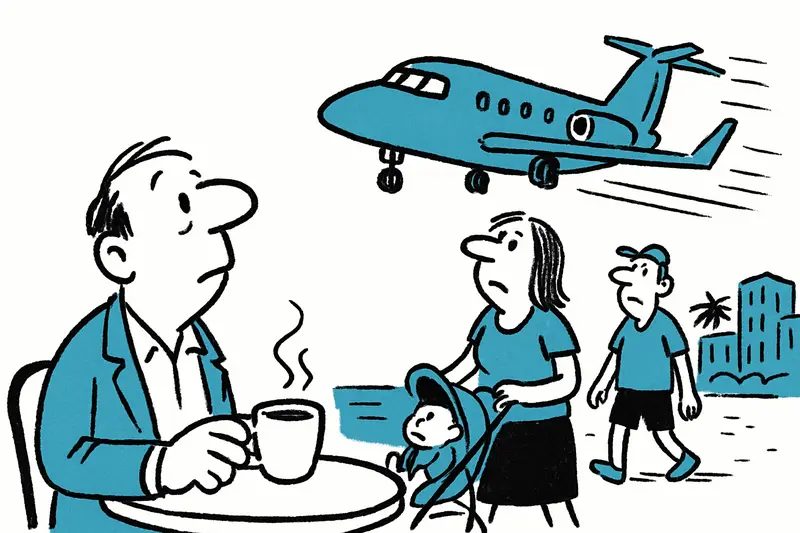
Short version: Yes, providers like JetApp report continuous demand for private flights to Mallorca, especially from Germany, as noted in Reality Check: Why Mallorca Can Hardly Escape Massification. The longer version is more complicated. If you have a coffee in Passeig Mallorca in the morning, you no longer only hear motorcycles and pigeons, but occasionally the lower-flying engine noise of private aircraft. The question I want to ask here is: What are the consequences of this development for the climate, airport operations and everyday life on the island — and which answers are missing from the conversation?
Analysis
Private jets mainly sell time: less waiting, direct departure points, flexible schedules. That explains why businesspeople, owners of holiday properties and wealthy tourists appreciate the option. JetApp names Mallorca as a continuously popular destination; the island's proximity to German economic centers and its good infrastructure surely contribute. Flights from Munich, Frankfurt, Düsseldorf or Hamburg are quick, often one to two and a half hours — a clear attraction, as discussed in Between Leather Seats and the Open Road: What Düsseldorf's Jet Connection Really Means for Mallorca.
But efficiency has its price. Ecologically, short-haul flights with small business jets are often significantly worse per passenger than scheduled airlines. At the municipal level this shows in two areas: noise and the use of public infrastructure. Son Sant Joan is not private; additional charter movements consume slots, ground staff, security checks and access roads. For the business park around the airport, for taxi drivers on the Carretera de Llevant and for small hotels in the city this can mean more revenue — but the balance between benefit and burden is not an automatic win for island society.
What is missing in public discourse
The current debate often stays on the surface: market opportunities, service comfort, international rankings. What rarely appears are clear data on the number and frequency of private takeoffs and landings, their actual distribution over the year and a transparent CO2 balance of these movements, and oversight issues (see Fake Pilot in Europe's Skies: Why Mallorca Must Take a Closer Look). Also rare are voices from immediate neighborhoods — from parents in residential areas near the approach path, from farmers in the Migjorn or from hotel cleaning staff who wonder about seasonal fluctuations.
Concrete everyday scene
A Tuesday morning: in Portixol an older man reels in his lobster pots, the seagulls circle, the bakery on Calle Sant Miquel is just filling the shelves with ensaimadas. Suddenly a sharper engine sound from the direction of the airport; a small group of walkers look up. For the man in the boat it is a sound like always. For the hotel hostess who picks up guests by private transfer late at night it is routine. For the mother who doesn't want to disturb her baby’s sleep in the evening it is an additional burden. These small, woven scenes are often missing in PR texts.
Concrete solution approaches
The island does not need enemies of technology, but clear rules. Proposals that could be implemented practically:
- More transparency: publish airport data on private and charter movements; low barriers for released monthly statistics. This creates a basis for politics and neighborhood dialogue.
- Examine noise zones and time restrictions: regulate night flights more strictly, plan arrival and departure routes so that sensitive residential areas are spared as much as possible.
- Eco-tax for private short-haul flights: not a ban, but a price signal that promotes more sustainable alternatives. Revenues could flow into public transport connections to the airport or into reforestation projects.
- Promote sustainable fuels (SAF) and stricter reporting obligations: providers should be required to disclose the share of sustainable fuels and offset measures.
- Promote shared solutions: shuttle and fractional-ownership models (shared jets) instead of individual empty flights; this reduces empty legs and increases load factors.
Why this is feasible
Mallorca has experience with conflicts of interest: mass tourism and nature conservation, party scenes and quiet places, urban development and monument protection. Authorities, hoteliers and residents have shown in the past that rules are possible — when data and pressure from below align. Transparency makes it easier to adopt robust measures that do not blindly punish the economy but protect quality of life.
Conclusion
Private jets are not a purely technical issue but part of island everyday life felt in Plaça Major over an espresso. That providers like JetApp see Mallorca as a year-round destination is no surprise. It becomes problematic when growth happens without accompanying rules and without publicly accessible data. The island needs fewer glossy PR stories and more regularly published figures, clear noise protection regulations and financial incentives for more sustainable flight options. Otherwise the bill will be negative for many residents — and you can hear that every morning in the sky over Palma.
Frequently asked questions
Why are private jets so common in Mallorca throughout the year?
How do private jets affect everyday life in Mallorca?
Are private jet flights worse for the climate than scheduled flights?
What information about private jet traffic in Mallorca is still missing?
Does Son Sant Joan airport in Mallorca handle private jets separately?
What could Mallorca do to reduce the impact of private jet flights?
Is there support for public transport links to Mallorca airport?
Why do residents near Palma notice private jets more than tourists do?
Similar News

Rental Car Theft in El Arenal: What This Incident Reveals About Our Gaps
A teenager steals a running rental car in El Arenal, flees on foot, climbs over walls and is caught by the Guardia Civil...

Red Rope in Palma's Library: What Helps Against Selfie Tourism — and What's Missing
Palma's city library cordoned off an area with a red rope to keep selfie tourism away from reading and working activitie...

Fort San Carlos: Museum, Harbor Dispute — and a Conflict That Demands Answers
The military museum at Fort San Carlos sits right on Palma's harbor, with unexpectedly quiet rooms filled with cannons a...
Old Town Under Pressure: When a Doorway Becomes a Sleeping and Shower Place
For months a woman has been living with a parasol, a clothes rack and personal belongings next to the social welfare off...

When Shopping Weighs Heavier: Mallorca Demands a Tax Pause on Food and Fuel
Rising prices are putting pressure on households and agriculture. The Balearic Islands are calling for temporary tax rel...
More to explore
Discover more interesting content

Can Cap de Bou

Townhouse Lleo 72
