
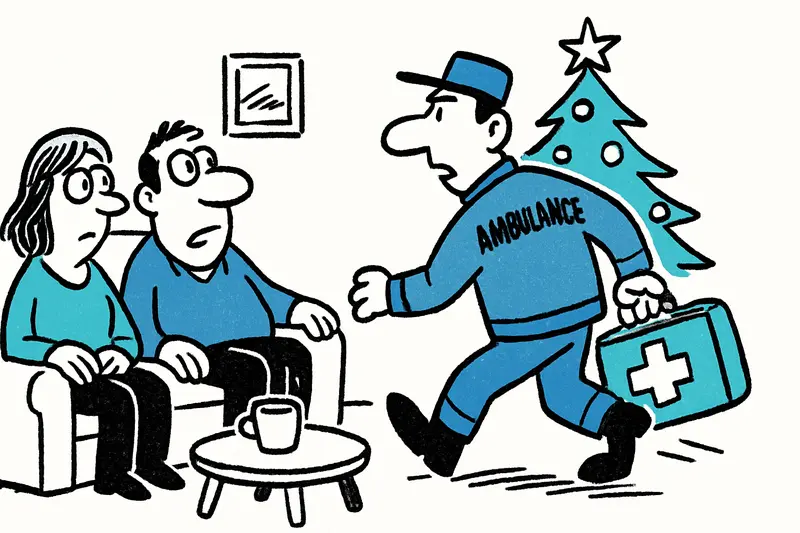
Quiet Christmas Eve? A reality check after the incidents in Mallorca
Quiet Christmas Eve? A reality check after the incidents in Mallorca
The emergency call center recorded 69 Christmas-related incidents — 57 of them on Mallorca. Police describe the night as "relatively quiet." What does this say about safety, prevention and transparency on the island?
Quiet Christmas Eve? A reality check after the incidents in Mallorca
69 Christmas-related incidents, 677 emergency calls — and still the assessment: relatively quiet
The sober numbers are on the table: on the night leading into Christmas Day the emergency call center in the Balearics registered 677 incoming calls; 69 of them were directly related to the festive period. The distribution is clear: Mallorca was hit hardest with 57 incidents, Ibiza recorded seven and Menorca four. The deployments ranged mostly from medical emergencies on streets and in hospitality venues to physical altercations. Yet authorities describe the evening as "relatively quiet." Key question: What does the public mean when official bodies speak of a quiet Christmas Eve?
There is a difference between falling below a statistical threshold and people feeling safe on the street. The 69 Christmas-related cases may be below the informally cited mark of one hundred — but the composition of the incidents says more than a number: 13 fights, 12 cases of bodily harm, nine traffic accidents, including incidents described in Three serious accidents in one night: Injuries on Mallorca, five threats, five trespassing incidents and three robberies are not just abstract statistics. Each single case can have serious consequences for those affected and for residents. In Mallorca, where Palma's inner city is usually relatively quiet at Christmas, concerns about promenade safety have been raised in reports such as Alarm on the Paseo Colón: How safe are Mallorca's promenades after nightfall?, yet sirens could still be heard, muffled voices in front of taverns and the clinking after an altercation near the Carrer de Joan Miró.
A locally known incident: in a nightclub near the Carrer de Joan Miró there was a severe head injury early Monday morning after one woman allegedly struck another with a glass bottle. The victim suffered a heavily bleeding scalp wound and had to be stitched in hospital. Witness statements described short-term confusion because another person was initially mistakenly thought to be the attacker. Such scenes linger in the memory of neighbors and bar staff, especially in Palma's narrow alleys.
What is often missing from public discourse is context: how many of these deployments are demonstrably linked to excessive alcohol consumption? How fast were the response times of ambulance services and police? Do those treated as outpatients end up back on the street or remain hospitalized? Without such information the assessment "relatively quiet" remains incomplete. Transparency would not be a mere buzzword here but a tool for improvement: data on times, hotspots, alcohol and drug involvement as well as the ages of those involved would help plan more precise prevention measures.
The island also shows that the burden is distributed unevenly. Palma had significantly more incidents than the smaller islands. That argues for a focus on city centers with a high density of bars and clubs. At the same time, medical emergencies in restaurants and on streets indicate that ambulance services must be tightly coordinated during peak times. It is not enough to plan for more staff on holidays; clear agreements with nightlife venues, better training for door staff and concepts for stabilizing the injured before the ambulance arrives are also needed.
Concrete proposals that could help Mallorca: firstly, the transparent publication of aggregated deployment data with time windows and categories so that urban planners and public order services can intervene in a targeted manner. Secondly, mandatory training for staff in restaurants and clubs on de-escalation and first aid. Thirdly, voluntary glass bans or increased use of plastic cups in particularly vulnerable venues. Fourthly, more dedicated contact points for people in acute need — temporary first-aid posts in the city center during holidays to relieve ambulances. And fifthly, preventive information campaigns ahead of major holidays, as during Immaculate Conception on Mallorca: Shops closed, questions remain, that address not only tourists but explicitly festive behavior and safe ways home.
An everyday scene: it's just before midnight, about 10 degrees outside, the wind carries the sound of tramcars along Passeig Mallorca, and in a bar a phone suddenly rings with an emergency call. An ambulance turns into the street, two paramedics jump out, and one of the regular cafés offers the team the restroom. These small, unspectacular cooperations between neighbors, hosts and emergency crews often prevent worse outcomes — yet they are barely visible in official statements.
Punchy conclusion: numbers alone do not make a safe island. That the emergency call center classified the Holy Night as "relatively quiet" is not wrong — but it must not obscure the fact that tangible problems occurred in Mallorca that need to be addressed systematically. More transparency, targeted prevention and practical agreements between authorities, emergency services and nightlife would turn a "relatively quiet" evening into a night that is truly safe — for locals and visitors alike.
Frequently asked questions
Was Christmas Eve in Mallorca really quiet?
How many emergency calls were made in Mallorca on Christmas Eve?
What kinds of incidents happen in Mallorca on Christmas Eve?
Is Palma safe at night during the Christmas holidays?
What happened near Carrer de Joan Miró in Palma on Christmas Eve?
Why do emergency services in Mallorca call a night like this relatively quiet?
What could help improve safety in Mallorca during holiday nights?
Which parts of Mallorca were most affected by Christmas Eve incidents?
Similar News

"Expensive chaos" and many open questions: What clients can do when a lawyer suddenly stops responding
Several clients complain that a well-known German lawyer in Mallorca has been unreachable for months. Key question: What...
TV tip: 'The Last Problem' — Mallorca as the setting of a classic crime
A classic whodunit on Mallorca: A new miniseries set in spring 1959 brings storm, an isolated hotel and a dense web of s...
Nipping Sea Creatures: Why Bathers in Cala Major and Elsewhere Should Be Cautious
In Cala Major, bathers have reported being nipped by small fish. What is behind it, how can problems be avoided — and wh...
Forced eviction in Santa Catalina: When a 65-year-old slept in her car and showered on the beach — a question of responsibility
The story of Pilar López from Santa Catalina represents a problem affecting many Mallorcans: How can an island with a bo...
New traffic rules from October 1: What Mallorca visitors and locals need to know
From October 1, 2026, Spain will implement far-reaching changes to traffic regulations. Important for Mallorca: greater ...
More to explore
Discover more interesting content

Can Cap de Bou

Townhouse Lleo 72
