
Ramona’s in Magaluf: German home cooking that keeps the lights on in winter
Ramona’s in Magaluf: German home cooking that keeps the lights on in winter
In the middle of Magaluf's quiet winter version, Ramona Hanke provides familiarity with goulash, Spätzle and schlager — open daily, even at Christmas. A plea to support small local restaurants.
Ramona’s in Magaluf: German home cooking that keeps the lights on in winter
When Avinguda Magaluf looks deserted in December, with shutters pulled down and only the occasional passing holidaymaker, there is one place that doesn’t close: Ramona’s, at Avinguda Magaluf 10. I visited on a mild afternoon (just above 15 degrees); the place glows in red and white, small garlands hang in the entrance, and thick blankets are ready on the terrace. It smells of broth and freshly baked cookies — you could hardly make winter cozier.
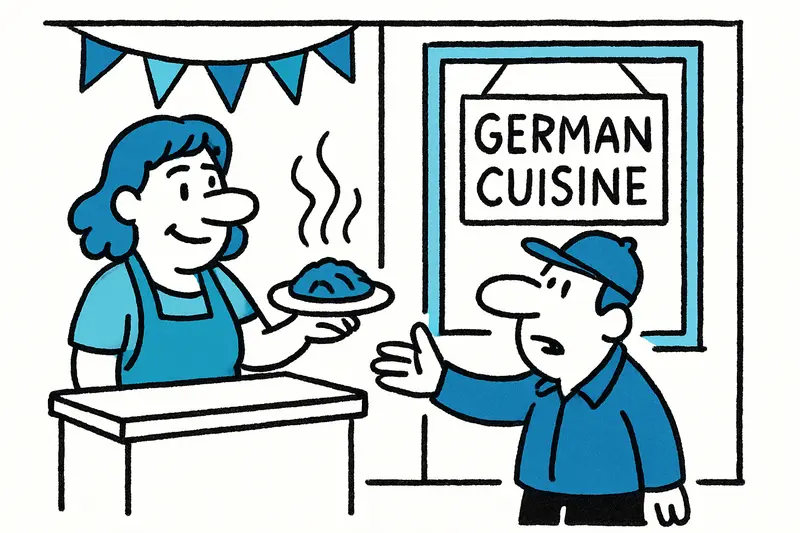
The owner is Ramona Hanke. She comes from Dresden and has lived on the island for around three decades. You can tell by every movement that she loves cooking as a craft: she stirs the lentil soup herself, shapes the Spätzle by hand and prepares the goulash with a hearty sauce that smells of onions and paprika. German schlager plays on the screen in the background, not overpowering but like a familiar soundtrack. The sign "German Cuisine" in the window feels like a promise that Ramona keeps.
What works well here is simple: reliability. Ramona has focused her small menu clearly — lentil soup, goulash with homemade Spätzle, red cabbage, stollen and cookies — and serves it daily from 8 a.m. to 6 p.m., with no day off, even on Christmas Eve and New Year’s Eve. For special occasions she offers a festive menu, for example a Christmas goose available by pre-order (see Christmas under Palm Trees: Germans Enjoy Advent in Mallorca). For many guests this means familiar flavors in a place where Magaluf is otherwise often dominated by fish and chips or Indian curries.
The guest list is varied: some German holidaymakers stop by, curious and relieved; Spaniards from the area and people from Palma also come, curious for something different. In winter you see fewer of the usual large tourist groups and more regulars, neighbors and people who value home-cooked food. Ramona says that the summer months bring a different crowd — more experimental guests who try new things — but in the low season reliability and warmth pay off.
Everyday details stay in the memory: the sound of cutlery, the quiet conversation of two older men at the counter, the waitress carefully sliding a steaming portion of goulash across the bar, and outside the occasional engine noise of a public bus. The atmosphere is more like a small canteen with heart than a restaurant with a show. That suits Magaluf outside the high season: less partying, more everyday life.
Why is this good for Mallorca? Small businesses like Ramona’s keep tourist places alive when the beaches are empty (see Empty Tables, Tight Wallets: Mallorca's Gastronomy at a Crossroads). They create jobs, prevent streets from falling completely into a sleeping spell, and offer residents and visitors a meeting place outside the noisy summer months. Culinary variety is not a luxury but part of the island’s appeal — places like this make Mallorca more diverse year-round (see Mallorca's Restaurants: Too Much Sameness, Too Little Courage — How the Island Rediscovers Its Flavor).
A note to readers: if you are in the area in the coming weeks, drop by. A plate of goulash with homemade Spätzle warms you longer than a short beach break at 15 degrees. If you are planning a holiday meal, you can pre-order the Christmas goose; if you prefer to be spontaneous, take a lentil soup and a piece of stollen to go. Reservations are not mandatory but sensible for the evening service and on holidays.
Ramona herself dreams of convincing more people of her cooking; she remains optimistic even though guest numbers are smaller in winter. In a town that lives off parties in summer, her decision to keep the place open is almost a small act of civic courage: she offers everyday life, familiarity and taste. That is worth more for Magaluf than it seems at first glance.
Outlook
Ramona’s is not a spectacular newcomer but a piece of lived normality in a seasonal town. Such places keep the island habitable — for locals and for visitors who want more than just a beach. So: yes, the schlager music plays, yes, there is goulash and Spätzle. And for that reason a visit is worthwhile.
Frequently asked questions
Is Magaluf open in winter, or does everything shut down?
What kind of food can you expect at Ramona’s in Magaluf?
Is Ramona’s in Magaluf open every day?
Can you order a Christmas goose in Mallorca?
Is Ramona’s in Magaluf worth visiting if you want something different from beach food?
What is the atmosphere like at Ramona’s in Magaluf?
What should I wear or bring if I eat outside in Mallorca in winter?
Why do small restaurants matter for Mallorca in the low season?
Similar News

Ryanair Flight Diverted to Barcelona: An In-Flight Emergency and the Questions That Follow
A Ryanair jet from Pisa to Málaga landed in Barcelona after a passenger became acutely ill. Why these cases need more at...

Alarm in Port de Pollença: What now for the polluted bay?
Hundreds of people protested on the beach of Port de Pollença. The environmental organization Arrels Marines demands a p...

Micaela Schäfer: Between Playa de Palma and a Berlin Law Firm — New Calm, an Old Tomcat and Solid Finances
The party artist from the Ballermann scene appears surprisingly down-to-earth: a new relationship with a Berlin lawyer, ...

At Playa de Palma: Fire in Residential Building – six people rescued on the roof, what is missing in prevention?
In the evening a fire broke out on the first floor of a five‑storey building on Calle Trasimé. Six residents fled to the...

New License Requirement for Mini-Boats in Mallorca: Protection Measure or Tourism Brake?
From October 1 renters of small recreational boats in the Balearics must present a boating license. Critical questions r...
More to explore
Discover more interesting content

Boat Tour with BBQ along Es Trenc Beach
Private transfer from Mallorca Airport (PMI) to Pollensa
