
Long traffic jam after rear-end collision on the Vía de Cintura: a wake-up call for better traffic preparedness
Long traffic jam after rear-end collision on the Vía de Cintura: a wake-up call for better traffic preparedness
A rear-end collision near the Son Hugo exit slowed traffic on the Vía de Cintura this morning. No serious injuries, but long delays and renewed questions about road safety.
Long traffic jam after rear-end collision on the Vía de Cintura: a wake-up call for better traffic preparedness
Collision near the Son Hugo exit causes kilometers-long backups on February 14
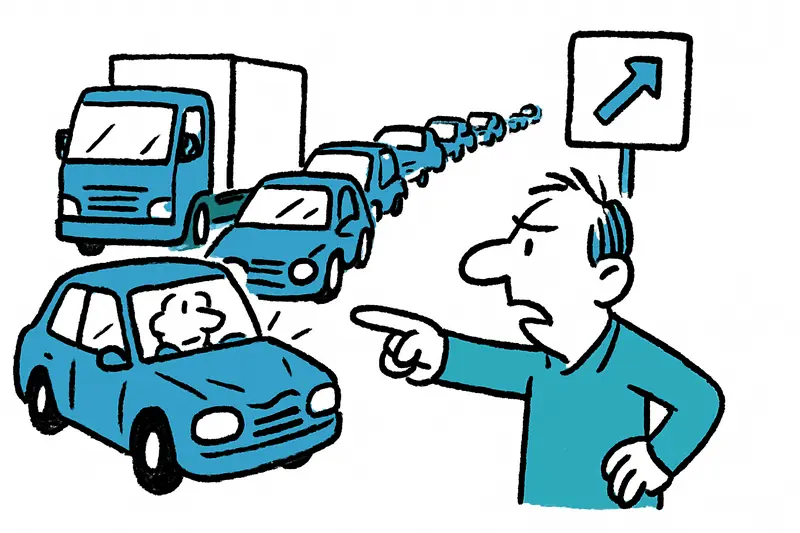
This morning at around 11 a.m. there was a rear-end collision on the Vía de Cintura heading towards Andratx, just after the Son Hugo exit. One lane had to be closed; as a result, a traffic jam formed that at times stretched for more than three kilometers. Fortunately, there were no serious injuries — only minor bruises and significant property damage. Because one of those involved had recently undergone heart surgery, emergency services attended the scene as a precaution.
Many drivers in Mallorca know the scene well: the engine coughs, twisted metal still smells in the air, a bus horns nearby, and a driver at the roadside is frantically on the phone. This scene played out this morning on one of the main traffic arteries around Palma. Commuters, delivery drivers and tourists were partly at a standstill; at the height of Son Hugo the pace slowed to a crawl. Those familiar with the route know: even small disruptions can spread quickly here; similar events include a stalled truck that paralyzed the Vía de Cintura.
Key question: why does a relatively minor rear-end collision on the Vía de Cintura so quickly lead to such widespread traffic problems? The answer lies in several factors: heavy traffic load, tight interchanges at exits and a lack of alternative capacity. Unlike rural roads, there are hardly any opportunities here to absorb congestion quickly. A closed lane immediately reduces throughput, backups grow, buses lose minutes — and the knock-on costs for supply chains and commuters add up; similar chain-reaction incidents have been recorded, for example a severe rear-end collision on the Ma-13 between Inca and Palma.
Critical analysis: today's incident highlights how vulnerable the infrastructure is to disruptions. We often lack dynamic response mechanisms: coordinated dispatch systems that prioritize emergency routes, or traffic management systems that quickly display diversions. The precautionary presence of emergency services is correct and reassuring; but it also reveals how medical caution can exacerbate congestion when emergency vehicles require additional space.
What is often missing from public debate is an honest discussion about everyday road safety on the island, not just large projects. It is about continuous measures: keeping safe distances, more buffer lanes, better signage before critical exits, and faster crisis management in network operations. The role of bus lanes, cycle paths and available parking on the outskirts also affects how such jams develop; non-collision events such as a cement cloud on the Vía de Cintura have likewise reduced visibility and triggered long delays.
Everyday scene from Palma: at a bus stop near Son Hugo a woman sits with a shopping bag, the ceramic beads of her bag mingling with the noise of idling engines. A taxi driver raises his voice while delivery drivers give up and switch off their engines. These small moments show how traffic is a social event, not just a technical problem.
Concrete measures that could help immediately: first, increased use of variable traffic signs and digital displays that show diversions early; second, closer coordination between police, emergency services and traffic management so that a closed lane can be cleared faster and traffic gradually reopened; third, targeted enforcement of safe following distances to prevent rear-end collisions; fourth, creation of small escape areas and emergency lay-bys at critical points along the Vía de Cintura; fifth, information campaigns for commuters on how to behave at an accident scene so that rescuers can work efficiently.
For medium-term planning it is worth looking at mobility data: which sections are more prone to chain reactions? Where do lane widths help, and where are separate merging and diverging lanes sensible? Responsibility does not lie with a single institution: Ajuntament de Palma, Consell de Mallorca and the agencies responsible for traffic control must work together — without new finger-pointing, but with concrete pilot measures.
Conclusion: the rear-end collision at the Son Hugo exit was not a tragedy, but it was a clear warning sign. As long as small incidents can immobilize large parts of daily traffic, island residents and visitors will feel the effect of every real or perceived bump. We need pragmatic interventions, better communication and more foresight on the road — so that a small accident does not become a whole day stuck in traffic.
Frequently asked questions
Why does a small accident on the Vía de Cintura in Mallorca cause such long traffic jams?
What should drivers in Mallorca do after a rear-end collision on a busy road?
Is the Vía de Cintura around Palma especially prone to traffic jams?
How serious was the rear-end collision near the Son Hugo exit in Palma?
What can help reduce traffic jams on Mallorca’s ring roads after an accident?
How long can a lane closure on the Vía de Cintura affect traffic in Mallorca?
What causes rear-end crashes on Mallorca’s busy roads?
Who is responsible for managing traffic incidents on Mallorca’s main roads?
Similar News
Injured captain, big plans: Germania Mallorca before the away match in Consell
The newly founded FC Germania Mallorca travels to Consell on Saturday. Captain Bastian Müller is out injured, but coach ...
Palma, Palma de Mallorca, Palma‑Mallorca: What is it really about?
The debate over the city's name is more than grammar: it concerns identity, law and branding policy. A sober reality che...
Warning to Bathers: Nipping Fish in Cala Major and Other Coves — a Reality Check
In Cala Major and several beaches around Mallorca, bathers report painful “nips”. Who are the animals, why are they gett...

Rental Car Theft in El Arenal: What This Incident Reveals About Our Gaps
A teenager steals a running rental car in El Arenal, flees on foot, climbs over walls and is caught by the Guardia Civil...

Red Rope in Palma's Library: What Helps Against Selfie Tourism — and What's Missing
Palma's city library cordoned off an area with a red rope to keep selfie tourism away from reading and working activitie...
More to explore
Discover more interesting content

Can Cap de Bou

Townhouse Lleo 72
