
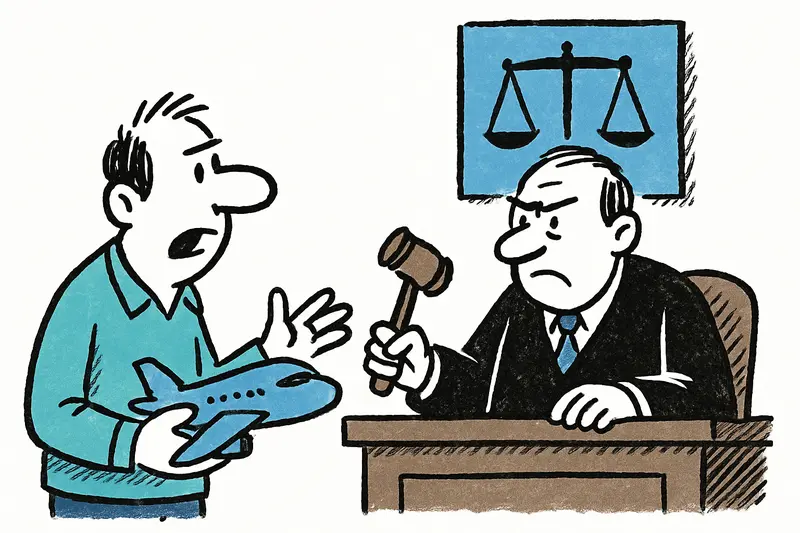
Judges in Palma strengthen passenger rights — a win with open questions
The provincial court in Palma pushes back against airlines' formal excuses — good for travelers, but the practical consequences raise new questions: who will bear the costs, how quickly can rulings be enforced and how will this change everyday life on the island?
Who pays in the end — the airline, the service provider, or the holidaymaker?
On the steps to the provincial court of Palma, the click of heels mixes with the distant hum of the airport air conditioning and the occasional call of a taxi driver hoping for customers. In recent months judges have sent clear signals: airlines can no longer block compensation payments with formal excuses, as reported in Jueces en Palma refuerzan los derechos de los pasajeros – una victoria con interrogantes. The central question remains: is an admission of liability by the airline enough for passengers to quickly get their money?
The court says yes — but with a big caveat
Several rulings concerned flights with long delays, for example an Alicante–Palma service delayed by more than three hours. In the final instance the judges ordered payments — in individual cases they confirmed amounts up to €4,800. An important signal: intermediary firms that collect claims and forward them to airlines are not a reason to withhold payouts. This strengthens passengers who, after a night at the baggage belt with tired eyes, assert their rights in court, as discussed in New legal situation for package travelers: What the Wiesbaden ruling means for Mallorca visitors.
Why the ruling does not automatically mean quick payout
A court decision is a stage victory, not the end of the journey. Enforcement costs time and money. A small side question: who bears the additional administrative costs if more cases end up in court? Public perception tends to focus on the court-confirmed claim. The less visible consequence is that effort and fees appear elsewhere — with the airlines, with service providers or, in the worst case, with end consumers.
More proceedings in Palma — curse or opportunity?
It is realistic to expect the number of lawsuits in Palma to rise. That means: longer waiting times in the offices, full calendars for judges and more people sitting with their boarding passes in a small café near the court waiting for a decision. For the island this can be both an opportunity and a burden: more work for law firms, translators and consumer centers — but also a higher density of cases that places greater demand on administration and the justice system.
The less noticed consequences — who pays the bill?
Companies that handle collective claims could reorganize: more efficient, yes, but also with higher service fees. Airlines might overhaul internal processes and reassign costs. The risk is that savings are then passed on to customers in the form of more expensive tickets or more restrictive terms for ancillary services. This is an aspect that is often overlooked in the public debate, as highlighted by Checkpoint Son Sant Joan: When unpaid fines can stop a holiday.
Practical steps for travelers — so the claim doesn't fail on formalities
A few pragmatic tips lower the threshold: keep your boarding pass, booking confirmation and receipts. Photograph information boards, note times at the baggage carousel. Submit claims in writing to the airline and document the responses. If the airline does not react: involve the arbitration body. Since April there have been EU-level rules for more efficient mediation — this is not theoretical, it can noticeably speed up procedures. Important: using an online platform does not automatically entitle the airline to reduce payments.
Concrete proposals so the ruling does not remain only on paper
For passenger rights to be effective in practice, several measures would help: clear information obligations by airlines at the airport, multilingual forms at the counters, a regional hotline of the arbitration body on Mallorca and standardized proofs for additional costs (taxi, hotel, meals). A procedure for rapid enforcement in clear-cut cases could also help — for example simple payment orders when the airline admits liability.
A sober outlook
The court in Palma has sent a clear signal — to the benefit of travelers and to strengthen confidence in the island as a destination. But practical implementation is not automatically ensured. Between the hum of the terminal air conditioning and the applause for a ruling lurk administrative effort, new cost structures and possible industry reactions. If politicians, courts and the airport operator now work together, the legal signal can become a real gain for Mallorca — for travelers, for the courts and even for the small café at the court gate.
Frequently asked questions
What should I do in Mallorca if my flight is delayed and I want compensation?
Do airlines have to pay compensation if they first admit responsibility?
How long do flight delay compensation cases take in Palma?
Can a claims company in Mallorca delay my airline compensation?
What evidence should I keep after a delayed flight at Palma airport?
Are flight delay rights in Mallorca the same for package holidays?
Where can passengers in Mallorca get help with a flight compensation claim?
Will stronger passenger rights in Palma make flights to Mallorca more expensive?
Similar News

When Housing Becomes a Matter of Survival: Mallorca Between Rental Frenzy and Everyday Life
The case of 87-year-old Maricarmen showed that on Mallorca many people's lives are poised between affordable and uninhab...

Autumn in Mallorca: When Melancholy Gets a Window
Why autumn quietly tightens here — and how to make use of the mood: walks, culture, candles and the light from Palma to ...
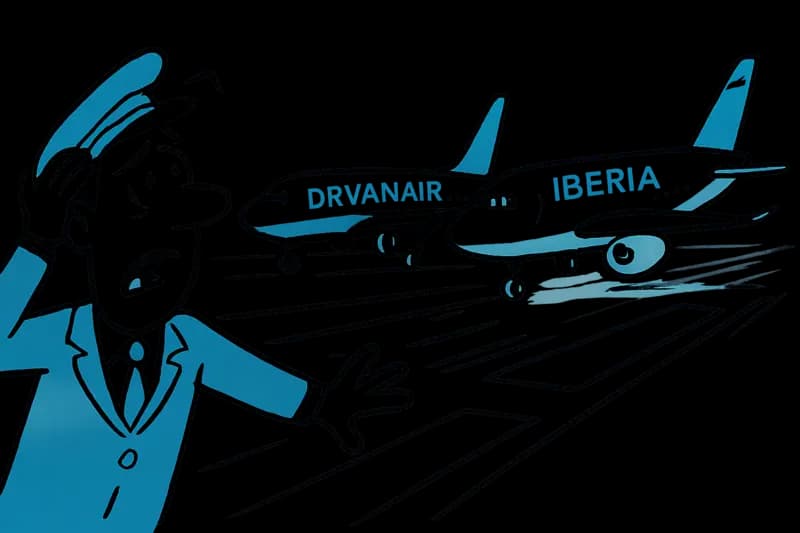
Near-miss on Lanzarote: Landing Ryanair Jet and Iberia Takeoff — what really went wrong
On Lanzarote there was a dangerous incident: A Ryanair flight (FR5910) from Dublin landed on runway 03 while an Iberia E...

Eurowings introduces new Premium Business seats on Mallorca routes
From December 1, selected Eurowings flights to Palma and other destinations will feature eight particularly generous sea...

Car on MA-13 near Inca in flames – a safety check for the island
A vehicle caught fire on the MA-13 towards Alcúdia on Tuesday afternoon. The driver was uninjured, the car was destroyed...
More to explore
Discover more interesting content

Can Cap de Bou

Townhouse Lleo 72
