
Crack in the window — what an aircraft defect means for Mallorca travelers
On a Ryanair flight to Ibiza, a passenger discovered a damaged window cover. Why such incidents are more than a social‑media clip — and what Mallorca travelers should take away.
A mid‑flight defect — and the immediate big debate
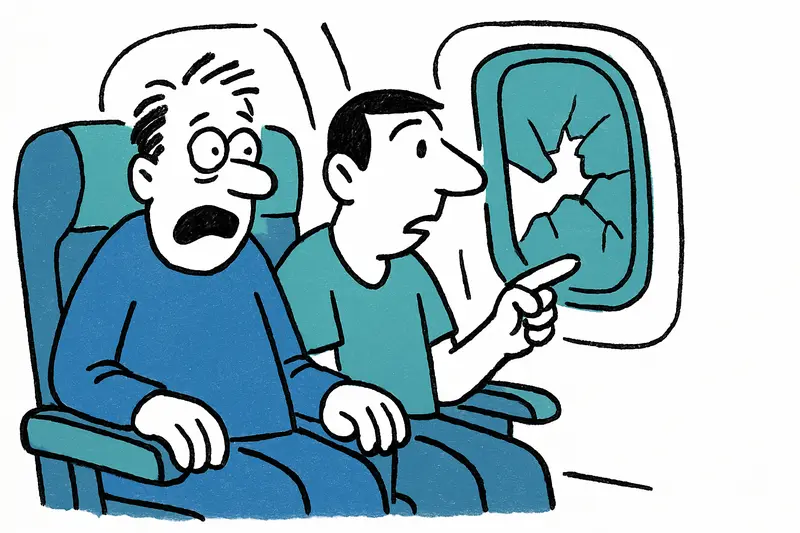
A British passenger boarded an early morning flight from Manchester to Ibiza and discovered a damaged window trim beside them. The video they took on their phone shows curious heads, a few nervous laughs and a crew member reassuring passengers: the load‑bearing pane is intact, it is only an outer plastic cover (see coverage of the damaged window on the Manchester–Ibiza flight).
The key question that makes the incident relevant for Mallorca travelers: When does an alarming cosmetic defect become a real safety issue — and how well prepared are airlines and airports to calm passengers' nerves?
How the crew reacted — composed, but not necessarily convincing
The cabin crew managed to convey routine. We see similar scenes on hot summer days in Palma: people wheel suitcases across the arrival hall tiles smelling faintly of North Africa, hear the distant drone of engines and look for a clear announcement. In this case the message was brief and technical: no danger, the aircraft is safe. For many fellow passengers that was not entirely sufficient — a quiet distrust remained.
The problem often lies not only in the technical side but in communication. A short, understandable check by the crew on site and a clear explanation of the next steps soothe more than any technical statement filled with jargon.
Technical short profile: window construction and risk
Passenger windows consist of several layers. The front, load‑bearing layer handles pressure differences — and according to the airline was undamaged. The visible damage affected an additional trim or sunshade component. Such parts are cosmetic or comfort‑related and less safety‑critical. Still: for passengers it initially looks different.
What is often missing from reporting are figures and processes: How often are these trims replaced each year? Who inspects them before service? What documentation is produced after an in‑flight report? There is often an information gap here — and that gap is then filled by the internet with speculation. For official aviation safety information see the European Union Aviation Safety Agency (EASA) website.
Why this also affects Mallorca
Mallorca depends on air traffic. From early morning buses run from Palma airport to Magaluf, the sun beats down on Alcúdia's promenade, and families in flip‑flops push luggage trolleys by. Gate issues such as a reserved 'window seat' that faces a wall are also familiar to travellers in Palma (see a local report about windowless 'window seats' at Palma).
When such clips heat up on social networks, a reputational hit is created that affects more than the airline involved. Restaurants, hotels and taxi drivers feel on a worrying arrival day that guests are more hesitant. That is why transparency matters — but it must be honest and easy to understand.
Concrete opportunities and solutions
1. Better passenger communication: short, clear and comprehensible — crew announcements should avoid technical jargon. A few sentences on the origin of the defect and the planned procedure help more than technical explanations.
2. Visible post‑flight checks on the ground: after landing affected aircraft should be prioritized for inspection and the result communicated transparently — digitally at the gate or via information for affected passengers.
3. Unified reporting channels: a clear process communicated by airlines and airports reduces speculation. Who informs whom — and how long does a check take?
4. Training for cabin crew on handling social‑media incidents: clips spread quickly. A structured communication plan helps avoid panic and preserves trust.
What travelers can do
Stay calm, report irregularities to the crew, take photos for documentation, but avoid dramatic speculation online before facts are confirmed on the ground. And yes: if you arrive in Mallorca after such an experience, treat yourself to a glass of water at the airport — it almost always helps.
In the end: damaged trims are unpleasant and cause a stir in the cabin, but they do not automatically equal a danger to flight operations. What matters is that the responsible parties act transparently, quickly and understandably — for the sake of passengers and the reputation of our island.
Frequently asked questions
Is a cracked or damaged airplane window always dangerous on a flight to Mallorca?
What should passengers do if they notice a defect on a flight to Mallorca?
Why do passengers on Mallorca flights worry so much when they see window damage?
How do airlines usually handle a damaged window reported during a Mallorca flight?
Can a damaged window on a flight affect arrivals in Palma de Mallorca?
What kind of communication helps passengers most during an aircraft defect on a Mallorca route?
How common are cosmetic aircraft defects on flights to Mallorca?
Where can travelers check official aviation safety information after a defect on a Mallorca flight?
Similar News
Why the Striped Breams in Cala Pí Should Be a Wake-up Call
Once again bathers in Cala Pí were surrounded while swimming by small, nippy fish — some wounds bled. Time for clear rul...
Daily from New York: How Palma's Air Traffic Is Growing — and What Must Change
United will increase the Newark–Palma service to daily flights in 2027 (Boeing, 231 seats). Strong tourist numbers clash...

When Love Ends in Shards: Destruction in Son Vida and the Questions That Remain
In Son Vida a relationship dispute escalated: a woman destroyed furniture in a luxury villa, later pressed a panic butto...
Who Bears the Burden? Mallorca Between Tenant Protection and Landlord Fears
Madrid's new housing decrees strengthen tenant rights — but on Mallorca concern is growing: will the law drive small lan...
On the Edge: What Mallorca's Airport Loses If a Major Low-Cost Carrier Falters
The company that operates numerous connections from Palma to France and domestically is negotiating with creditors to re...
More to explore
Discover more interesting content

Can Cap de Bou

Townhouse Lleo 72
