
Close to the limit: Sa Pobla advises against tap water — a reality check
Close to the limit: Sa Pobla advises against tap water — a reality check
The municipality of Sa Pobla warns that tap water is currently unsuitable for drinking or cooking. Cause: failure of one of two pumps in the water treatment plant and prolonged problems with monitoring and documentation. A look at risks, information policy and concrete solutions.
Close to the limit: Sa Pobla advises against tap water — a reality check
Pump failure, nitrate levels and the question of trust
On a cool April morning in the centre of Sa Pobla a bright yellow notice stands in front of the town hall that many people read while having coffee on the Plaça Major: the tap water is not suitable for drinking or cooking. At the weekly market, between orange stalls and the low hum of delivery vans, residents fill plastic jerry cans while passers-by walk past the bakery with worried looks. The municipality justifies the advisory with the failure of one of two pumps in the municipal drinking water treatment plant. Current measurements are around 35 milligrams of nitrate per litre — below the legal limit, but according to the town hall not reliably stable due to the malfunction. The repair is expected in a few days. (See When the Tap Becomes a Luxury: Seven Municipalities Tighten Water Rules in Mallorca.)
Key question: Can the tap water still be trusted — and why was the warning issued now?
Critical analysis: Technically the situation is simple and at the same time precarious. Two pumps in a plant mean low redundancy: if one fails, the stability of the treatment process is at risk. Nitrate levels around 35 mg/l provide a buffer against the legal threshold of 50 mg/l, but the concern is not a single measurement but the uncertainty whether the level will hold. If monitoring and documentation are patchy, authorities and the public cannot detect fluctuations in time. That is precisely the problem: a single exceedance of the limit can be dangerous, especially for infants and pregnant women, if it is not quickly communicated and mitigated. (See Sóller Facing a Drinking Water Emergency: Ten Days Until the Crisis?.)
What is missing in the public discourse: two things. First: clear emergency plans and their practical implementation. A repair announcement is not enough if there is no tiered supply model — who gets priority access to drinking water, how are midwives, childcare facilities or care homes secured? Second: transparent data. People want open measurement series explained in an understandable way. Missing reports and gaps in the transmission of analysis results undermine trust faster than technical failures themselves.
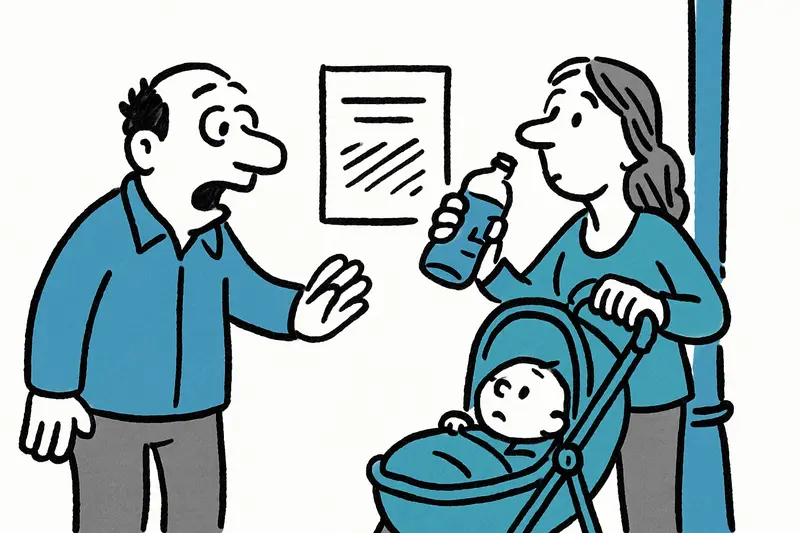
An everyday scene from Sa Pobla shows the consequences: on Carrer del Mercat a young mother leaning against a lamppost with a baby in a stroller holds a bottle of water. She says she only read about elevated levels yesterday — not from the municipality, but from conversations in the supermarket. Such channels of information spread are random, unfair and dangerous for risk groups.
Concrete solutions: in the short term the municipality must prioritise supply-critical institutions and provide free bottled drinking water until measurements show stable values. A multilingual info channel via SMS and notices at central points would improve reach. In the medium term, technical redundancy must be strengthened: a second independent pump, remote monitoring of water parameters and an alarm mechanism that automatically notifies when values approach the limit. Long-term, the investigation of causes must be on the agenda: nitrate contamination often results from agricultural runoff. Measures at the source — retention areas, adapted fertilisation strategies, buffer strips — reduce contamination and dependence on complex treatment processes.
Another often underestimated point is administrative practice: patchy documentation has already led to sanction proceedings by the health authority. Transparency, consistent data transmission to the responsible bodies and independent publication of the measurement series would be simple steps to regain trust.
Conclusion: a pump failure explains the current advisory, but the real shortage lies elsewhere — in limited reserves in the system, deficient documentation and poor communication. A repair is needed immediately. (See Sóller turns off the tap: Showers off, pools forbidden — how the town is dealing with drought.) In the medium term Sa Pobla needs better preparedness, clear emergency routines and a more open approach to measurement data. Until that happens, a small note on the town-hall notice board remains for many the clearest proof: confidence in a vital supply cannot be restored by promises alone.
Frequently asked questions
Is tap water in Sa Pobla safe to drink right now?
Why did Sa Pobla issue a warning about tap water if nitrate levels are still below the legal limit?
Can you use Sa Pobla tap water for cooking, coffee or brushing teeth?
How long will the tap water warning in Sa Pobla last?
What should residents in Sa Pobla do until tap water is safe again?
Where can people in Sa Pobla get drinking water during the advisory?
Why do nitrate problems matter so much for drinking water in Mallorca?
Are water advisories becoming more common in Mallorca towns like Sa Pobla?
Similar News

Four goals, heart-stopping moments, a message: Germania Mallorca takes three points in Consell — questions remain
The new German club on the island won its first away game in Consell 4:3. Celebration, a 4:0 lead, then a nervous finish...

Mueller continues expanding in Mallorca: Artà in 2026, Can Picafort in early summer 2027
The drugstore chain Mueller is opening two new stores in Mallorca: a 1,400 m² shop in Artà on 5 November 2026 and a bran...
The Painter Who Lived Mallorca: Franz Taussig and His Century-Old Secret
A hundred years ago a young Viennese arrived in El Terreno, sketched the island and called himself Francis Caron. Today ...

Airport dispute: Bridge, forecasts and the question of responsibility
A video by the Spanish transport minister has ignited the dispute over DORA figures, capacities and local governance pow...

The Painter Who Invented Himself: How a Young Viennese Drew Mallorca
A hundred years ago a 19-year-old draftsman arrived in El Terreno. His diary and sheets, long known under the pseudonym ...
More to explore
Discover more interesting content

Can Cap de Bou

Townhouse Lleo 72
