
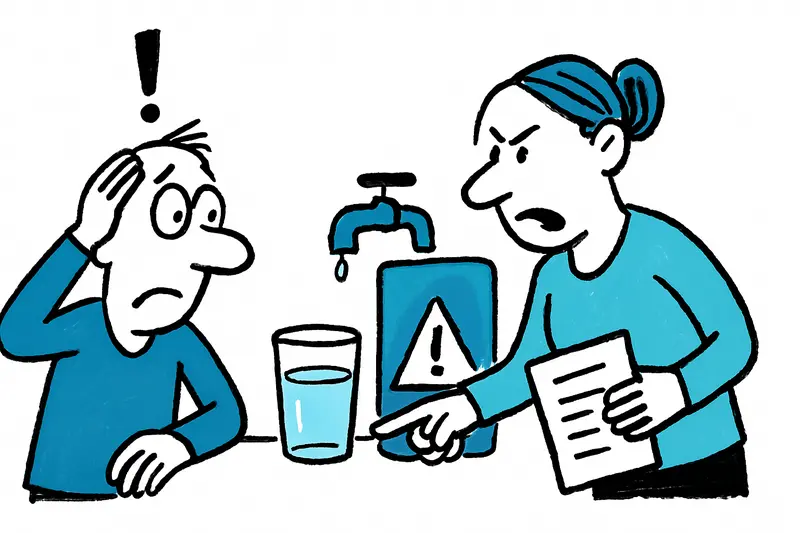
Sanction against Sa Pobla: Why the drinking water warning came too late
Sanction against Sa Pobla: Why the drinking water warning came too late
Nitrate levels in tap water were above the limit for months, residents were informed late. A reality check from Sa Pobla: what lacked in transparency, who bears responsibility, and how can trust be restored?
Sanction against Sa Pobla: Why the drinking water warning came too late
The message was clear and sober: between October 2024 and May 2025 nitrate levels in Sa Pobla's tap water exceeded the permitted limit of 50 milligrams per liter. What followed was less clear: the municipality warned residents only months later. The Balearic Ministry of Health has therefore opened sanction proceedings. The municipality stresses that the water has been potable again since December. But is that enough?
Key question
When is a delayed warning still an administrative error — and when does it endanger the health of people in our neighbourhood?
Critical analysis
The facts at the core are simple: a limit was exceeded, the warning came late, and there were apparently gaps in the documentation of the analyses. The problem is not a technical triviality. Nitrate in water is a classic sign of pollution from agriculture or over-fertilization of soils (see EPA information on nitrate and nitrite in drinking water). For infants it can mean an increased risk of the so-called blue baby syndrome (methemoglobinemia); for adults the effects are more long-term, but not harmless. Administrative responsibility in such a case means three things: measure regularly, inform quickly, document without gaps. In at least one of these points Sa Pobla fell short.
What is missing in the public discourse
The debate is currently focused on the sanction proceedings. That is important, but not sufficient. There is a lack of clear discussion about who caused the nitrate contamination, which long-term measures are needed to protect the groundwater and how citizens will be informed promptly in the future. There is also little talk about concrete health precautions for risk groups during the affected period: were families with small children specifically contacted? Was there free alternative water supply?
Everyday scene from Sa Pobla
At the Plaça Major, where the old fountain statue sometimes still lures children to wash their hands, neighbours exchange their stories: a woman fills chestnut-coloured water jugs, an older man listens to radio news and furrows his brow. The fear is quiet but palpable. Moments like these show: water is not an abstract good, it is part of daily life — the morning coffee, the bread dipped in olive oil, the bottle taken to the market.
Concrete solutions
From practice on Mallorca, pragmatic steps emerge: 1) a public online dashboard with daily laboratory values and history, accessible to all; 2) a legal reporting deadline for exceedances, with mandatory notification by SMS and notices at public places; 3) free provision of drinking water for households with young children or pregnant people until safe values are reached; 4) independent inspections of the water infrastructure and complete protocols of the analyses; 5) preventive measures in the surrounding area: fertilizer bans in buffer zones, reforestation, and promotion of drainage systems that filter nitrates; 6) training for municipal employees in sampling, documentation and crisis communication.
Why this is feasible
Many of these measures do not require a large budget, but clear processes. A digital display of measurements costs little and creates trust. Reporting deadlines and SMS notifications can be introduced by ordinance. Longer timelines and money are needed for groundwater protection projects — but these are investments in the island's livelihood (see alert level for Es Pla due to drought).
Pointed conclusion
Sa Pobla is not alone; on Mallorca the incident shows how quickly everyday security becomes fragile when administration, communication and prevention do not work together. The sanction is a signal, but more important now is to provide transparency and put concrete precautions in place. Similar measures have already been reported in seven municipalities tighten water rules in Mallorca. Only then can the lost trust at the fountain and at the breakfast table be regained.
Frequently asked questions
Why did Sa Pobla receive a sanction over the drinking water warning?
Is tap water in Sa Pobla safe to drink now?
What does high nitrate in drinking water mean for health?
What should families in Mallorca do during a drinking water alert?
Why are nitrate problems in Mallorca tap water usually linked to agriculture?
How can Mallorca towns prevent late warnings about bad tap water?
What kind of water information should people in Sa Pobla be able to see?
Are there other municipalities in Mallorca dealing with water restrictions?
Similar News
Bendinat as a meeting place: Padel Cup brings together nearly 120 players
Three days of padel at the Bendinat Urban Country Club: organized by El Económico and Borbalán, with around 120 particip...
Large-scale Anti-Tourism Graffiti at Cala Mendia: Protest or Vandalism?
On the morning walkers discovered an approximately 50-meter-long slogan against tourism on the wall above Cala Mendia. W...
Bomb threat before Jet2 flight in Tenerife: A reality check for security protocols
A passenger reported a bomb in luggage shortly before departure in Tenerife. Evacuation, baggage checks, delays — and ma...
Who is stripping Mallorca's coast bare? Why entire slopes are being removed for villas
On Mallorca steep slopes are again being removed to make way for luxury construction sites. Who bears the responsibility...

Robber Falls While Fleeing in Sant Agustí: Who Takes Responsibility?
During a purse-snatching in Sant Agustí, a non-commissioned officer chased the suspect; the man jumped from a bridge and...
More to explore
Discover more interesting content

Can Cap de Bou

Townhouse Lleo 72
