
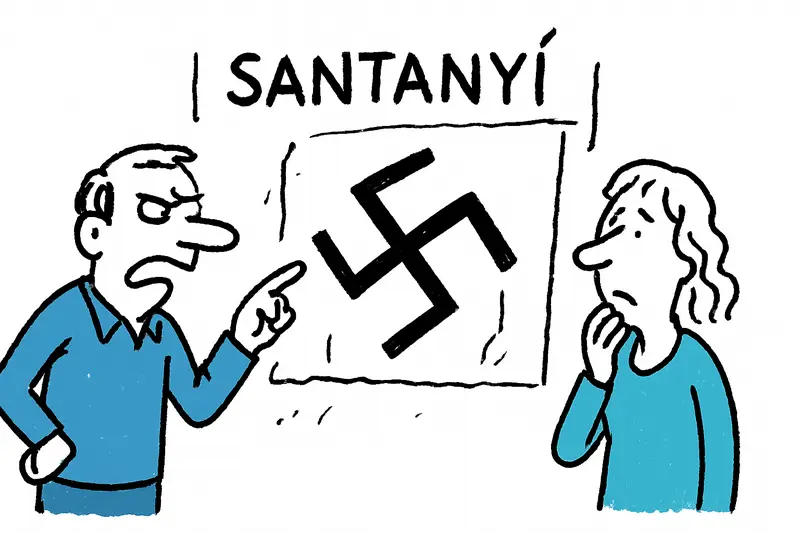
Attack on Togetherness: Xenophobic Graffiti in Santanyí and What Must Happen Now
Once again a gate in the municipality of Santanyí in a rural area has been daubed with a xenophobic slogan. A video was shared publicly and the political debate flared up. What is missing in the response — and which steps could counter the hate?
Attack on Togetherness: Xenophobic Graffiti in Santanyí and What Must Happen Now
“Get out of Mallorca, damned Nazis” – graffiti hits neighborhood and the municipality's reputation
In recent days a gate in the surroundings of Santanyí was once again daubed with a hateful slogan: the property bears the message “Get out of Mallorca, damned Nazis.” This is not the first incident in the rural area around the village; in the previous week several gates of country estates had already been defaced with similar phrases, and other parts of the island have seen related incidents such as xenophobic graffiti at Playa de Palma. A short video of the graffiti reached the public and triggered a political reaction.
Key question: How does a small municipality like Santanyí deal with recurring hate speech without destroying the delicate balance between security, transparency and everyday coexistence?
A spokesperson for the municipal council, who also represents a conservative bloc in the council, described the incidents as serious and pointed out that the victims are part of the local community: people who work, invest and live here, and incidents like scratched cars in Santanyí underline this. A right-wing party shared the video and criticized the municipal administration for not responding forcefully enough. This sharp confrontation between political criticism and municipal responsibility shapes the debate.
Viewed critically: there is an escalation dynamic. The repeated occurrence of similar messages within a short period suggests organized or at least recurring actors. Similar acts, including graffiti on the Aurora Picornell bust in El Molinar, suggest organized or recurring actors. Such scribblings are more than property damage — they affect the sense of security of entire groups and poison the climate in neighborhoods where people meet at the morning market, drink coffee at the Plaça Major and hear the church clock strike.
What is missing in the public discourse: numbers and facts. How many incidents have been officially reported? Is there a police investigation? Are there traces that point to perpetrators or groups of perpetrators? The public and those affected need transparent information so that rumours do not gain the upper hand. Also missing so far is a municipal plan for how quickly and in what form affected owners will be supported — for cleaning, protecting their property and for legal steps.
A typical everyday scene from Santanyí: on a cool morning in the village centre, the scent of baked ensaimadas mixes with the sound of suitcases rolling over cobblestones. Retirees chat on benches, German-speaking couples pick up newspapers, farmers drive past on tractors. In this weave of different lives, such a targeted attack acts like a disruptive fire that unsettles the neighbourhood. The victims are not an abstract statistic — they are neighbours, waiters, landlords and friends in the school class.
Concrete, immediately implementable steps that would now make sense: firstly, a clear, visible condemnation by the municipal leadership combined with a prompt meeting that invites affected residents, police and civil initiatives. Secondly, an accelerated cleaning program for defaced surfaces: quick removal discourages copycats. Thirdly, an eased reporting and support channel for victims — a central contact point at the town hall or digitally, multilingual and low-threshold.
Further mid-term measures: targeted prevention work in schools and clubs, close coordination with the Guardia Civil or the Policía Local in investigations and in assessing whether criminal offences have occurred. Public spaces should have their lighting and sightlines reviewed; where legally possible and socially accepted, discreet surveillance measures can deter perpetrators. It is important that security does not turn into surveillance — transparency and clear rules are essential.
What politics and administration should also consider: a communication strategy that does not merely repeat outrage, but builds trust. That means: timely information about the status of investigations, careful protection of personal rights and concrete offers of assistance for those affected. Encounter projects in which people of different origins work together on small infrastructure projects or cultural events are also useful — they reduce distance and make hate speech less fertile.
A delicate balancing act remains: decisive action must not fall into symbolic politics. Cleaning, investigations and prevention require resources — personnel, budget, clear responsibilities. It is not enough to condemn slogans if nothing concrete follows. The municipality must show that the rule of law applies and that violations of neighbourhood trust have consequences.
In the short term, neighbours themselves can do a lot: show visible solidarity, keep their eyes open and report observations, support local cleanliness initiatives. Anyone who runs a café in Santanyí, rents a room or is active in club life can send a small but effective signal against exclusion: presence, exchange, normality.
Conclusion: Repeated xenophobic scribblings are an alarm signal for the social climate in a municipality. Santanyí now needs not only words but a bundle of quick measures, transparent communication and long-term prevention. Without this mix, the poison of intolerance risks becoming routine — and that would be a loss no one in the community wants.
Frequently asked questions
Why are xenophobic graffiti incidents in Santanyí taken so seriously?
What should the town hall in Santanyí do after hate graffiti appears?
What can residents in Mallorca do if they see xenophobic graffiti?
Why does quick cleaning matter after graffiti incidents in Mallorca?
Is xenophobic graffiti in Santanyí usually treated as a criminal offence?
How can Mallorca municipalities prevent repeated hate graffiti?
Are foreign residents in Santanyí being targeted by the graffiti incidents?
What support should be available for people affected by hate graffiti in Mallorca?
Similar News

Bendinat as a meeting place: Padel Cup brings together nearly 120 players
Three days of padel at the Bendinat Urban Country Club: organized by El Económico and Borbalán, with around 120 particip...
Large-scale Anti-Tourism Graffiti at Cala Mendia: Protest or Vandalism?
On the morning walkers discovered an approximately 50-meter-long slogan against tourism on the wall above Cala Mendia. W...
Bomb threat before Jet2 flight in Tenerife: A reality check for security protocols
A passenger reported a bomb in luggage shortly before departure in Tenerife. Evacuation, baggage checks, delays — and ma...
Who is stripping Mallorca's coast bare? Why entire slopes are being removed for villas
On Mallorca steep slopes are again being removed to make way for luxury construction sites. Who bears the responsibility...

Robber Falls While Fleeing in Sant Agustí: Who Takes Responsibility?
During a purse-snatching in Sant Agustí, a non-commissioned officer chased the suspect; the man jumped from a bridge and...
More to explore
Discover more interesting content

Can Cap de Bou

Townhouse Lleo 72
