
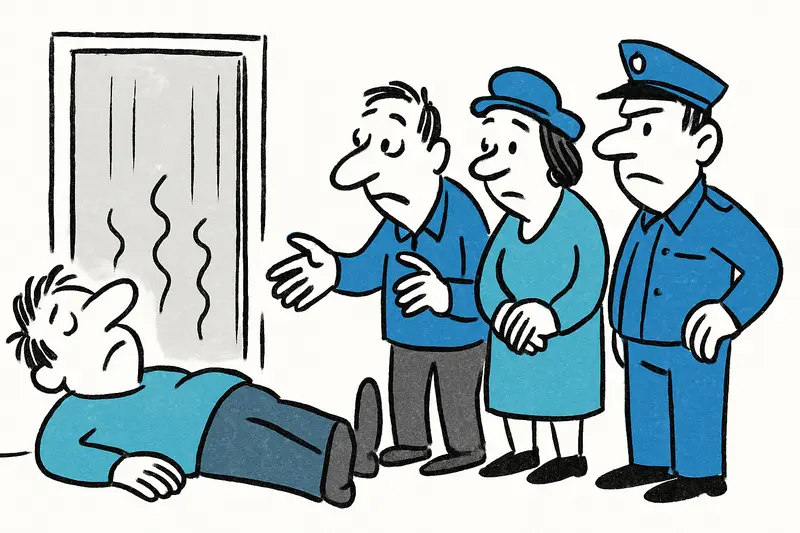
Man Found Dead for Weeks in Son Gotleu — Key Question and Consequences for the Neighborhood
Man Found Dead for Weeks in Son Gotleu — Key Question and Consequences for the Neighborhood
A 60-year-old man was found dead on Saturday in an apartment on Calle Santa Florentina. Neighbors had noticed a pungent smell; the body may have been there for about a month. What does this case reveal about neighborhood ties, social services and safety in Son Gotleu?
Man Found Dead for Weeks in Son Gotleu — Key Question and Consequences for the Neighborhood
Key question: How can a city ensure that a person in a densely populated neighborhood like Son Gotleu does not remain unnoticed for months?
On Saturday morning around eight o'clock, residents of Calle Santa Florentina called the police because a pungent stench was coming from an apartment and the resident had not been seen for weeks. The National Police requested the fire brigade, which forced the door open. Inside the apartment, emergency personnel found the body of an approximately 60-year-old Spanish man. According to initial findings there were no visible external injuries; an autopsy will determine the exact cause of death. Neighbors said the man could have been dead for about a month.
The bare facts are brief, but the questions that remain are many. Son Gotleu is one of Palma's most densely populated neighborhoods: narrow streets, laundry lines over balconies, small shops, early-morning delivery vans and potholes that still tell of last week's rain. It is striking here how quickly people can disappear in the anonymity of the city — despite the proximity of hundreds of neighbors. At the same time the area has seen large-scale police activity, including a major police operation in Son Gotleu.
Critical analysis: Why wasn't the alarm raised earlier? There are several possible reasons we must name. First: social isolation, even in busy neighborhoods. Those without stable employment, nearby family or close contacts among neighbors are at risk. Second: distrust of authorities and language barriers — in a multiethnic area like Son Gotleu not all residents speak Spanish or trust the police. Third: overloaded or poorly connected social and health services. Doctors' practices, health centers and social teams often lack the capacity to organize regular home visits for people without complaints.
What is missing from the public discourse: discussions quickly turn to 'safety' and 'problem neighborhoods', as recent reports show Threat in Son Gotleu: Youth Group Robs Phone and Threatens with Knives, but rarely to concrete ways to detect and alleviate loneliness. There is little discussion of how property managers, caretakers, parcel carriers or local shopkeepers could be systematically trained and involved to notice signs. Likewise, proposals are often missing on how the padrón (residents' registry), health centers and social services can better cooperate without violating data protection rights.
An everyday scene from Palma: early in the morning on Calle Santa Florentina you can hear the clatter of the garbage truck, a woman sweeping in front of the tobacco shop, children in thick jackets walking to school, a neighbor calling 'buenos días'. It is exactly there, between laundry lines and delivery vans, that a safety net can form — or it can remain a silent coexistence. The pungent smell that alerted neighbors only became strong enough when the situation was already critical.
Concrete solutions — short and practical:
1) Municipal visiting programs: Volunteer neighborhood helpers coordinated by city hall or churches who regularly check on elderly or solitary residents.
2) Training for everyday professionals: Postal workers, parcel couriers, supermarket staff and caretakers should learn to recognize when an unusual absence may indicate danger and whom to inform.
3) 'Risk registers' with data protection: Health centers and social services could create simple contact plans with the consent of vulnerable people so that quick action can be taken if they are unreachable for an extended time.
4) Funding for local social work: More presence in neighborhoods like Son Gotleu, dedicated social workers with local contacts and streetwork teams.
5) Strengthen neighborhood initiatives: Meetings in community halls, info flyers, notices at the local shop and telephone check-in services for people without family.
Some measures cost little, others require political will and money. The central message is: responsibility does not lie solely with the police. A network of actors is needed — neighbors, shopkeepers, property managers, health centers, social services and volunteers — that catches gaps in attention.
Conclusion: The discovery on Calle Santa Florentina is sad and alarming because it reveals a structural weakness. Son Gotleu is not an isolated case of loneliness in the city; a similar story occurred in Santa Catalina, reported in Body Found in Santa Catalina: When an Entire Neighborhood Didn't Notice. If Palma wants to prevent people from dying unnoticed, the city must strengthen the social infrastructure where life actually happens: in stairwells, on street corners and in front of small shops. Not only sirens and fire brigade doors are needed — but neighbors who know each other and know who to call.
Frequently asked questions
Why can someone go unnoticed for weeks in a neighbourhood like Son Gotleu in Palma?
What should neighbours in Mallorca do if they smell something suspicious from an apartment?
How common is loneliness among older people in Palma neighbourhoods like Son Gotleu?
What can Mallorca health and social services do to prevent people from dying unnoticed?
What role can neighbours and local shopkeepers play in Son Gotleu?
How can Mallorca deal with social isolation in dense urban neighbourhoods?
Why is Calle Santa Florentina in Son Gotleu mentioned in local news?
What does the case in Son Gotleu say about life in Palma’s neighbourhoods?
Similar News
Injured captain, big plans: Germania Mallorca before the away match in Consell
The newly founded FC Germania Mallorca travels to Consell on Saturday. Captain Bastian Müller is out injured, but coach ...
Palma, Palma de Mallorca, Palma‑Mallorca: What is it really about?
The debate over the city's name is more than grammar: it concerns identity, law and branding policy. A sober reality che...
Warning to Bathers: Nipping Fish in Cala Major and Other Coves — a Reality Check
In Cala Major and several beaches around Mallorca, bathers report painful “nips”. Who are the animals, why are they gett...
Rental Car Theft in El Arenal: What This Incident Reveals About Our Gaps
A teenager steals a running rental car in El Arenal, flees on foot, climbs over walls and is caught by the Guardia Civil...
Red Rope in Palma's Library: What Helps Against Selfie Tourism — and What's Missing
Palma's city library cordoned off an area with a red rope to keep selfie tourism away from reading and working activitie...
More to explore
Discover more interesting content

Can Cap de Bou

Townhouse Lleo 72
