
Major operation in Son Gotleu: 60 police officers, many questions
Last night around 60 officers swept through Son Gotleu — vehicle and shop checks, but no arrests. What does visibility achieve, and what is missing for a sustainable solution?
Large presence in the narrow streets of Son Gotleu
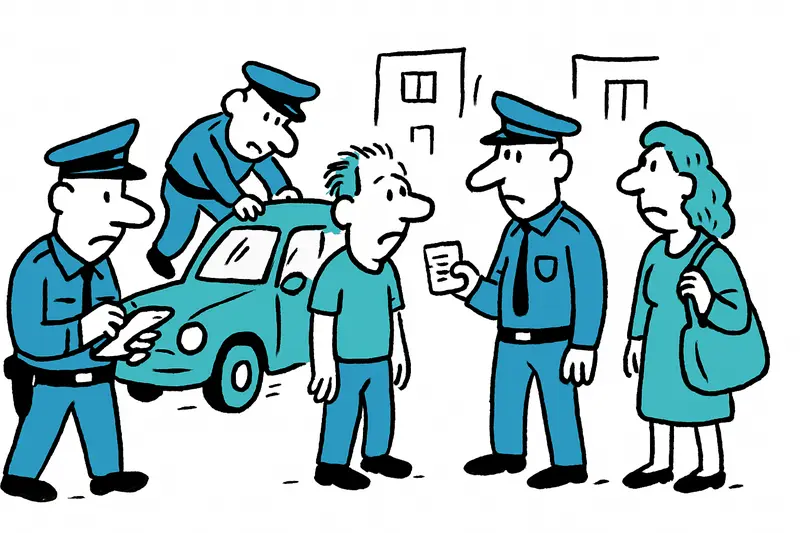
In the early evening Son Gotleu was briefly filled not only with the buzzing of mopeds and the scent of freshly baked ensaimadas, but also the typical crackle of radios and the clack of service boots. Around 6:30 p.m. a convoy of patrol cars rolled down Carrer de la Fàbrica: National Police and Policía Local were in the neighborhood with around 60 officers for several hours and carried out meticulous checks, as reported in Why so many police officers in Son Gotleu? A look behind the controls.
What the teams did exactly
The officers checked vehicles, asked for IDs and paid particular attention to small shops and stalls. They focused on licenses, signs of illegal street vending and general identity checks. A shop owner on the corner reported that the officers had asked to see his permits and 'noted down a few things'. No arrests were reported by evening; the actions appeared routine but targeted, as described in Gran operativo en Son Gotleu: 60 policías, muchas preguntas.
The key question: Is presence enough?
Such operations are not entirely unusual in Son Gotleu, but the sheer number of deployed officers stood out. This raises a central question: does this signal create lasting safety — or does it merely displace problems for a few days? Residents reacted mixed: a woman returning from work said she felt temporarily safer. An older man, however, complained about the noise and disruption on his way home. Children on the playground watched the scene with curiosity, while some young people briefly kept their distance.
What is often missing
In public perception police operations quickly stand for enforcement and order. Less visible, however, are consequences such as temporary displacement of trade into side streets, mistrust between neighbourhood and authorities, or the question whether administrative measures (for example missing permits) would be better addressed through targeted information and low-threshold assistance, as can be found in Ajuntament de Palma permits and procedures. Also rarely discussed: the follow-up. Are violations documented and do they lead to lasting measures, or does it remain a "big deployment, small effect"?
Concrete levers for more sustainable solutions
From the perspective on the ground there are several, not exclusively police, approaches that could be more effective:
1. Joint operations with social workers: Teams made up of police and social workers could not only carry out checks but also directly provide help — for example regarding homelessness, job placement or navigating bureaucracy for traders. This collaborative approach is discussed in ¿Por qué tantos policías en Son Gotleu? Una mirada tras los controles.
2. Mobile administrative offices: A weekly satellite office of the city administration in Son Gotleu to handle permits, registration forms or advice locally could help legalize informal activity.
3. Transparent communication: A debriefing of the operations with clear numbers and measures would build trust — what exactly was noted, how many warnings, how many procedures?
4. Permanent community-policing strategies: Regular, but less spectacular presence by fixed contacts from the Policía Local fosters trust instead of fear.
Conclusion: Visibility is a start, not a goal
Yesterday's operation showed that authorities can and want to respond. But safety is not created in the long term by strong visibility for one evening alone. Rather, a mix of enforcement, administrative services and social work is needed — accompanied by transparent communication. Son Gotleu is a lively neighbourhood with narrow streets, bustling shops and people organizing everyday life. Short operations reassure; sustainable solutions change.
If you were in Son Gotleu yesterday and would like to share observations or photos, get in touch with us. Voices from the neighbourhood are important to complete the picture.
Frequently asked questions
Why were so many police officers in Son Gotleu?
What do police usually check during a major operation in Mallorca neighbourhoods like Son Gotleu?
Does a big police presence make Son Gotleu safer?
What should I know if I live or work in Son Gotleu during a police operation?
Why do police checks in Son Gotleu sometimes cause concern among residents?
Are police operations in Son Gotleu usually linked to arrests?
What kind of support could help address problems in Son Gotleu more effectively?
How often do police operations happen in Son Gotleu, Mallorca?
Similar News
Failed before the first flight: How Fischer Air's plans for Palma were ground down
Announced routes, repeated postponements and now apparent insolvency: Why the Fischer Air project for Mallorca is not me...
Seconds in the Water: 19-year-old Fights Her Way Out of Flooded Car in Palma
A 19-year-old managed to rescue herself from her half-submerged car after sliding under the Verge de Lluc underpass. Res...

Between Dream and Reality: Thorsten Legat and the Challenges of FC Germania Mallorca
The former Bundesliga pro has assembled a colorful squad in a short time. But how realistic is the grand plan for promot...
Arrest warrant at check-in: Why two travelers at Cologne/Bonn Airport suddenly had to pay
At Cologne/Bonn Airport, federal police in mid-September found two German passengers subject to enforcement measures. Bo...
Balearic Islands as a New Route: A Reality Check on Rising Boat Migration
For the first time the Balearic Islands are ahead of the Canary Islands in boat arrivals. What do the numbers really say...
More to explore
Discover more interesting content

Can Cap de Bou

Townhouse Lleo 72
