
Why so many police officers in Son Gotleu? A look behind the controls
Yesterday around 60 officers swept through Son Gotleu: searchlights, checks at entrances and shop inspections. Why the operation is more than a police action — and what might now be missing.
Why so many police officers in Son Gotleu? A look behind the controls
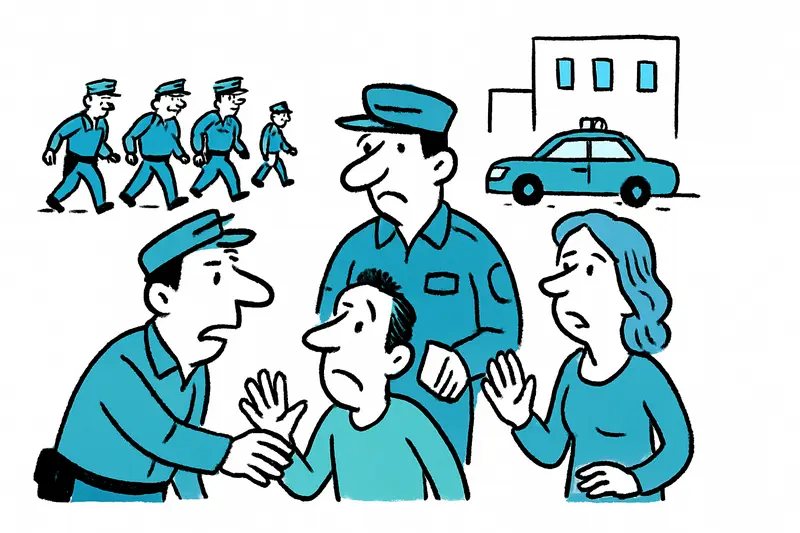
Last night Son Gotleu looked like a scene: cold light from searchlights cut through the alleys, sirens faded, and in front of the small café at the bus station guests stopped because police tape blocked the way. Around 60 officers from Policía Nacional and Policía Local were on duty in the neighborhood for several hours — from around 8:00 p.m. well into the night, as reported in Major operation in Son Gotleu: 60 police officers, many questions. The operation was visibly planned: systematic checks, no panic, rather a methodical sweep street by street.
The guiding question: creating security or creating an impression?
The authorities said the aim was to strengthen public security and curb illegal street vending. But the central question remains: are such occasional large deployments enough to tackle the deeper problems? For many residents the operation felt like a mixture of relief and unease. Some applauded because they had complained for months about open street sales and petty crime. Others felt their daily life restricted, heard the noise of the cordons and were annoyed by checks of passing pedestrians.
What exactly was done?
The officers stopped cars at provisional checkpoints at the neighborhood entrances, searched small shops and checked documents on street corners. The focus was on business licenses, signs of organized trading structures and routine identity checks. Police groups deliberately went past shop fronts, asked for permits and documented irregularities. Concrete arrests or seizures had not been detailed by the editorial deadline.
What often gets short shrift in the public debate
Such operations show presence — that is important. But it's not enough to only treat the symptoms. Three aspects remain little illuminated:
1) Transparency: After operations of this size citizens expect comprehensible figures: how many checks, how many warnings, were there arrests, were goods seized? Much remains vague at present, as local coverage such as Gran operativo en Son Gotleu: 60 policías, muchas preguntas illustrates.
2) Root-cause analysis: Illegal street trading often has economic and bureaucratic roots. People without steady work, missing or expensive permits, and shadow markets are frequent drivers. Police presence alone changes little about that.
3) Side effects: Short-term fear, fewer guests in cafés, shifted flows of goods to neighboring streets — such effects are rarely recorded, but they are real. A café owner reported that guests arrived later because of the cordons. Voices in the street corners combined relief with discussions about lasting solutions.
Concretely: What could help?
Yesterday's operation can be a start, but it needs accompanying measures. Suggestions from the neighborhood and security circles:
- More transparency: Public follow-up with figures and a clear agenda of what is planned next.
- Reduce bureaucracy: Simple, low-cost paths to legalize small traders could bring many into the legal sphere.
- Social services: Street workers and counseling centers that talk to affected traders, point out perspectives and help with formalities.
- Continuity instead of show: Regular, smaller control rounds with visible presence and offers for dialogue are more effective long-term than sporadic large deployments.
- Community engagement: More community meetings on site where residents, business owners and police can coordinate daily life.
A concluding word from Son Gotleu
The night with sirens and searchlights will stay in the ears of many in the neighborhood for a long time. For some it was a signal: the authorities are taking care. For others it was just a flash that fades as soon as the vans disappear. If Palma really means more lasting calm in Son Gotleu, it must not stop at one evening. A sense of security arises through consistent measures, transparency and the combination of order and opportunities — not just police sirens under a mild evening sky.
Frequently asked questions
Why were there so many police officers in Son Gotleu, Mallorca?
Is Son Gotleu safe to visit in Palma, Mallorca?
What do police checks in Mallorca usually involve?
Why does illegal street vending remain a problem in Mallorca?
What impact do large police operations have on everyday life in Mallorca neighborhoods?
What is the best time of year to visit Mallorca if I want calmer city streets?
What should I know before visiting Son Gotleu in Palma?
Are there longer-term solutions to reduce tension in Son Gotleu, Mallorca?
Similar News
Failed before the first flight: How Fischer Air's plans for Palma were ground down
Announced routes, repeated postponements and now apparent insolvency: Why the Fischer Air project for Mallorca is not me...
Seconds in the Water: 19-year-old Fights Her Way Out of Flooded Car in Palma
A 19-year-old managed to rescue herself from her half-submerged car after sliding under the Verge de Lluc underpass. Res...
Between Dream and Reality: Thorsten Legat and the Challenges of FC Germania Mallorca
The former Bundesliga pro has assembled a colorful squad in a short time. But how realistic is the grand plan for promot...
Arrest warrant at check-in: Why two travelers at Cologne/Bonn Airport suddenly had to pay
At Cologne/Bonn Airport, federal police in mid-September found two German passengers subject to enforcement measures. Bo...

Balearic Islands as a New Route: A Reality Check on Rising Boat Migration
For the first time the Balearic Islands are ahead of the Canary Islands in boat arrivals. What do the numbers really say...
More to explore
Discover more interesting content

Can Cap de Bou

Townhouse Lleo 72
