
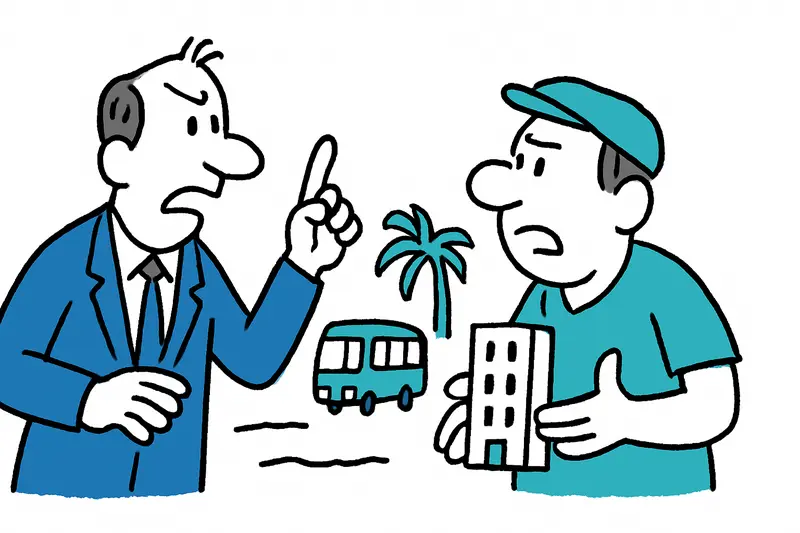
Spain’s election is about more than political camps. For Mallorca, the key issues are concrete: affordable housing, reliable local transport and lines of responsibility that often overlap on the island.
What Madrid Decides Reaches Mallorca
An election in Spain is often presented as a major turning point. That sounds like the capital, televised debates and political camps. On Mallorca, the question is more down to earth: What will change for people looking for a home, commuting to work in the morning or relying on an effective public administration? The answer does not lie in Madrid alone. But rules and funding flows are shaped there, and their effects are felt very directly on the island.
National election campaigns often turn complicated problems into stark contrasts: housing versus migration, social spending versus austerity, city versus countryside. Such divisions can mobilize voters. But they fit poorly with life on an island where several pressures can build at once: high housing costs, seasonal work, traffic and the challenge of providing public services for a population that fluctuates sharply.
The Ballot Box Cannot Resolve Questions of Responsibility
When looking for a home in Palma, few people think about which level of government is responsible. Yet it makes a difference. The national government sets the framework for many laws and distributes funding; the Balearic government has its own powers, while municipalities make decisions on matters such as local planning and services. Transport, housing and social policy involve overlapping responsibilities. A promise made in Madrid does not automatically mean a new bus on a village route or the keys to an affordable home.
This is precisely the kind of detail that is often missing from election campaigns. What specific effect is a measure supposed to have? Who will implement it? How will it be funded, and what can a municipality actually influence? Without these questions, politics becomes a wish list draped in flags. This applies to every political camp, whether it promises more public support or lower spending.
Housing Is Not a Side Issue
On Mallorca, the housing problem is visible well beyond the statistics. It comes up in a conversation with a colleague who wants to live closer to work, or in a family’s search for a home when they do not want to wonder every year whether they can stay in their neighborhood. A long commute costs time; moving away can also mean losing the short journey to school, work or family. This is not an abstract debate about property. It is about who can afford to make a lasting home on the island.
That is why election promises here need to be more than headlines. Useful commitments would include measurable targets for increasing the supply of long-term housing, clear rules for public land and transparent accounts of which programs have actually been carried out. The Balearic government and municipalities must also spell out their roles: land-use planning, permits and infrastructure are not decided in the capital alone. There is no quick fix, but responsibilities can be made clearer.
Mobility Is Part of the Same Problem
A grey morning at Plaça d'Espanya in Palma can sometimes say more than an election poster: people wait at the bus stop with backpacks and takeaway coffee, while others travel onward to work or to make a connection. Those living outside the capital cannot always simply switch to another form of transport. Service frequency, connections and operating hours all help determine whether a job is accessible and whether daily life is possible without a car.
Discounted fares can ease the pressure on families and commuters. But a cheaper ticket is of little use if there is no service at the right time. Election platforms should therefore address not only fares, but also service levels, staffing, funding and coordination between the authorities involved. On an island, a reliable connection between home and work is not a nice extra. It affects where people can live and how heavily roads are used.
Migration Deserves More Than a Slogan
Migration is also part of the political reality in Spain and the Balearic Islands. Reducing the issue to a slogan explains neither the situation at the external borders nor the responsibilities of public authorities and European partners. Nor does a heated debate answer how accommodation, procedures and municipal support should be organized. In this area, accurate information and clear lines of responsibility matter more than the next outraged image.
On Mallorca, it is also important to distinguish between different levels of government: national policy can set the framework, but the practical work on the ground also depends on regional and municipal authorities. Anyone seriously promising solutions must say what can be done in the short term and what requires longer-term planning. People in need of assistance and municipalities providing services must not be reduced to mere backdrops in an election campaign.
What the Debate Should Be Measured Against
We need fewer grand labels and more verifiable answers. Four straightforward questions can help assess every promise: Which authority is responsible? What will the measure cost? When is it supposed to take effect? And how will we know later whether it worked? These questions are not glamorous. But they help prevent political announcements from disappearing into a maze of responsibilities after election day.
For Mallorca, this also means that island politics must continue to apply pressure after an election instead of shifting every responsibility to Madrid. Municipalities need resources and certainty for planning; the Balearic government must explain its own decisions; and the central government should be clear about where it can offer support and where it cannot. Whoever is elected has a responsibility. But the ballot box is no substitute for administration, cooperation and oversight.
The real question of direction, then, is not just which political camp wins. It is whether the campaign leads to policies that can be understood and scrutinized. On Mallorca, the difference is not visible on the posters, but in whether housing, transport and public services become a little more reliable in everyday life. Everything else is grand theater with little practical benefit.
Frequently asked questions
How can a Spanish national election affect everyday life in Mallorca?
Who is responsible for housing decisions in Mallorca?
Why is finding a long-term home in Mallorca a concern for residents?
What should a housing plan for Mallorca explain?
Is public transport in Mallorca enough for people who commute to work?
Do cheaper bus fares solve Mallorca’s public transport problems?
Which authorities handle migration support in Mallorca?
How can voters judge whether a political promise in Mallorca is realistic?
Similar News

Kaulitz, Janke and The Bachelor: Mallorca Is More Than a Celebrity Backdrop
When familiar names come together around a dating show, there’s no shortage of conversation. Mallorca deserves a closer ...
Campanet Draws a Line—but What Does It Really Change?
Campanet is excluding listed buildings from a special option for tourist use. This is not a ban on all holiday rentals—a...
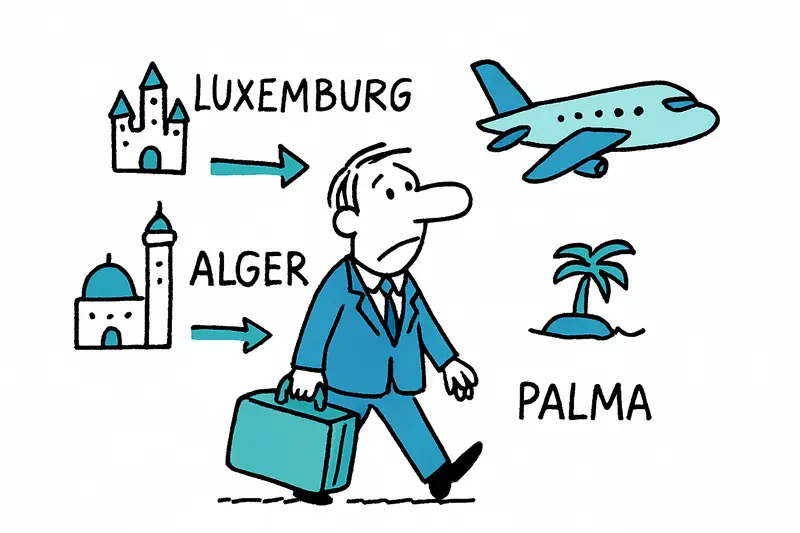
From Palma to Luxembourg and Algiers: Volotea Expands Its 2027 Flight Schedule
From April 2027, Volotea will connect Palma with Luxembourg once a week. Algiers follows in June, with two flights a wee...

Thanksgiving in Palma: A Taste of America at the Table
Dozens of Americans celebrated Thanksgiving in Palma with turkey and classic sides. The shared meal showed how familiar ...
Mallorca in the Feed: Why a Beautiful Picture Doesn’t Show a Whole Life
Sunsets, crowded tables, day trips: on a screen, every day looks like an event. What disappears from view—and how we can...
More to explore
Discover more interesting content

Can Cap de Bou

Townhouse Lleo 72
