
Mallorca in the Feed: Why a Beautiful Picture Doesn’t Show a Whole Life
Sunsets, crowded tables, day trips: on a screen, every day looks like an event. What disappears from view—and how we can bring our attention back to real life.
A Day in Mallorca Doesn’t Fit into Nine Seconds
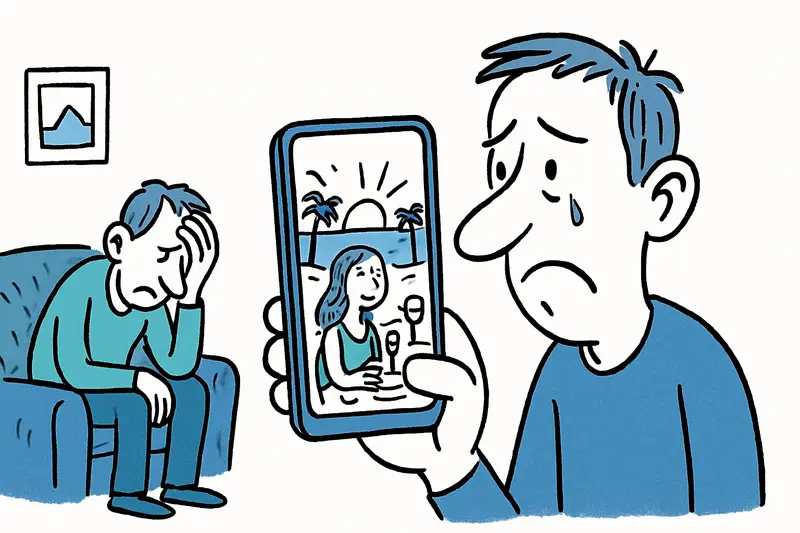
At the bus stop on Plaça d’Espanya, a scooter whizzes past. The doors of the number 3 bus hiss open, and someone balances a paper cup on the edge of their backpack. Beside me, a woman holds up her phone. On the screen: sea, light, a perfectly still moment. Behind her, the bus rumbles forward, coffee sloshes, and the wind tugs at a shopping bag. Both scenes are real. But that one image doesn’t show the whole morning.
The central question is this: What happens to our idea of a good life when we constantly view it through other people’s carefully selected snapshots?
A Selection Starts to Feel Like Everyday Life
A photo from a trip to Cala Mondragó doesn’t have to be staged to create a false impression. Maybe the day really was lovely. Maybe it came after an hour of searching for parking, wet towels, and a child who wanted to go home. The picture isn’t necessarily lying. It’s just leaving a lot out. That’s exactly where its power lies: a handful of highlights becomes a continuous story in our minds, where everyone else always seems to be out and about, popular, and in a great mood.
It’s a familiar scene in Mallorca, too. The island practically serves up the pictures: terraces in the evening light, a market stall in Inca, the first clouds over the bay, the Tramuntana behind a narrow road. There’s nothing wrong with enjoying and sharing those scenes. The problem starts when we turn someone else’s snapshot into a measure of our lives—and our perfectly ordinary Tuesday comes up short.
The comparison is rarely fair. We set our own tiredness, unpaid bills, and shopping still to be done beside someone else’s public highlight reel. It’s like watching only the opposing team’s goals in a football match and concluding they played a perfect game. Our everyday lives then seem not merely ordinary, but inadequate.
What Often Gets Left Out of the Debate
The discussion often gets stuck on screen time: scroll less, put your phone away, problem solved. That can help, but it doesn’t go far enough. It’s also about the kind of attention a platform rewards and what we ourselves consider worth seeing. A quiet afternoon rarely comes with a dramatic caption. A clumsy first attempt, a moment of boredom, or a conversation without a photo is hard to squeeze into a little success story.
And not everyone uses social media in the same way. For some, it’s a way to stay in touch with family far away; for others, it’s a place to find people with similar interests. A blanket “turn off your phone” overlooks that. It puts all the responsibility on individual users, even though design, habits, and peer pressure all play a part. Young people, in particular, are expected to navigate an environment where belonging is visibly measured—in reactions, comments, and invitations they can follow on their screens.
That doesn’t mean every post automatically causes harm, or that all young people are affected in the same way. But adults shouldn’t pretend the issue can be settled with a lecture on self-confidence. Someone who feels excluded needs a real person to talk to more than a reminder that everyone else is just posing. Sometimes they are. Sometimes they really are having fun. From the outside, it’s hard to tell the difference.
More Everyday Life, Less Self-Blame
What helps? Start with a small reality check while scrolling: Am I looking at a whole day or a carefully selected moment? That question doesn’t take anything away from a beautiful picture. It just stops the picture from becoming the standard for our own lives. If you notice that certain accounts regularly make you feel envious, pressured, or left behind, you can take a break from them—without turning it into a moral judgment about yourself.
For families and schools, a conversation about how these images are made would be more useful than a simple ban. Who chose this snapshot? What’s left unsaid? Why does the post seem convincing? Young people can bring in examples of their own, including ones they think are well done. Adults don’t have to understand every trend. Listening would be a start.
We also need opportunities where nothing has to be documented: cooking something together, walking through the Santa Catalina market on the weekend, taking a stroll along the Passeig Marítim, or simply sitting around the kitchen table. Not as an alternative activity with mindfulness as an obligation. Just because talking lets you notice when someone has gone quiet; because a walk can start out dull and still end up doing you good. None of that can be reliably planned, and it doesn’t need to be proved online.
People who post show a snapshot. People who look often fill in the rest with their own imagination. In Mallorca, the sunset really can be spectacular—and afterward, the rubbish still needs taking out. One doesn’t diminish the other. Life doesn’t become fuller by looking fuller. It gets a little easier when we stop turning other people’s pictures into a verdict on our own Tuesday.
Frequently asked questions
Why can social media make my ordinary life in Mallorca feel disappointing?
Do Mallorca holiday photos show what a day is really like?
What can I do if social media makes me feel envious or left out?
Is social media always harmful for young people in Mallorca?
How can parents talk to teenagers about social media pressure?
What are simple things to do together offline in Mallorca?
Does spending less time online solve social media pressure?
Can social media be useful for people living in Mallorca?
Similar News
Campanet Draws a Line—but What Does It Really Change?
Campanet is excluding listed buildings from a special option for tourist use. This is not a ban on all holiday rentals—a...
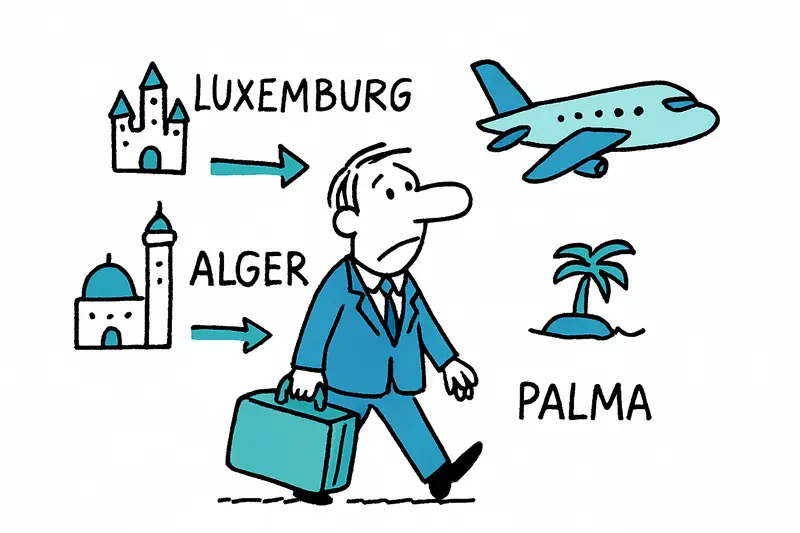
From Palma to Luxembourg and Algiers: Volotea Expands Its 2027 Flight Schedule
From April 2027, Volotea will connect Palma with Luxembourg once a week. Algiers follows in June, with two flights a wee...

Thanksgiving in Palma: A Taste of America at the Table
Dozens of Americans celebrated Thanksgiving in Palma with turkey and classic sides. The shared meal showed how familiar ...
What Madrid Decides Reaches Mallorca
Spain’s election is about more than political camps. For Mallorca, the key issues are concrete: affordable housing, reli...

Formentera Property Under the Hammer: The Low Price Is Only the Beginning
A foreclosure auction may sound like a bargain. But when it comes to property on Formentera, the bid and location are on...
More to explore
Discover more interesting content

Can Cap de Bou

Townhouse Lleo 72
