
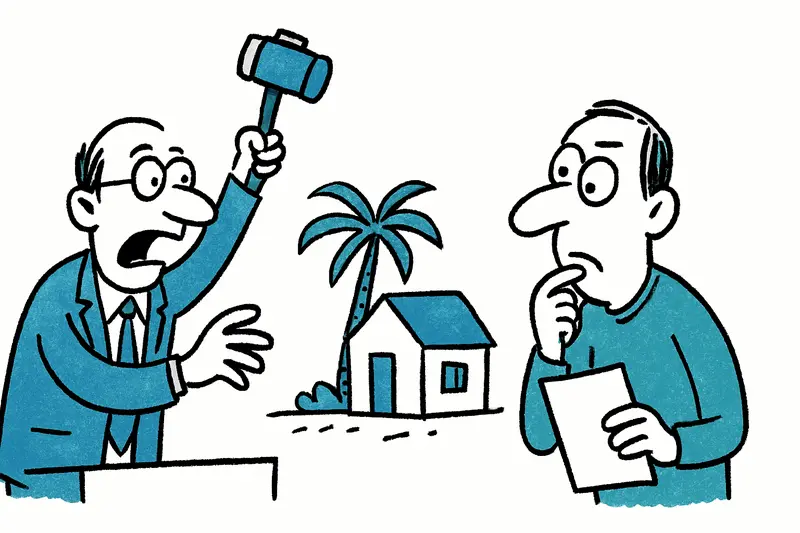
Formentera Property Under the Hammer: The Low Price Is Only the Beginning
A foreclosure auction may sound like a bargain. But when it comes to property on Formentera, the bid and location are only part of the story: before bidding, buyers should check the documents, potential liabilities and the property’s actual condition.
What does a house on Formentera really cost when it goes to auction?
An estate on Formentera is being offered through an auction process. The first figure to make the rounds sounds tempting: significantly lower than a conventional purchase. But is a low starting price really a bargain—or just the first line in a long bill?
That is the key question. At an auction, you cannot simply view a house, make an offer and receive the keys at the end. Fixed deadlines and conditions apply, depending on the procedure. The successful bid alone says little about the property’s condition, whether it can be handed over vacant or what additional costs the buyer may face. Anyone who focuses only on the eye-catching figure may be overlooking what matters most.
The price on the screen is not the full bill
With property auctions, it is essential to read all the official documents in full. These include details about the plot and building, as well as the terms of the specific procedure. Potential liabilities, unanswered questions about permitted use and the situation on the ground should also be on the checklist. What appears in the registry, what is described in the auction documents and what can be seen during a viewing do not necessarily present the same picture.
A house may look spacious and well maintained in photographs. That is no substitute for a technical inspection. Damp, old wiring, unauthorized alterations or a need for renovation may not be obvious at first glance—sometimes they only become apparent after spending time in the building or bringing in specialists. On an island, there is also the practical side to consider: arranging tradespeople, materials and transport may not be as quick as on the mainland. The ongoing costs of maintaining a large property should also be included in the calculation.
It is also important not to generalize about the rules for every auction. The required deposit, how bids are submitted and which deadlines apply all depend on the specific procedure. Anyone who assumes the process works like another type of property purchase can easily miscalculate. The official documents for the procedure—not a short promotional text or a figure in a headline—provide the definitive answers.
What often gets overlooked in the debate
Talk of a “cheap house” quickly turns to square footage, a pool and location. Less attention goes to the questions that will shape everyday life later: Is the property actually accessible? Is anyone living there? What uses are legally permitted? Is there construction work that still needs to be completed or documented? And how much will it cost to make the building not just acquired at auction, but genuinely usable?
On a small island, “remote” is more than a charming word in a description. It can mean longer trips for shopping, dependence on a car and more complicated repairs. Roads and services are in high demand during peak season; in quieter months, another side of life there emerges. Anyone considering a property as a holiday home should also check what uses are actually permitted, rather than assuming based on its location or type of building.
Then there is the question of housing. A single purchase does not determine the entire property market on Formentera. Even so, it makes sense to consider how high prices and seasonal use affect the island whenever a luxury property is discussed. For people who live and work there year-round, the property market is not an abstract stock-market figure. It helps determine whether a home remains within reach.
Before you bid: a straightforward checklist
First, obtain the official notice and all auction terms, then review them carefully. Second, have the land registry and cadastral records compared; do not guess when something is unclear. Third, consult an independent lawyer experienced in Spanish property procedures. Fourth, arrange a building inspection, where access and the rules of the procedure allow it. Fifth, prepare a full cost estimate—including taxes, fees, possible debts or liabilities, repairs and ongoing maintenance.
It is just as important to set a personal spending limit in advance. At an auction, competition can tempt you to exceed your budget little by little. Financing should not be based on the optimistic assumption that everything will go smoothly after the bid is accepted. If you need to pay a deposit or provide other security, make sure you know in advance the conditions under which it can be refunded or forfeited. Those details are set out in the specific procedure and should be understood before placing the first bid.
Island life, not property fantasy
On a November morning in Palma, you might hear cups clinking outside a bakery as a delivery van briefly blocks the already narrow street. It is not a picture of Formentera, but it is a reminder of what property is ultimately about: daily journeys, essential services and people—not just an aerial photograph. On a smaller island, these questions can feel even more immediate. An estate may be impressive, but its value to a buyer still depends on whether its use, condition and everyday realities fit together.
An auction can be an opportunity. But it is not a price tag with a guaranteed discount; it is a process in which risks need to be clarified before bidding, as far as the documents and access allow. The best deal is not the one with the lowest opening figure. It is the one where the buyer knows in advance what they are taking on. If you cannot find that out, it may be better not to bid. An empty seat at the auction table is sometimes the wisest investment.
Frequently asked questions
What costs should I budget for when buying a house at auction in Formentera?
Can I inspect a Formentera house before bidding at auction?
How can I check whether an auction property in Formentera is legally in order?
How do I know if a house bought at auction in Formentera will be vacant?
Can I use a Formentera auction property as a holiday home?
What should I check about the deposit and deadlines at a Formentera property auction?
Is it more difficult to maintain a house on Formentera than on the mainland?
How should I set a bidding limit for a Formentera property auction?
Similar News

When Waiting Turns into Tension: How Mallorca Can Better Protect Healthcare Staff
Aggression in clinics and emergency departments is no fringe issue, but neither is it an unavoidable part of healthcare....

Luggage at Palma Airport: How to Make Your Suitcase Easier to Spot
Black and dark blue suitcases can look remarkably alike on the carousel. A distinctive marker makes yours easier to find...

EU Tourism Funding in Mallorca: Sustainable, but Without a Brake?
An analysis of 296 tourism projects in the Balearic Islands shows that only a small share of the EU funding examined wen...

The Ferreret on Mallorca: Why This Little Toad Is More Than a Natural Wonder
The Ferreret toad lives only on Mallorca. Its protection depends not on grand promises, but on quiet water sources, inta...
Luxury Hotel Renovation in Port de Sóller: What Will It Mean for the Town?
A hotel renovation can refresh rooms and facilities. The harder question for Port de Sóller is how employees, local busi...
More to explore
Discover more interesting content

Can Cap de Bou

Townhouse Lleo 72
