
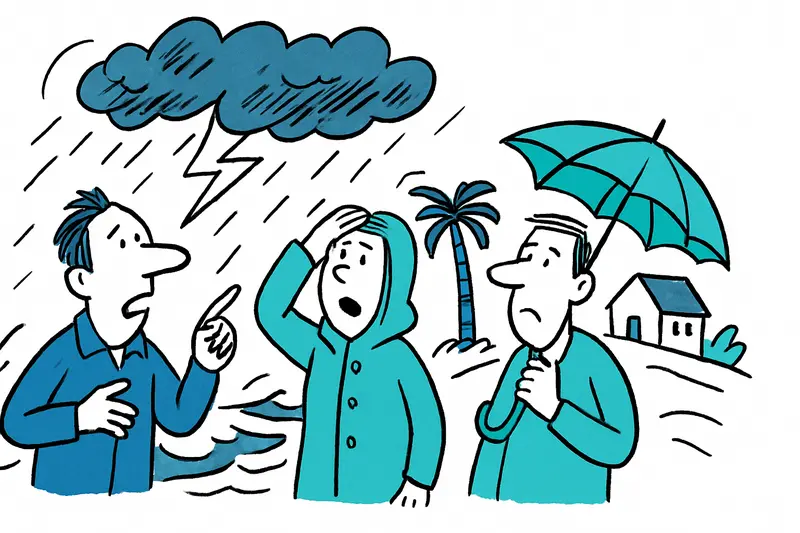
Storm series on Mallorca: How well are we prepared for 'Marta'?
A new low brings wind, rain and repeatedly high waves. A reality check: Which gaps exist in prevention and infrastructure — and what can residents and municipalities do practically now?
Storm series on Mallorca: How well are we prepared for 'Marta'?
Guiding question: Is preparation enough or will the next storm surprise us again?
The wind whistles through the palms on the Passeig Marítim. In the early morning the gusts from the west carry a damp, salty smell over the harbour wall; vendors have packed up their tables even faster than usual. That sounds like everyday life in a stormy week — and that is exactly the challenge: the island is not experiencing a single attack but a series of fast-moving low-pressure systems. Aemet reports yellow coastal warnings; for Saturday gusts of up to around 70 km/h are forecast for exposed sections, and on Sunday the service warns of locally heavy showers with thunderstorms and small hail.
The short-term weather situation is clear: on Friday meteorologists expect mostly sunshine with occasional clouds and temperatures between about 15 and 18 degrees. That offers a moment of calm after days with heavy seas. But all-clear signals are deceptive: already over the weekend the wind will shift to the north and the likelihood of precipitation rises, especially on Sunday when widespread rain and sometimes heavy showers are possible again. Graduated warnings apply for the coast because of high waves; Aemet currently points to changing periods with increased risk.
Critical analysis: it is not just the weather — it is the repetition that wears people down, a point explored in Severe weather on Mallorca: When it really becomes critical — and what's still missing. New warnings every few days mean short recovery phases for municipalities and infrastructure, but hardly any time for lasting repairs or preventive measures. Street gutters and drain openings are checked regularly, but if intense rain returns in a few days that only helps to a limited extent. Sand drifts on promenades show that beach and coastal protection are not robust enough everywhere. And for many small coastal businesses this means constantly low-revenue days and waiting for reliable forecasts.
What is often missing in the public debate is an honest conversation about priorities. People are informed about warning levels — rightly so — but there is less discussion about how municipalities could become storm-resilient without waiting every time for the next civil protection call. Technical measures (improved drainage, flexible barriers, targeted concrete reinforcements) help, but long-term planning is also needed: where should sandbanks be replenished, which parts of promenades are permanently endangered, and how can rescue routes be kept clear in emergencies?
Everyday scene from Mallorca: in S'Arenal an older homeowner shovels sand out of his driveway on Saturday, neighbors bring buckets of salt water to water the palms because the wind dries out the soil. At the corner café the sunshade is rolled up, waiters pull the chairs into the back room. Small gestures that show: people here know the game with the weather — and they improvise. But improvisation does not replace strategy.
Concrete suggestions that bring immediate benefits: 1) municipalities should automatically forward Aemet warnings to local WhatsApp groups and information boards; 2) create prioritized checklists for drain cleaning — especially in places with poor drainage; 3) store mobile sandbags and easily assembled beach barriers at strategic points; 4) quick checks for businesses: secure roofs, loose signage and outdoor furniture; 5) clear duty rosters for municipal street clearing on storm-prone days; 6) information leaflets in multiple languages for visitors so they know how to behave during high waves and road closures.
For medium- and long-term planning: there is a need for a map of particularly storm-prone coastal sections that is regularly updated, and a joint fund for immediate measures for the island's municipalities (see New Storm Front on Mallorca: How Prepared Are the Island and Its People?). Insurance issues must become more transparent: small businesses should know what is covered, who organizes rapid assistance and how claims are processed pragmatically after damage, as discussed in Storm Alert: Is Mallorca Prepared for the Deluge?.
Conclusion: the weather will continue to challenge the island — that is certain. The more decisive question is whether Mallorca organizes its daily routines and infrastructure so that the same damages do not keep recurring. For anyone who wants to be safe today: check Aemet, secure loose items, avoid parking on seafront promenades and pay attention to municipal notices. And to local authorities: use the short calm phases between storms not only for tidying up but for rethinking — so the next 'Marta' does not surprise us again.
Frequently asked questions
What is the weather expected to be on Mallorca this weekend?
How strong can the wind get on Mallorca during the storm period?
Is it safe to swim in the sea in Mallorca when there are coastal warnings?
What should I pack or prepare for stormy weather in Mallorca?
What should visitors do in Mallorca if there is heavy rain and thunderstorms?
Why do repeated storms cause so many problems in Mallorca?
What are the main storm-related risks in Palma and the Passeig Marítim?
What is happening in S'Arenal when storms hit Mallorca?
Similar News

Rental Car Theft in El Arenal: What This Incident Reveals About Our Gaps
A teenager steals a running rental car in El Arenal, flees on foot, climbs over walls and is caught by the Guardia Civil...
Red Rope in Palma's Library: What Helps Against Selfie Tourism — and What's Missing
Palma's city library cordoned off an area with a red rope to keep selfie tourism away from reading and working activitie...
Fort San Carlos: Museum, Harbor Dispute — and a Conflict That Demands Answers
The military museum at Fort San Carlos sits right on Palma's harbor, with unexpectedly quiet rooms filled with cannons a...
Old Town Under Pressure: When a Doorway Becomes a Sleeping and Shower Place
For months a woman has been living with a parasol, a clothes rack and personal belongings next to the social welfare off...
When Shopping Weighs Heavier: Mallorca Demands a Tax Pause on Food and Fuel
Rising prices are putting pressure on households and agriculture. The Balearic Islands are calling for temporary tax rel...
More to explore
Discover more interesting content

Can Cap de Bou

Townhouse Lleo 72
