
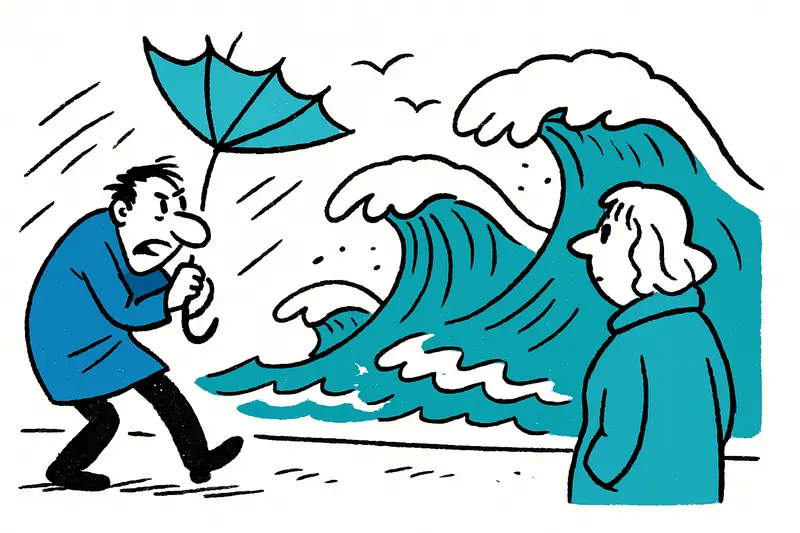
Sudden autumn in Mallorca: Are harbors and coasts prepared for short storms?
Rapid weather changes bring three-meter waves, strong northeasterly winds and wet jackets on the Passeig. The key question: How well are harbors, promenades and rescue services prepared for such peak situations?
Sudden autumn in Mallorca: cooler, windy and noticeably rougher seas
This morning at the Passeig: damp air, the occasional cry of seagulls and the scent of pines rising between construction tarps and wet asphalt. Within an hour the sky went from pale blue to heavy gray. Aemet forecast dense cloud cover, isolated showers and increasing north to northeast winds - and they were right. After a week of T-shirts: put on a jacket, bring the laundry in and for now it's better not to go out to sea. This matches recent reporting such as Autumn storm in Mallorca: Three-meter waves and what we should learn from it.
The key question: Is the island sufficiently prepared?
At first this sounds like a normal autumn situation. But the pressing question is: how well are our harbors, boat owners, promenades and local services set up for such short but strong shifts? In Palma, along the Tramuntana coast and in open bays gusts were reported today, and at exposed spots wave heights of up to three meters are possible. Not a long storm, but enough to cause damage if precautions are missing. Local analysis such as Storm Alert: Is Mallorca Prepared for the Deluge? explores similar preparedness issues.
What the weather warning often does not tell you
Public warnings mention wind and waves - which is correct - but many details often remain unsaid: floating piers that start to rock in high seas, incorrectly rigged moorings or boat covers coming loose and causing fenders to be pulled under. Ferries may be suspended at short notice, shallow crossings suddenly become dangerous, and rescue teams can quickly become overwhelmed by multiple simultaneous incidents. Sea birds and beach sections with shallow fore-shores are also vulnerable; animals can become disoriented in stormy seas.
Temperature drop, wind traps and local particularities
Highs fall to around 24 °C in Palma, and around 23 °C on the east side. The wind tears at tarps, whistles through open cafés and whips fine sand across the promenades. Particularly treacherous are places where the promenade and a rock edge sit close together: spray can jump over breakwaters and reach pedestrians - often for reasons that are underestimated. Anyone taking selfies there underestimates the force of the spray.
What boat owners should do now
A short, clear plan helps: double up mooring lines, use thicker rope and move to more sheltered berths or harbors if possible. Remove covers, loose sails and light structures. Bring dinghies, SUPs and windsurfers ashore or secure them properly. If in doubt: ask for help. Local sailing clubs and harbor masters often organize short-term assistance with securing boats - especially at northwest anchorages where the sea can increase abruptly.
Tips for coastal visitors and families
If you are out with children or dogs: keep your distance from breakwaters and cliff edges. A scarf or windproof jacket, non-slip shoes and a Plan B for beach days (museum, café, short inland trips) are now sensible. Visibly wet benches or wet concrete surfaces indicate spray; do not linger there. And yes: please skip the selfie pose at the cliff edge - the sea has a mind of its own on days like this.
Underappreciated consequences for infrastructure and rescue
Short autumn gusts reveal weak points: loose floating walkways, inadequate moorings for small boats, poorly secured construction sites and unprotected fittings on yachts. Harbor masters report spontaneous repair needs on piers and problems with power supply at floating pontoons. Rescue services often must quickly set priorities when several emergency calls come in - the risk of delays increases.
Concrete opportunities: what the island could improve
These episodes are warning signs and at the same time opportunities: a mandatory program for sustainable harbor infrastructure, standardized checklists for recreational skippers and an easily accessible public warning system that communicates via app, SMS or visible flags. Regular checks of berths by harbor masters, temporary closures of exposed promenades in case of strong spray and a voluntary network of helper teams in harbors could minimize damage. In short: better prepare rather than repair afterward.
A concrete set of measures for municipalities and harbors
Clear minimum standards for mooring lines and pier attachments, mandatory checklists before the season change, scheduled inspection intervals and a public alarm protocol that also reaches residents. Training for harbor staff and volunteers, simple, widely visible signage at critical points and a plan for the short-term relocation of small boat categories to protected berths - all of this costs at first, but saves operational hours and repairs in the long run.
Short-term outlook and recommended behavior
Over the next 24 to 48 hours conditions remain changeable with strong gusts. Not a continuous storm, but enough to affect unsecured berths and promenades. For related situational updates see New Storm Front on Mallorca: How Prepared Are the Island and Its People?. Before any trip, check the local wind report, secure loose items and in emergencies call 112 immediately - and give your location as precisely as possible. You can certainly enjoy the dramatic clouds over the bay, but from a safe distance. When the wind has passed, the streets will smell of pine resin again and maybe this will be the start of a real island autumn.
Frequently asked questions
Is Mallorca prepared for sudden autumn storms?
What should I wear in Mallorca when the wind picks up and the weather turns cooler?
Is it safe to go to the beach in Mallorca during strong wind and rough seas?
Can boat owners in Mallorca leave their boats in the harbor during a short autumn storm?
What can happen in Palma when autumn wind and spray hit the seafront?
Are the Tramuntana coast and open bays in Mallorca more exposed to rough weather?
What should families do in Mallorca when a short storm makes the coast unpleasant?
Who should I call in Mallorca in an emergency during severe coastal weather?
Similar News
Who Bears the Burden? Mallorca Between Tenant Protection and Landlord Fears
Madrid's new housing decrees strengthen tenant rights — but on Mallorca concern is growing: will the law drive small lan...
On the Edge: What Mallorca's Airport Loses If a Major Low-Cost Carrier Falters
The company that operates numerous connections from Palma to France and domestically is negotiating with creditors to re...
Ballermann star Frenzy wins 'Villa of Temptation' and donates prize money to Mallorca animal rescue
Ballermann singer Frenzy won the German reality show and donated the remaining prize money — around €14,080 — to an anim...
70 Trees Removed on Avenida Jaume I: What's Happening in Santa Ponça?
On October 1 the final redevelopment phase on Avenida Jaume I in Santa Ponça begins: 70 trees and old streetlights are t...

When a Boundary Is Crossed: The Case of Isi Glück and the Responsibility of Venue Operators
The singer from Mallorca reports an assault backstage in Halle. A clear guiding question, analysis of missing protective...
More to explore
Discover more interesting content

Can Cap de Bou

Townhouse Lleo 72
