
Summer Extra Police Officers: More Presence, but Is That Enough for Safety in Mallorca?
Summer Extra Police Officers: More Presence, but Is That Enough for Safety in Mallorca?
The Policía Nacional is sending additional officers to Mallorca — mainly to Playa de Palma, the airport and the old town. Reinforcement helps, but without local measures much remains piecemeal.
Summer Extra Police Officers: More Presence, but Is That Enough for Safety in Mallorca?
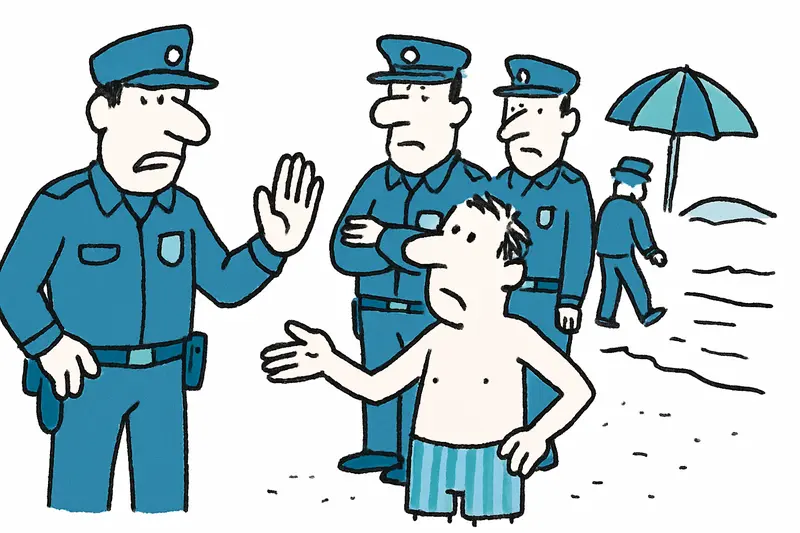
The Policía Nacional is stepping up its deployment in the Balearics this summer. Additional forces from mainland Spain are expected for Mallorca, Menorca and Ibiza; on Mallorca the focus areas will be Playa de Palma, Son Sant Joan airport and Palma's city centre. Police cite pickpocketing in particular as a recurring seasonal problem. That sounds like a clear reaction at first glance — but the real question remains open.
Key question: Are more uniforms alone enough to really reduce summer crime and improve the feeling of safety?
A sober view shows: in the short term the reinforcement brings visible presence, deters offenders and enables faster intervention in concrete incidents. In the long term, however, the causes of the problems are varied. Pickpocketing often happens at overcrowded stops and bars, in groups of tourists with heavy suitcases and in poorly lit alleys of the old town — places that cannot be permanently "secured" by additional patrols alone.
What is critical and rarely discussed in the public debate is that measures often remain reactive rather than preventive. More personnel is expensive and logistically limited; the reinforcements are temporary and concentrate on hotspots. When the police scale back again, offenders may simply shift to other trouble spots. In addition, there is so far a lack of clear coordination with municipal services, the tourism industry and providers such as taxis, landlords and beach bars — precisely those who are first confronted with incidents in everyday life.
What does that look like in practice? Picture an early morning at Son Sant Joan airport: holiday planes land almost every fifteen minutes, rolling suitcases cross the apron, families search for counters, young travellers stand in line with open backpacks. An extra patrol is visible, but the information situation is poor: multilingual notices on how to avoid pickpocketing are rare. The same picture at Playa de Palma: crowded promenades, drunk partygoers, small shops with open cash registers — the risk increases, the police are present, but not everywhere at once (Night raid at Playa de Palma: assessment, questions and what's missing).
So what is missing from the public discourse? Three points stand out: sustainable prevention, better information work and coordinated local partnerships. Without these pillars additional police presence remains a band‑aid on a recurring problem.
Concrete approaches that could be implemented quickly and with reasonable effort:
1. Early prevention at arrival points: multilingual notices at baggage carousels, clear information leaflets at car rental and bus stations and awareness teams who briefly and politely point out risks. Not police prosecution but behavioural prevention reduces many opportunistic crimes.
2. Cooperation between police, municipality and businesses: regular situation briefings in heavily frequented neighbourhoods — for example at Playa de Palma and Palma's old town — where hotel operators, beach equipment renters, market vendors and transport services sit at the same table. Joint measures range from lockers on beaches to coordinated luggage checks at bus boarding points.
3. Visible but smart presence: instead of pure foot patrols, staggered control rounds, the use of plainclothes informants and better lighting in problem areas help. CCTV can support but must not be seen as the sole solution and must be used in a way that is data‑protection compliant and transparent.
4. Multilingual awareness campaigns: short video clips at airports and in apps, simple pictograms at tourist spots and materials for landlords — small tips often work better than warning signs because they change behaviour instead of simply raising fear.
5. Expansion of local reporting systems: a central, easy‑to‑access phone number or app for tourists and industry staff, complemented by clear procedures for handling theft reports. Faster information means better prevention — and higher clearance rates (Palma takes stock: Arrests made — is that enough to make beaches safer?).
These suggestions sound simple, but the art lies in networking: police forces that are only on site briefly need local partners who maintain structures in the long term. Otherwise, after the reinforcements leave the same reports are likely to reappear — at the airport, at the beach, in the narrow streets of Palma. Local initiatives have also prompted plans to increase municipal policing capacity in coming years (Palma gears up: 170 new police officers for Playa de Palma).
Conclusion: The additional National Police is not a mistake; it is a clear signal that authorities take the seasonal problems seriously. But safety is not created by more officers on the street alone. Anyone who wants to change things permanently must rely on prevention, cooperation and smart local solutions. Otherwise the summer reinforcement will amount to nothing more than a better headline — and the unpleasant feeling among many holidaymakers that it could happen again tomorrow.
Frequently asked questions
Is increasing police presence in Mallorca during summer really making it safer?
What steps reduce pickpocketing in Mallorca's tourist hotspots?
How important are prevention and partnerships for Mallorca’s safety?
What quick, practical measures could Mallorca implement to boost safety?
Is CCTV the main solution for Mallorca's safety or are there limits?
Do seasonal police reinforcements have a lasting impact on Mallorca's safety?
Where should Mallorca focus prevention beyond the airport and beaches?
What is the overall takeaway about safety in Mallorca this summer?
Similar News

Micaela Schäfer: Between Playa de Palma and a Berlin Law Firm — New Calm, an Old Tomcat and Solid Finances
The party artist from the Ballermann scene appears surprisingly down-to-earth: a new relationship with a Berlin lawyer, ...
At Playa de Palma: Fire in Residential Building – six people rescued on the roof, what is missing in prevention?
In the evening a fire broke out on the first floor of a five‑storey building on Calle Trasimé. Six residents fled to the...
New License Requirement for Mini-Boats in Mallorca: Protection Measure or Tourism Brake?
From October 1 renters of small recreational boats in the Balearics must present a boating license. Critical questions r...
After the Storm: Mallorca Breathes Easy — Warm Weekend with Short Showers
The thunderstorm left its mark, but calm returns for the weekend: sun, summer temperatures around 32 °C, isolated shower...
No More 'Just Hop on a Boat': Mallorca, Mandatory Boating License and the Open Questions
From October 1, the Balearic Islands will require a boating license for small rental boats under five meters/15 hp. A tr...
More to explore
Discover more interesting content

Boat Tour with BBQ along Es Trenc Beach

Private transfer from Mallorca Airport (PMI) to Pollensa
