
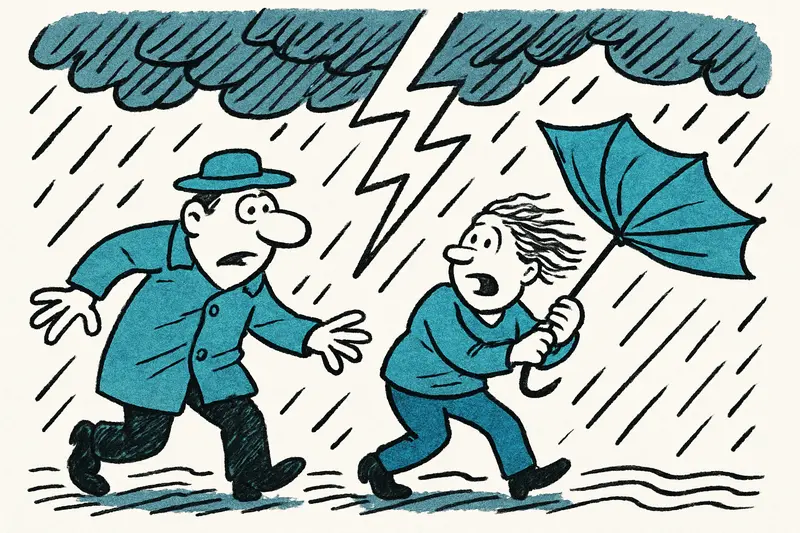
10,000 Lightning Strikes over Mallorca: What the Summer Storm Reveals
A compact thunderstorm complex produced up to 10,000 lightning strikes and locally heavy rainfall on Thursday afternoon — particularly affected were Alcúdia, Pollença, the Serra de Tramuntana and Manacor. Time for a look at preparedness, infrastructure and the often overlooked problems along the coast.
Sudden spectacle: lightning and rain on a summer afternoon front
Thursday late afternoon: the sky over the bay darkened, the typical whistle of the Tramuntana fell silent, then one word: „thunderstorm“. In a few minutes the horizon north of Palma turned into a flickering light show. Meteorological analyses show it in black and white — or rather: bright on dark: around 10,000 lightning strikes in a short time over the northern sea area. On land, stations reported partly 20 l/m² in a short time; locally up to 40 l/m² were even recorded.
Where it was most severe — and why this is not just a weather phenomenon
The coastal sections in the north were particularly affected: Alcúdia and Pollença suffered from rapidly rising streams and flooded streets, shutters rattled in the Serra de Tramuntana, and gusts rolled over the cliffs at Cap de Formentor. Heavy showers also fell eastwards in Manacor, while Palma and the west remained comparatively calm. Lifeguards at some beaches raised warning flags and some piers were temporarily closed — not an uncommon sight for islanders, but one that raises questions.
The immediate dangers — lightning strikes, suddenly swelling rambla streams, slippery coastal paths — are visible to many. But the storm exposed deeper weaknesses: clogged gutters in village centers, poorly maintained road drainage and communication that needs to be even more reliable in moments that require rapid action.
Small damages, big thinking: How well does preparedness work?
The Spanish weather service Aemet issued an orange warning for large parts of Mallorca, and the emergency number 112 had the Plan Meteobal ready. These are the right tools — but do they reach everyone equally? Older residents in mountain villages, farmers on remote fincas and many tourism businesses often rely on local information: loud village sirens, WhatsApp groups, social media. In practice, there are still no comprehensive, accessible early-warning channels that can precisely indicate at short notice where the next cell will strike.
Another problem: roads that appear robust at first reveal their weak points in heavy rain. Around Alcúdia it was not the main roads but side paths and underpasses that quickly collected water. The result: stranded cars, flooded accesses to beaches, closed landings.
What would make sense now — practical proposals instead of mere concern
Such weather events will not become rarer. Therefore a few concrete steps that could help:
1. Regular cleaning of gutters: Simple maintenance in autumn and spring significantly reduces the risk of flooded village centers.
2. Expand decentralized measuring points: More rain and lightning sensors along the north coast and in the Serra de Tramuntana would refine local warnings.
3. Better information chains: Standardized alerts via SMS/Cell Broadcast for acute danger scenarios, complemented by easily accessible local loudspeaker systems in mountain villages.
4. Adapt tourist infrastructure: Mark clear evacuation routes on beach sections, specify closure schedules for piers in high winds.
5. Practice makes safe: Joint emergency drills by municipalities, rescue services and private operators (hotels, marinas) before the summer season.
Looking at the consequences — agriculture, tourism, nature
For farmers, 20–40 l/m² in a short time often means infiltration problems rather than usable water: fields become waterlogged and temporarily impassable. On the other hand, heavy rain washes away nutrients and soil — an underestimated cost factor. For tourism, it is often the small restrictions: canceled boat trips, closed beaches, wet excursions. For nature and the coast, intense, rapid rainfall can accelerate erosion processes, especially on exposed slopes of the Tramuntana.
Outlook: calm before the next show(er)?
The front is moving on toward Menorca; activity could rise there again, while Ibiza and Formentera remain comparatively unaffected. Aemet expects the phase to subside over the next 24 hours and the warning level will likely drop to yellow. But that does not mean: sit back. For those of us on site the lesson is as clear as the smell of wet pine after the rain: preparation and small structural measures can make the difference.
I stood briefly at the window, heard thunder roll over the bay and watched fishermen bundle their nets one last time before they dashed into the rain. Such Thunderstorms, Downpours, Cooling and Contrasts: Is Mallorca Ready for Summer Storms? are spectacular and short — but they will be a test for our infrastructure, information culture and community on the island. Maybe this is the chance to check gutters, loudspeakers and plans not in the next storm, but today.
Frequently asked questions
How common are summer thunderstorms in Mallorca?
Is it safe to go swimming in Mallorca during a thunderstorm warning?
What does an orange weather warning mean in Mallorca?
How much rain can fall in Mallorca during a short summer storm?
Why do Alcúdia and Pollença flood so quickly during heavy rain?
What was the impact of the storm in Palma and the west of Mallorca?
What should I do if a summer storm hits while I’m in the Tramuntana?
What kind of damage can heavy rain cause in Mallorca beyond flooding?
Similar News
Near-miss on Lanzarote: Landing Ryanair Jet and Iberia Takeoff — what really went wrong
On Lanzarote there was a dangerous incident: A Ryanair flight (FR5910) from Dublin landed on runway 03 while an Iberia E...
Eurowings introduces new Premium Business seats on Mallorca routes
From December 1, selected Eurowings flights to Palma and other destinations will feature eight particularly generous sea...
Car on MA-13 near Inca in flames – a safety check for the island
A vehicle caught fire on the MA-13 towards Alcúdia on Tuesday afternoon. The driver was uninjured, the car was destroyed...

Real Estate in Mallorca: Fewer Buyers, Higher Prices — What's Behind It?
Sales on Mallorca are falling, yet prices continue to climb. Why fewer transactions do not equal relief — and what shoul...
Just Bought — Already Trouble: Water Damage in the Heiters' Villa and What Owners in Mallorca Should Know Now
A newly purchased sea-view property — and within days a water damage. What risks lurk in new properties in Mallorca, and...
More to explore
Discover more interesting content

Can Cap de Bou

Townhouse Lleo 72
